
Pruning
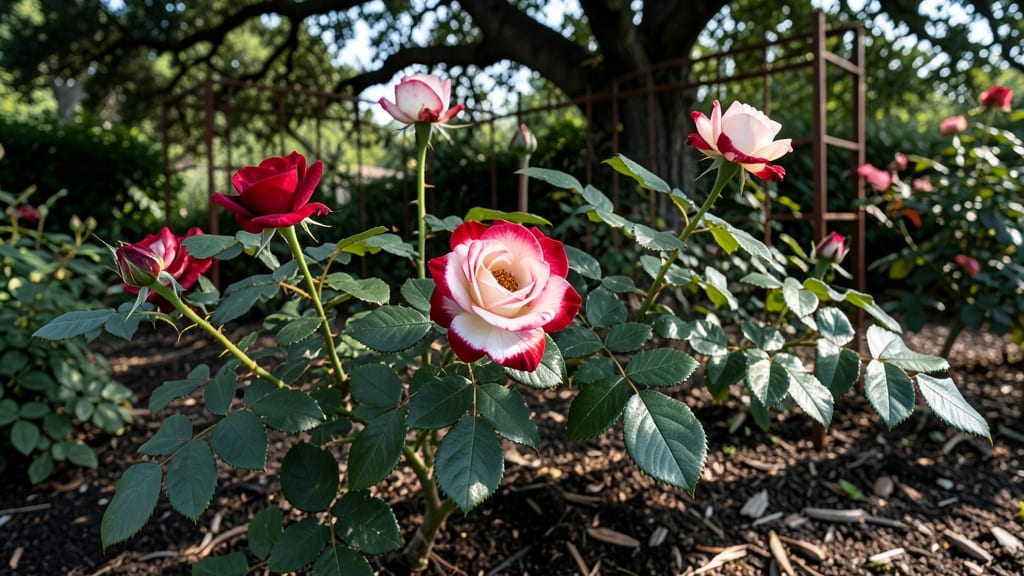
Tri-color roses bring drama to your garden with their striking stripes that defy ordinary pinks and reds. 🌸 These aren’t your grandmother’s roses—they’re the bold statement pieces of the floral world, turning borders into living art.
I’ve used them to transform dull garden edges into eye-catching focal points that draw visitors in like magnets. The secret to their impact lies in placement: pair them with deep greens like hostas or silvery foliage like lamb’s ear to make the colors pop.
In mixed beds, they anchor the design while letting other flowers play supporting roles. For maximum drama, plant them in odd-numbered clusters—three or five plants create natural focal points that feel intentional, not random.
You’ll love how they bloom from early summer through fall, offering seasonal color accents that keep your garden lively. Their fragrance adds another layer, making them perfect for seating areas or entryways where you want to impress. Just a light pruning in spring keeps them lush and productive all season.
Works in cottage gardens, modern landscapes, or even urban containers. The key is giving them 6+ hours of sun and well-draining soil—they’ll reward you with blooms that turn heads and conversations.
📚 In This Guide
- What you need
- Instructions
- Tips and common mistakes
- Wrapping up and next steps
What you need
- ● Pruning shears: Bypass pruners (sharp, clean, and disinfected with rubbing alcohol or bleach solution to prevent disease). Quantity: 1 pair.
- ● Gloves: Heavy-duty gardening gloves (protects from thorns and dirt). Quantity: 1 pair.
- ○ Pruning saw: For thicker stems (optional but helpful for mature roses). Quantity: 1.
- ● Disinfectant: 1-part bleach to 9-parts water (for sterilizing tools between cuts). Quantity: Small spray bottle or bowl.
- ● Rubbing alcohol (70% or higher): For quick tool disinfection. Quantity: Small bottle.
- ○ Pruning sealant: (Optional) Like tree wound paint to prevent disease entry on large cuts.
- ○ Garden twine or tape: (Optional) For marking stems to remove later.
- ● Weather check: Prune on a dry, cool day (avoid extreme heat or rain).
- ● First aid kit: Bandages and antiseptic wipes (thorns happen!).
- ● Water source: Hose or bucket to rinse tools and clean up.
- ● Trash bag: For disposing of pruned debris (prevents pests/diseases).
- ○ Notebook & pen: (Optional) To jot down pruning notes or plant IDs.
How to grow and maintain stunning tri-color roses
Here's the straightforward method I use to keep my tri-color roses vibrant and blooming all season long.
🌱 Step 1: Choose the Right Location and Soil
Tri-color roses thrive in full sun—at least 6-8 hours daily—so pick a spot where they’ll get morning sun and afternoon shade if your climate is hot. I always test the soil first by digging a 6-inch deep hole and checking drainage. If water pools after 30 minutes, amend with 2-3 inches of compost to improve drainage.
These roses love rich, well-draining soil with a pH between 6.0 and 6.5. If your soil is heavy clay, mix in 1 part perlite to 3 parts garden soil before planting. A simple pH test kit from the garden center tells you everything you need to know—no guesswork required.
🪴 Step 2: Plant at the Correct Depth and Spacing
Dig a hole twice as wide as the rose’s root ball but only as deep as the container it came in. This prevents burying the graft union (the bump near the base of the stem), which can weaken the plant. Gently loosen the roots if they’re circling the root ball—just tease them apart with your fingers.
Place the rose in the hole so the graft union sits 2 inches above soil level. Backfill with a mix of native soil and compost, tamping lightly as you go to remove air pockets. Space plants 3-4 feet apart—crowding leads to poor airflow, which invites fungal diseases like black spot. Water deeply right after planting to settle the soil around the roots.
☀️ Step 3: Water and Fertilize for Vibrant Blooms
Water deeply once a week (about 1-1.5 gallons per plant) rather than shallow daily waterings. You’ll know you’re doing it right when the top 2 inches of soil feel dry to the touch. Tri-color roses are drought-tolerant once established, but consistent moisture keeps their striped blooms bold and bright.
Fertilize every 4-6 weeks during the growing season with a balanced rose fertilizer (10-10-10 or 20-20-20). I like to mix in 1 tablespoon of Epsom salt per gallon of water monthly to boost magnesium, which enhances color vibrancy. Stop fertilizing in late summer to encourage hardy growth before winter.
✂️ Step 4: Prune for Health and More Blooms
Prune in early spring before new growth starts, cutting back one-third of the plant’s height to encourage strong, bushy growth. Remove any dead, diseased, or crossing branches first—these compete for energy and reduce airflow. Always cut just above an outward-facing bud at a 45-degree angle to promote water runoff.
Deadhead spent blooms regularly to redirect the plant’s energy into producing more flowers. I also trim back leggy stems in late summer to keep the plant compact and prevent winter damage. Sterilize your pruners with rubbing alcohol between cuts to prevent spreading disease.
⏰ Step 5: Protect and Prepare for Winter
In late fall, reduce watering gradually as temperatures drop. Once nighttime temps hit 40°F, mound 4-6 inches of mulch around the base of the plant to insulate roots. I use straw or shredded leaves because they break down slowly and add organic matter to the soil.
Wrap young plants or tender varieties with burlap and secure with twine to shield them from harsh winds. In USDA Zones 5-7, add a lightweight frost blanket over the plant if winter temps dip below 20°F. Remove all protection in early spring once new growth appears—this signals it’s safe to resume regular care.
Tips & tricks for growing stunning tri-color roses
Common pitfalls—and how to sidestep every one—so your striped roses stay vibrant all season.
Sunlight Strategy: Those 6-8 hours of sun are non-negotiable, but here's the thing: morning sun is your best friend. If your climate gets scorching afternoons, position your roses to catch that golden morning light first. I've seen striped blooms fade faster when they get too much midday heat—almost like they're sunburning. A simple trick is to plant them near a north-facing wall or under a light canopy that filters afternoon rays.
Soil Secrets: That 6.0-6.5 pH range is critical, but don't stress if your soil test shows something slightly off. You can adjust clay soil with the perlite mix, but here's what nobody tells you—peat moss works even better than perlite for heavy soils. It holds moisture while improving drainage, and it won't compact like perlite can over time. Just mix 1 part peat moss to 2 parts garden soil instead.
Planting Perfection: When you're placing that graft union 2 inches above soil level, here's my game-changer: use a small wooden stake to mark the exact height before you start backfilling. I've buried too many graft unions by eye, and that's how you get weak plants that revert to wild-type growth. The stake gives you a clear reference point—no more guesswork when you're tamping down that soil.
Winter Prep: That 40°F nighttime temperature is your cue to start winter prep, but don't wait until the last minute. I start reducing watering when nights dip to 50°F—about 2 weeks before the official 40°F trigger. Gradual reduction prevents root shock. And for that mulch? Double-check it's actually organic—straw or shredded leaves break down and feed your roses, while plastic mulch just suffocates the roots. That 4-6 inch layer should feel like a cozy blanket, not an airtight seal.
Pro Tips for Tri Color Roses
- Common pitfalls—and how to sidestep every one—so your striped roses stay vibrant all season.
- Sunlight Strategy: Those 6-8 hours of sun are non-negotiable, but here's the thing: morning sun is your best friend.
- Soil Secrets: That 6.0-6.5 pH range is critical, but don't stress if your soil test shows something slightly off.
Frequently asked questions
Got questions about tri-color roses? You’re not alone!
These stunning blooms are packed with personality, but they do come with a few quirks. Below, we’ve rounded up the most common questions—plus expert tips to keep your striped beauties thriving.
What makes tri-color roses different from other roses?
Tri-color roses stand out because of their genetic mutation that creates bold stripes or splotches in shades like red/white, pink/cream, or even purple/lavender. Unlike grafted or painted roses, these colors emerge naturally from the flower’s DNA—though they’re still rare! The stripes can vary even within the same bloom for a truly unique look.
How long does it take for tri-color roses to bloom after planting?
Patience is key! Tri-color roses typically take 1–2 years to establish roots and produce their first blooms after planting. In the first year, focus on watering deeply (1–2 inches per week) and avoiding heavy pruning. Once mature, they’ll reward you with season-long color from spring through fall—if you deadhead spent blooms regularly.
Can tri-color roses grow in hot climates? What’s the best care for them?
Tri-color roses love warmth but need protection from extreme heat. Here’s how to keep them happy:
- Watering: Deep water 2–3 times per week (morning is best to reduce evaporation).
- Shade: Provide afternoon shade in zones above 9 (e.g., mulch or a light cloth).
- Soil: Amend with compost to retain moisture—these roses hate soggy roots.
- Pruning: Trim lightly in late winter to encourage airflow and prevent fungal issues.
Where can I buy tri-color roses, and how much do they cost?
Tri-color roses are specialty plants, so your best bets are:
- Online nurseries: Websites like Raintree Nursery or Bare Root Nursery offer bare-root or potted options ($50–$150 per plant).
- Local rose societies: Check if your area has a rose club—they often source rare varieties.
- Garden shows: Events like the All-America Rose Selections showcase often feature unique blooms.
Cost note: They’re pricier than standard roses, but the wow factor makes them worth it! Look for ‘Striped Candy’ or ‘Black Baccara’ (a deep red/black tri-color) for stunning results.
What should I do if my tri-color rose’s stripes fade or disappear?
Fading stripes are usually caused by stress or poor growing conditions. Try these fixes:
- Check for nutrient deficiencies—add a balanced rose fertilizer (10-10-10) in spring.
- Ensure 6+ hours of sunlight daily (stripes can dull in shade).
- Test your soil pH—tri-color roses prefer 6.0–6.5. Adjust with lime or sulfur if needed.
- Watch for pests like aphids, which can weaken blooms. Spray with neem oil if needed.
If stripes still fade, your rose might be reverting to its parent color—a common (but frustrating) trait in hybrid roses. Sadly, this can’t be reversed, but replacing the plant will restore the drama!
Wrapping up and next steps
Tri-color roses are a stunning way to add drama and vibrancy to any garden—whether you're a seasoned gardener or just starting out! Their bold stripes and striking hues make them a must-have for pruning enthusiasts looking to refresh their blooms and encourage lush regrowth.
With the right tools, timing, and techniques, you’ll keep these showstoppers thriving all season long.
Ready to transform your garden? Grab your pruners and give those tri-color beauties the care they deserve—your future blooms will thank you! 🌸 For even more tips, explore advanced pruning guides or share your progress with fellow gardening communities.