
Pruning
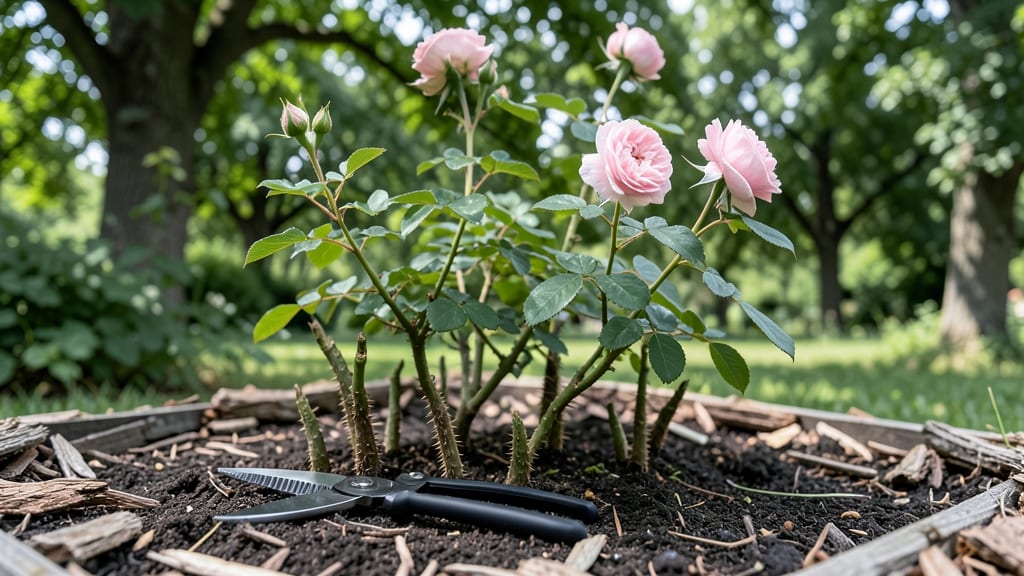
Those aggressive shoots growing from the base of your rose bushes aren’t helping—they’re stealing energy from your blooms. ✂️ Suckers on roses might look like extra growth, but they’re actually weak, watery stems that drain nutrients from your main canes, leaving you with fewer flowers and leggy vines.
The good news? Removing them the right way turns your roses into stronger, more productive plants.
First, learn to spot the difference: suckers grow from the root crown (where the stem meets the soil) and have a pale, almost translucent look, while healthy canes emerge from the bud union (the swollen bump on the stem).
Grab your pruners and a pair of gloves—you’ll want to cut suckers off at the base, not just pinch them, or they’ll grow back faster than weeds. Timing matters too: do this in early spring or right after blooming season when the plant’s energy is focused on new growth.
What you’ll end up with is a rose bush that puts all its energy into stronger canes and more blooms—not wasted on these energy vampires. The pruned suckers can even be rooted for new plants, so nothing goes to waste.
Plus, your roses will look fuller and healthier, with fewer gaps where pests can hide. It’s a win-win: more flowers and a bush that stays in control.
This method works for all rose types, from hybrid teas to shrub roses, and keeps your garden looking sharp all season. The key is consistency—check for suckers every 4-6 weeks during growing season, and you’ll keep your roses thriving without the hassle.
No more struggling with weak growth or wondering why your roses aren’t blooming like they should.
📚 In This Guide
- What you need
- Instructions
- Tips and common mistakes
- Wrapping up and next steps
What you need
- ● Bypass pruners – Sharp, clean pruners (✅ 1 pair, 5-8 inch blades) for clean cuts.
- ● Loppers – For thicker suckers (✅ 1 pair, 8-12 inch blades).
- ● Garden gloves – Protect your hands from thorns (✅ 1 pair, heavy-duty).
- ● Disinfectant (70% isopropyl alcohol or bleach solution) – To sterilize tools between cuts (✅ small bottle or spray).
- ○ Pruning saw (optional) – For stubborn, woody suckers (✅ 1, 8-10 inch blade).
- ● Rubbing alcohol or hydrogen peroxide – For wiping pruners between cuts (✅ small bottle).
- ○ Pruning sealant (optional) – To coat larger cuts (✅ small tube).
- ○ Garden twine or zip ties (optional) – For supporting heavy canes post-pruning.
- ● Trash bag or bucket – For disposing of suckers and debris.
- ○ Notebook & pen (optional) – To track pruning progress or sketch rose structure.
Instructions for pruning rose suckers like a pro
Here's how I tackle those pesky suckers—turning them into energy for bigger blooms and healthier vines.
✂️ Step 1: Identify Suckers Correctly
Suckers are the fast-growing shoots sprouting from the base of your rose bush or along the stem below the graft union. They look like thin, green shoots with small leaves, often growing at a sharp angle from the main stem. If you see a shoot emerging from the ground near your rose or from the lower stem, that's your sucker.
I always start by inspecting the base of each rose bush, especially in spring when new growth begins. Run your fingers gently along the stem—you'll feel the rough texture where the graft union is located. Any shoots below this point are suckers and need removal. This ensures you're not accidentally pruning off desirable growth.
✂️ Step 2: Time Your Pruning for Best Results
Prune suckers as soon as you spot them, but ideally in early spring before new growth begins. This prevents them from draining energy from your rose bush. I make it a habit to check my roses every two weeks during the growing season—early detection means less work later.
Never prune suckers in late summer or fall, as this can stimulate new growth that won't harden off before winter. If you miss a sucker in spring, don't worry—just remove it as soon as you notice it. The key is consistency; those suckers grow fast and can quickly become a problem.
✂️ Step 3: Remove Suckers Cleanly
Use clean, sharp pruners or shears to cut suckers at ground level. Make the cut at a 45-degree angle just above the soil line—this helps water run off the cut and prevents rot. I always sterilize my tools with rubbing alcohol between cuts to avoid spreading disease.
Don't pull suckers by hand unless they're very small. Tugging can damage the roots of your rose bush or leave behind pieces that regrow. For stubborn suckers, I use a small trowel to gently loosen the soil around the base before cutting. This ensures a clean removal every time.
🌿 Step 4: Redirect Energy to Your Rose Bush
Once you've removed the suckers, your rose bush will redirect that energy to its main stems and blooms. You'll notice stronger canes, more abundant foliage, and bigger, healthier flowers within a few weeks. I always follow up by giving my roses a light feeding with balanced fertilizer after pruning.
Watch for new suckers to appear throughout the growing season. Regular monitoring keeps your roses focused on producing the stunning blooms you planted them for. This method has transformed my rose bushes—thicker stems, more flowers, and fewer pests to deal with.
⏰ Step 5: Maintain Year-Round Vigilance
Sucker control isn't just a spring chore—it's an ongoing process. I set reminders to check my roses every 4-6 weeks during the growing season. In late fall, do one final inspection and remove any remaining suckers before winter dormancy begins.
Here's the thing—if you let suckers go unchecked, they can outcompete your rose bush for nutrients and water. Over time, this weakens the plant and reduces flowering. But with consistent pruning, your roses will reward you with lush growth and spectacular blooms all season long.
Tips & tricks for pruning rose suckers like a pro
These simple tricks will help you turn sucker removal from a chore into a game-changer for your roses.
Visual Identification: Look for the graft union—the rough, swollen area near the base of your rose stem. Any shoots growing below this point are suckers. I always run my fingers along the stem to feel for that distinctive texture, which helps me spot suckers even when they're tiny. This prevents accidentally pruning off desirable growth that comes from above the graft.
Timing Secret: Early spring is ideal for removing suckers because it prevents them from draining energy from your rose bush before the growing season begins. I check my roses every two weeks during the growing season—those suckers grow fast, and early detection means less work later. Never prune in late summer or fall, as this can stimulate new growth that won't harden off before winter.
Clean Cut Technique: Use sharp pruners to make a clean cut at a 45-degree angle just above the soil line. This angle helps water run off the cut and prevents rot. I always sterilize my tools with rubbing alcohol between cuts to avoid spreading disease. For stubborn suckers, gently loosen the soil around the base with a small trowel before cutting to ensure a clean removal.
Year-Round Vigilance: Sucker control is an ongoing process. Set reminders to check your roses every 4-6 weeks during the growing season. In late fall, do one final inspection and remove any remaining suckers before winter dormancy begins. This consistent approach keeps your roses focused on producing stunning blooms all season long.
Pro Tips for Suckers On Roses
- These simple tricks will help you turn sucker removal from a chore into a game-changer for your roses.
- Visual Identification: Look for the graft union—the rough, swollen area near the base of your rose stem.
- Timing Secret: Early spring is ideal for removing suckers because it prevents them from draining energy from your rose bush before the growing season begins.
Frequently asked questions
Got questions about those pesky rose suckers? You’re not alone!
Here are the answers to the most common concerns—so you can prune with confidence and keep your roses thriving.
What exactly are rose suckers, and why do they appear?
Rose suckers are vigorous, unwanted shoots that sprout from the base of your rosebush or along the graft union (the bulge near the stem’s base). They often appear when the rootstock—hardier but less desirable—takes over, or when the plant sends out new growth to compensate for stress or damage. Left unchecked, they drain energy from your main rose, reducing blooms and weakening the plant.
When is the best time to remove rose suckers?
Prune suckers as soon as you spot them—year-round! However, the ideal times are:
- Early spring (before new growth starts): Easier to identify and remove when the plant is dormant.
- After major pruning (late winter/early spring): Helps redirect energy to the main rose.
- Fall (before hard frosts): Prevents pests or diseases from using suckers as a winter home.
How do I remove suckers without hurting my rose?
Use clean, sharp pruners or shears to cut suckers at ground level—never leave a stub. For stubborn suckers near the graft union, dig carefully to expose the rootstock and sever it completely. Warning: If the entire rootstock is removed, your rose may die. When in doubt, leave a tiny bit of rootstock attached to the main stem to ensure survival.
Will removing suckers kill my rose or stop it from blooming?
Nope! In fact, removing suckers boosts blooms by redirecting the plant’s energy to the main rose. Think of it like weeding your garden—you’re making space for healthier growth. Just avoid over-pruning; focus on suckers and leave the rest of the plant intact. Your rose will thank you with more vibrant flowers and stronger vines!
What if my rose keeps growing suckers back? What’s the fix?
Persistent suckers often mean the rootstock is still active. Try these steps:
- Dig deeper: Use a spade to expose the rootstock and cut it at least 6 inches below the soil line.
- Apply vinegar or copper sulfate: Dab a small amount on fresh cuts to deter regrowth (test on a small area first!).
- Monitor for pests: Aphids or beetles can stimulate sucker growth—spray with neem oil if needed.
Wrapping up and next steps
Mastering the art of pruning suckers on roses isn’t just about keeping your garden tidy—it’s about unlocking your roses’ full potential! By removing those pesky suckers and following the right techniques, you’ll reward yourself with healthier vines, stronger blooms, and a thriving garden. 🌹✨
Now that you’re armed with the know-how, grab those pruners and get pruning! Start with just one or two roses to build your confidence, and soon, your garden will be the envy of the neighborhood. Happy pruning—your roses will thank you with a showstopping display!