
Shrubs
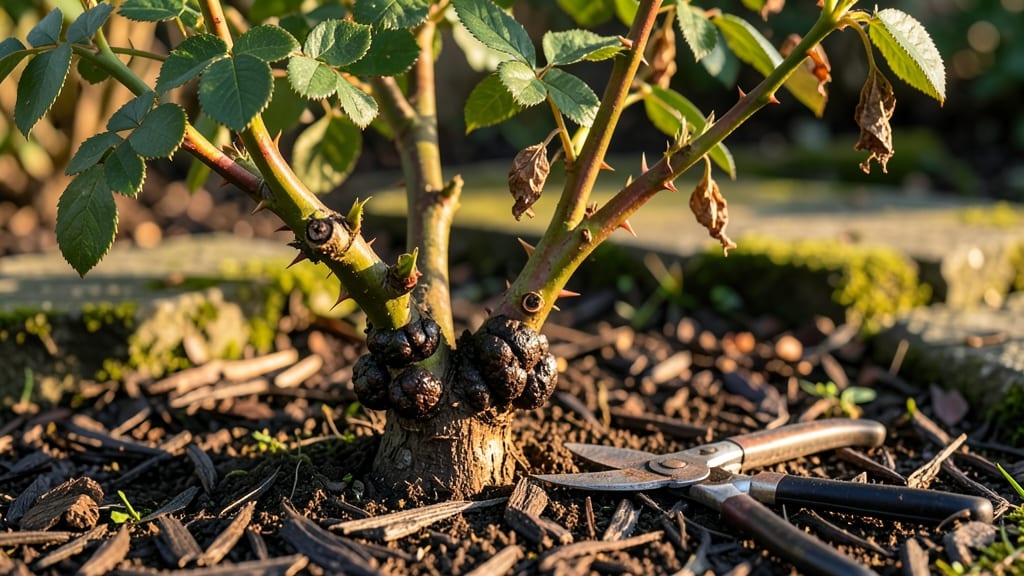
That swollen, tumor-like bump at your rose's base isn't just unsightly—it's rose crown gall, a bacterial infection that can strangle your plant's growth if ignored.
I've wrestled with this stubborn problem for years, and the difference between losing a prized rose bush and nursing it back to health comes down to three precise steps that target the root of the issue—literally.
The culprit is Agrobacterium tumefaciens, a soil-dwelling bacteria that hijacks your rose's natural growth hormones, creating those unsightly galls. The good news? You can fight back with sharp pruning tools, copper-based sprays, and a little elbow grease.
I've saved roses that looked hopeless by cutting out the infected tissue and treating the wounds properly—even when the galls were the size of golf balls.
What you'll end up with is a rose bush that stops wasting energy on tumors and starts putting it back into vibrant blooms and lush foliage.
The key is acting fast—once you spot those bumps, you've got a narrow window to prune, sterilize, and protect before the bacteria spreads deeper into the roots. With the right approach, your roses can bounce back stronger than ever.
This method works for both heirloom and hybrid roses, whether you're dealing with a single infected stem or an entire bush. The tools you need are basic—just make sure they're sterilized between cuts. Let's get those roses back to their full potential.
The Hidden Triggers Behind Rose Woes
When your prized roses develop unsightly, tumor-like bumps at their base, you’re likely dealing with a bacterial infection known as Agrobacterium tumefaciens—the culprit behind rose crown gall. This persistent pathogen hijacks your plant’s natural growth hormones, causing abnormal cell proliferation.
But why does it strike some roses and not others? Let’s break down the key factors that turn your garden’s crown into a battleground.
The root cause—literally—of crown gall is the Agrobacterium tumefaciens bacterium. This soil-dwelling microbe is a master of deception, inserting a segment of its DNA (called the Ti plasmid) into plant cells. Once inside, it triggers uncontrolled growth, forming galls that strangle roots and restrict nutrient flow.
- How it spreads: Bacteria latch onto wounds—whether from pruning, root damage, or even insect bites—and slip into the plant’s vascular system.
- Survival tactic: The bacteria thrive in moist, organic-rich soil, where they can persist for years in a dormant state, waiting for the right opportunity to strike.
- Actionable insight: Prune with sterilized tools and avoid overwatering to reduce bacterial access points.
Healthy roses have natural barriers to fend off infections, but stress weakens these defenses. When your plant is already struggling—due to poor soil, nutrient deficiencies, or environmental shocks—it becomes an easy target for Agrobacterium.
- Common stress factors:
- Compacted or waterlogged soil (💡 Fix: Amend with compost and improve drainage.)
- Over- or under-fertilization (💡 Fix: Use balanced, slow-release fertilizer and test soil pH.)
- Extreme temperature swings (💡 Fix: Mulch heavily in winter and provide shade in scorching heat.)
- Pro tip: Stressed plants are 3x more susceptible—regularly inspect roots and crown areas for early signs of swelling or oozing sap.
Bacteria can’t invade unbroken skin—so any disruption to your rose’s crown or roots creates an open door. Even minor injuries can be fatal if they’re not cleaned or treated properly.
| Damage Source | How It Helps Bacteria | Prevention Tip |
|---|---|---|
| Pruning cuts | Exposes inner tissues; bacteria colonize within hours. | 🔪 Sterilize shears with rubbing alcohol between cuts. |
| Root disturbance (transplanting) | Traumatizes roots, making them vulnerable for weeks. | ⏰ Water deeply before/after transplanting to aid recovery. |
| Insect bites (e.g., rose slugs) | Creates tiny entry points for bacteria. | 🛡️ Use neem oil as a natural insect repellent. |
Just like us, Agrobacterium thrives in specific conditions. Moisture, warmth, and organic debris create the perfect storm for gall formation.
- High-risk scenarios:
- Overhead watering: Splashes soil onto the crown, spreading bacteria like a splash guard. Fix: Water at the base and avoid wet foliage.
- Heavy mulch layers: Traps moisture and blocks airflow, giving bacteria a cozy hideout. Fix: Keep mulch 2–3 inches away from the crown.
- Poorly drained soil: Waterlogged conditions drown roots and invite bacterial growth. Fix: Test soil and amend with perlite or sand if needed.
- 🌡️ Temperature sweet spot: Bacteria multiply fastest between 68–86°F. In hot climates, prioritize shade and afternoon watering.
Even well-meaning gardeners can unknowingly transfer Agrobacterium from one plant to another. The bacteria can hitchhike on dirty pruners, gloves, or infested soil.
- How it happens:
- Reusing tools on infected plants without cleaning.
- Adding compost from diseased plants to healthy beds.
- Sharing soil or mulch between gardens.
- ✨ Prevention checklist:
- 🧼 Sterilize tools with 10% bleach solution or a flame.
- 🚫 Avoid cross-contamination—never compost rose clippings with galls.
- 🌱 Test new soil for pathogens before amending garden beds.
How to Treat and Prevent Bacterial Swells
Crown gall—those unsightly, hard, tumor-like bumps on your rose stems—can feel like a losing battle. But with the right approach, you can stop the spread, shrink existing galls, and protect your roses for years to come.
Below, we break down targeted fixes based on the root cause, plus preventive steps to keep your shrubs thriving.
Cause: Bacterial infection (Agrobacterium tumefaciens) thrives in damaged tissue. Fix:
- 🔪 Sterilize your tools first—wipe pruners with 70% isopropyl alcohol or a bleach solution (1 part bleach to 9 parts water) to avoid cross-contamination.
- 🌿 Cut ½ inch below and above the gall (include healthy tissue to ensure removal).
- 🚯 Dispose of infected material—do not compost it! Seal pruned galls in a plastic bag and toss in the trash to prevent reinfection.
- 🌱 Monitor for regrowth—if new galls appear, repeat pruning or consider removing the entire plant if heavily infected.
Pro Tip: 💡 Prune during dry weather to minimize bacterial spread from rain splashing.
Cause: Weakened rose defenses allow bacteria to take hold. Fix:
- 💊 Apply copper-based bactericides (like copper hydroxide or copper sulfate) every 7–10 days during active growth (spring to fall).
- Example: Bordeaux mixture (copper sulfate + hydrated lime) is a classic remedy.
- 🌿 Strengthen roots with a balanced fertilizer (10-10-10) low in nitrogen—too much nitrogen weakens defenses.
- 🍄 Improve soil drainage—waterlogged roots invite bacterial growth. Amend clay soil with compost or perlite.
Pro Tip: ✨ Mix 1 tbsp baking soda in 1 gallon of water as a mild antibacterial spray (test on a small leaf first).
Cause: Open wounds or contaminated tools invite bacteria. Fix:
- 🧴 Seal pruning cuts with pruning sealant (like Tanglefoot Tree Wound Pruning Seal) to block entry points.
- 🌱 Avoid over-fertilizing—excess nitrogen stresses plants, making them vulnerable.
- 🚫 Sterilize tools after every cut—even a small nick can transfer bacteria.
- 🌿 Choose resistant varieties—some roses (like ‘Knock Out’ roses) show natural resistance to crown gall.
Pro Tip: 🎯 Mulch with wood chips (not fresh sawdust) to reduce soil splatter during watering, lowering infection risk.
If your rose is covered in large galls or the bacteria has spread to the roots:
- 🌳 Dig up and destroy the plant (bag it and trash it—do not burn in some areas due to fire risks).
- 🌱 Replace with a new, healthy rose—avoid replanting in the same spot for at least 2 years (bacteria can linger in soil).
- 🔄 Test soil for pathogens before planting—some nurseries offer bacterial testing kits.
Pro Tip: 💪 Plant in well-draining, raised beds if your area is prone to crown gall—elevated soil stays drier and reduces bacterial survival.
Remember: Consistency is key! Prune, treat, and prevent in cycles to keep your roses gall-free for seasons to come. 🌹💪
Frequently asked questions
Can I save a rose bush with crown gall?
It depends on the severity! For small galls (1 inch or less), you can often save the plant by pruning out infected tissue and applying copper-based sprays. However, if galls are large or the bacteria has spread to the roots, removal may be the best option to prevent further infection. Always sterilize tools and monitor for regrowth.
How do I know if my rose has crown gall?
Look for hard, swollen bumps at the base of stems or where branches meet the main trunk. These galls may ooze a sticky substance when cut open. Other signs include stunted growth, yellowing leaves, and weak stems. Compare to healthy roses in your garden for reference.
Will copper sprays actually work against crown gall?
Yes! Copper-based bactericides like copper hydroxide or Bordeaux mixture are effective against Agrobacterium tumefaciens. Apply every 7-10 days during growing season to create a protective barrier. For best results, combine with proper pruning and soil drainage improvements.
Can I use the same pruners on other plants after cutting infected roses?
Never reuse unsterilized tools! Wipe pruners with 70% rubbing alcohol or soak in a 10% bleach solution between cuts to prevent spreading bacteria. Even small residues can transfer the infection to healthy plants.
How long does it take to see improvement after treatment?
With proper pruning and copper treatments, you may see new growth within 4-6 weeks. However, complete recovery can take 1-2 growing seasons. Consistency is key—don't stop treatments once you see improvement, as bacteria can persist in the soil.