
Shrubs
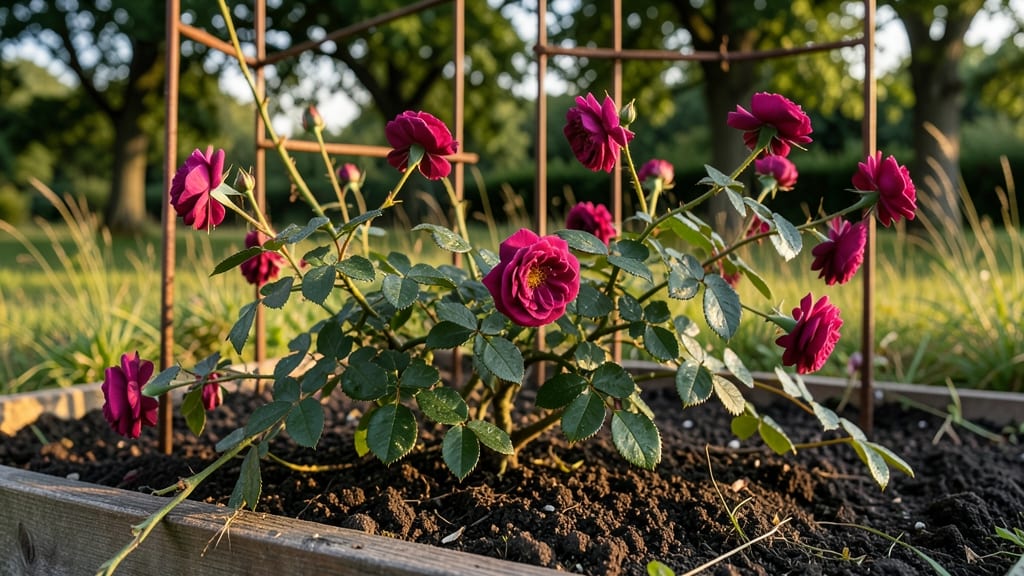
Growing the Climbing Rose 'Crown Princess Margareta' means fragrant, repeat-blooming vines that turn your fence or trellis into a living perfume factory. 🌹 I fell in love with this rose after seeing it climb a neighbor's arbor—its deep pink blooms and intoxicating scent made me determined to grow it myself.
What sets this variety apart is its ability to bloom from early summer through fall, even in cooler climates where other roses fade.
The secret to its success starts with the right conditions: full sun (at least 6 hours daily), well-draining soil, and consistent moisture without soggy roots. This rose thrives when planted near a sturdy support, like a trellis or fence, where its vigorous growth can reach 8-10 feet tall.
Unlike some roses, 'Crown Princess Margareta' is disease-resistant, which means less fuss and more blooms—exactly what you want from a climbing variety.
By mid-summer, you'll be rewarded with clusters of velvety petals that perfume the air, and the blooms keep coming if you prune correctly. The key is removing spent flowers and thinning out crowded canes in late winter to encourage strong new growth.
With the right care, this rose becomes the star of your garden, drawing hummingbirds and admiring glances from passersby.
Perfect for gardeners who want low-maintenance beauty without sacrificing fragrance or repeat blooms. Whether you're a beginner or a seasoned rose grower, this variety delivers results that make the effort worthwhile. Let’s get those roots in the ground and watch this queen of climbers shine!
📚 In This Guide
- What you need
- Instructions
- Tips and common mistakes
- Wrapping up and next steps
What you need
- ● Climbing Rose Bare Root or Potted Plant: 1 healthy 'Crown Princess Margareta' rose bush (choose bare-root for spring planting or a potted plant for year-round transplanting).
- ● Well-Draining Soil: A mix of topsoil, compost, and perlite/sand (ratio: 60% topsoil, 30% compost, 10% perlite/sand).
- ● Support Structure: A trellis, arbor, or fence (at least 6–8 feet tall for optimal growth).
- ● Organic Mulch: 2–3 inches of wood chips or straw to retain moisture and suppress weeds.
- ● Fertilizer: Balanced 10-10-10 fertilizer (spring planting).
- ● Rose-specific organic fertilizer (e.g., fish emulsion or bone meal) for ongoing feeding.
- ● Garden Tools: Trowel or spade
- ● Pruning shears (sterilized with rubbing alcohol)
- ● Gloves (to protect from thorns and dirt)
- ● Watering Supplies: Hose with a gentle spray nozzle (avoid harsh streams).
- ○ Drip irrigation system (optional but ideal for consistent moisture).
- ● Sunlight: Full sun (6+ hours daily) in a sheltered location.
- ○ Optional Extras: Rose food or bloom booster (for extra fragrance and blooms).
- ● Epsom salt (1 tablespoon per gallon of water, monthly for magnesium).
- ● Pest control (neem oil or insecticidal soap if aphids appear).
Step-by-step guide to planting and caring for climbing rose 'Crown Princess Margareta'
This fragrant, repeat-blooming rose thrives with the right start—here's how to set it up for years of lush vines.
🌱 Step 1: Choose the Perfect Planting Location
Select a spot with full sun exposure (6-8 hours daily) and protection from harsh winds. 'Crown Princess Margareta' loves warmth but also benefits from afternoon shade in hotter climates. I always check for at least 6 feet of vertical space for the trellis or fence—this rose grows vigorously and needs room to climb.
Test the soil drainage by digging a 12-inch hole and filling it with water. If it drains completely within 2 hours, you're good to go. Poor drainage leads to root rot, and this rose won't tolerate soggy feet. Amend heavy clay soil with 2-3 inches of compost mixed into the top 12 inches of soil.
🪴 Step 2: Plant at the Right Time and Depth
Plant your rose in early spring or fall when temperatures are mild (50-70°F). Avoid extreme heat or cold—stressed plants struggle to establish roots. Dig a hole twice as wide as the root ball but only 6 inches deep—deeper planting buries the graft union, which weakens the plant.
Gently loosen the roots if they're circling and position the plant so the graft union sits 2-3 inches above soil level. You'll see a noticeable bump or ring where the main stem meets the rootstock. Backfill with native soil mixed with 1 part compost to encourage strong root growth. Water deeply to settle the soil and remove air pockets.
☀️ Step 3: Install Support and Prune for Growth
Install your trellis, fence, or arbor immediately after planting. 'Crown Princess Margareta' needs sturdy support—its canes grow 8-12 feet long and produce heavy blooms. I use 4-inch diameter posts buried 2 feet deep with horizontal wires spaced 12 inches apart for proper vine training.
Prune the plant right after planting to encourage bushier growth. Cut back the main stems by one-third and remove any damaged or crossing branches. Leave 3-5 strong canes to develop as the main framework. This early pruning prevents overcrowding and sets the stage for better air circulation, reducing disease risk.
💧 Step 4: Water and Fertilize for Lush Blooms
Water deeply 2-3 times per week for the first 4-6 weeks to help roots establish. You'll know it's enough when the soil 6 inches down feels consistently moist but not waterlogged. After establishment, water 1-2 times weekly, increasing during hot, dry spells. Always water at the base to keep foliage dry and prevent fungal issues.
Fertilize with a balanced rose fertilizer (10-10-10) every 4-6 weeks during the growing season. Start fertilizing 6-8 weeks after planting and continue until late summer. I avoid high-nitrogen fertilizers—they promote leafy growth at the expense of flowers. Instead, I use a low-nitrogen, high-phosphorus formula to encourage abundant blooms.
✂️ Step 5: Prune and Maintain for Year-Round Blooms
Prune your 'Crown Princess Margareta' twice yearly—once in early spring (March) and again after the first flush of blooms (June). In spring, remove dead, diseased, or weak canes completely. Then cut back remaining canes by one-third to encourage new growth. Always make cuts just above an outward-facing bud to promote bushy, upward growth.
After the first bloom cycle, prune again to remove spent flowers and shape the plant. This encourages repeat blooming throughout the season. I also tie in new growth to the trellis as it emerges—young canes are flexible and won't snap under the weight of blooms. Mulch around the base with 2-3 inches of organic mulch to retain moisture and regulate soil temperature.
Tips & tricks for thriving climbing rose 'Crown Princess Margareta'
These simple strategies will help you avoid common pitfalls and maximize your rose's potential for stunning, fragrant blooms.
Sunlight Strategy: That 6-8 hours of daily sun is non-negotiable, but here's the trick: if you're in a hotter climate, position your trellis to provide afternoon shade naturally. I've seen roses in Southern California thrive with morning sun and afternoon shade—just move the trellis slightly to create your own shade canopy. This prevents leaf scorch while maintaining the full sun requirement.
Soil Test Hack: The 2-hour drainage test is crucial, but here's how to make it foolproof. After digging your 12-inch hole and filling it with water, wait until the water level drops to about 6 inches, then time how long it takes to drain completely from that point. If it takes longer than 2 hours, you'll need to add more compost or consider raised beds. I've had to adjust garden beds three times before getting the perfect drainage for this rose.
Graft Union Visibility: When planting, make sure that graft union sits 2-3 inches above soil level—this is where the plant's strength comes from. Here's a trick I learned: after positioning your plant, use a small stick to mark where the soil meets the graft union. This visual reference makes it easier to backfill correctly and avoid burying it. The graft union should always remain visible above soil.
Pruning Precision: That one-third pruning after planting might sound simple, but here's what I watch for: look for the first set of healthy buds when cutting back. Make your cuts just above these buds at a 45-degree angle—this prevents water from pooling on the cut and reduces disease risk. I always prune on a dry day to minimize any potential fungal issues from fresh cuts.
Pro Tips for Climbing Rose Crown Princess Margareta
- These simple strategies will help you avoid common pitfalls and maximize your rose's potential for stunning, fragrant blooms.
- Sunlight Strategy: That 6-8 hours of daily sun is non-negotiable, but here's the trick: if you're in a hotter climate, position your trellis to provide afternoon shade naturally.
- Soil Test Hack: The 2-hour drainage test is crucial, but here's how to make it foolproof.
Frequently asked questions
Got questions about growing the stunning Climbing Rose Crown Princess Margareta? You’re not alone! Here are some of the most common queries—and their answers—to help you cultivate a fragrant, repeat-blooming masterpiece in your garden.
How fast does the Crown Princess Margareta climbing rose grow?
The Crown Princess Margareta is a vigorous climber, typically growing 3 to 5 feet per year under ideal conditions. With proper pruning and support, it can reach 15 to 20 feet in just a few seasons. Patience is key—give it time to establish strong roots before expecting rapid vertical growth!
When is the best time to plant this rose?
Plant your Crown Princess Margareta in early spring or early fall for the best results. Avoid extreme heat or frost, as these can stress the plant. If you’re in a mild climate, fall planting (6–8 weeks before the first frost) allows roots to establish before winter dormancy.
Does this rose need full sun, or can it tolerate partial shade?
While Crown Princess Margareta thrives in full sun (6+ hours daily), it can tolerate partial shade (4–6 hours), especially in hotter climates. However, expect fewer blooms if sunlight is limited. Choose a spot with morning sun and afternoon shade for optimal performance.
How do I prune it to encourage more blooms?
Prune in late winter or early spring before new growth appears. Remove dead, diseased, or crossing branches, then cut back remaining canes by one-third to promote airflow and blooms. For repeat flowering, do a light summer trim after the first flush of blooms to encourage a second flush.
Why aren’t my Crown Princess Margareta roses blooming as much as expected?
Several factors could be at play:
- Insufficient sunlight: Move to a sunnier spot if possible.
- Over-fertilizing with high nitrogen: Switch to a balanced rose fertilizer (10-10-10 or similar) to encourage blooms over foliage.
- Poor pruning habits: Prune correctly in late winter/early spring to stimulate new growth.
- Stress from pests/disease: Inspect for aphids, black spot, or powdery mildew and treat promptly.
If the issue persists, check soil drainage—waterlogged roots can stunt blooming.
Can I grow Crown Princess Margareta in a container?
Yes, but it requires extra care. Choose a large container (at least 20 gallons) with drainage holes and use a well-draining potting mix. Containers dry out faster, so water daily in hot weather and fertilize monthly during growing season. Expect slower growth and fewer blooms than in-ground plants.
Wrapping up and next steps
The Climbing Rose Crown Princess Margareta is a stunning choice for gardeners who crave year-round fragrance and beauty—its repeat blooms and hardy nature make it a true standout.
Whether you're a beginner or a seasoned gardener, this rose rewards patience and care with lush, fragrant petals that turn heads and fill the air with sweetness.
Ready to transform your garden? Start by selecting the perfect spot, gather your tools, and dive in with confidence! With the right preparation, you’ll be enjoying this royal rose’s charm in no time. 🌸✨