
Pruning
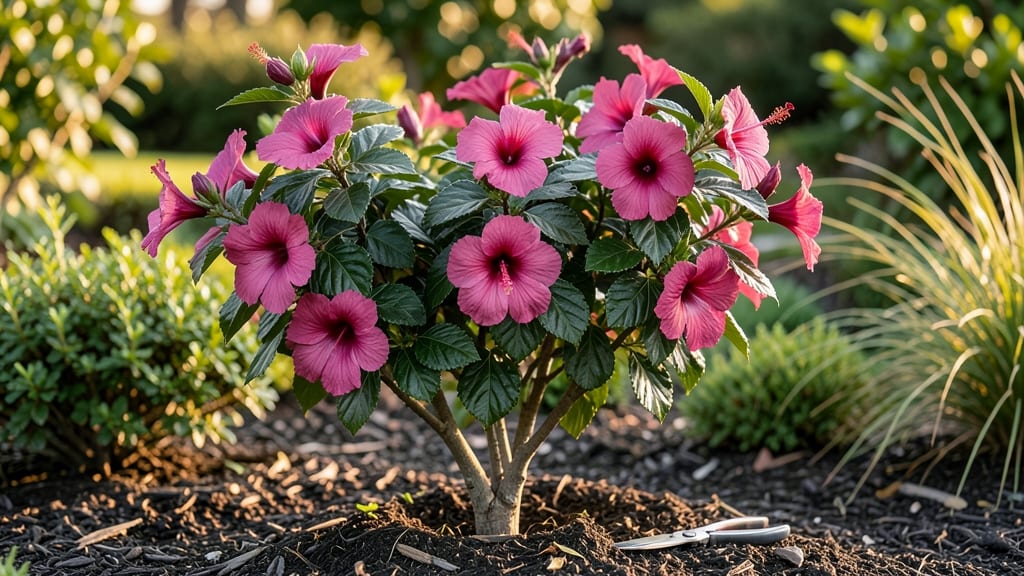
That first flush of red Tree Rose of Sharon blooms in June feels like a promise—one you can keep blooming until frost with just four strategic trims. 🌸 I planted mine last spring after watching neighbors' bushes explode with color, and now I get flowers from late summer through fall, plus a second show in spring if I time it right.
The secret isn't complicated: it's about when you cut, not how hard.
Start with full sun and well-draining soil—this plant thrives where others struggle. Mine gets 6-8 hours of direct sunlight daily, and I mix compost into the planting hole to keep roots happy.
Water deeply once a week (more in extreme heat), but let the top inch of soil dry between waterings. Overwatering is the fastest way to kill these tough bushes.
Those bold red blooms come back every year if you prune correctly. After the first frost, cut back one-third of the oldest stems to encourage new growth.
Repeat in late winter, early summer, and again after August blooms fade. Each trim keeps the plant compact and flowering, not leggy and bare.
The best part? You can propagate new plants from those cuttings. Dip stems in rooting hormone, plant in pots with moist soil, and you'll have ready-to-plant bushes by spring.
Just watch for Japanese beetles—they'll strip leaves faster than you can say "pesticide." A quick spray of neem oil keeps them in check.
📚 In This Guide
- What you need
- Instructions
- Tips and common mistakes
- Wrapping up and next steps
What you need
- ● Pruning shears: Bypass pruners (sharp, clean, and sterilized with rubbing alcohol or bleach solution). Quantity: 1 pair.
- ● Loppers: For thicker branches (1–2 inches in diameter). Quantity: 1 pair.
- ● Gloves: Heavy-duty gardening gloves (to protect from thorns and sap). Quantity: 1 pair.
- ● Disinfectant: 1-part bleach to 9-parts water (for sterilizing tools between cuts).
- ○ Pruning sealant (optional but helpful): For large cuts (e.g., Tanglefoot Tree Wound Pruning Sealer).
- ● Bucket or bag: For collecting pruned branches (10–20 gallon capacity).
- ● Notebook & pen: To jot down trimming notes (e.g., branch locations, growth patterns).
- ● Extension pole saw: For high branches (if your shrub is tall).
- ● Safety glasses: To shield eyes from debris.
- ● Knee pads: For comfort during ground-level trims.
- ● String or twine: To mark branches for removal (helpful for complex shapes).
- ● Compost bin: For repurposing pruned branches as mulch.
How to prune a Red Tree Rose of Sharon for year-round blooms
Here's the proven seasonal approach I use to keep my shrubs flowering nonstop—no dead wood, no wasted energy.
✂️ Step 1: Late Winter Cleanup (Before Bud Break)
Wait until late February or early March when temperatures stay above 40°F at night. This is your chance to remove all last year's spent stems—cut them back to 12-18 inches from the ground. I like to make clean cuts just above outward-facing buds to encourage new growth that will bloom later.
Don't worry about being too aggressive here. Rose of Sharon is tough—it thrives on pruning. As you work, look for any dead, crossing, or weak branches. Remove those completely. You'll see fresh green buds forming within weeks—that's your signal you're on the right track.
✂️ Step 2: Light Summer Pruning (After First Bloom)
Once the first flush of blooms fades in late June or early July, it's time for a second cut. Shape the shrub by removing about 1/3 of the oldest stems at the base. This encourages younger, more vigorous branches to develop that will produce fall blooms.
I also trim back any leggy growth that's stretching toward the sun. Look for branches growing inward—they'll crowd the center and block light. Cut these back to where they branch outward. You want an open, vase-like shape that lets air circulate freely.
✂️ Step 3: Fall Renewal (After Second Bloom)
After the second flush of flowers in September or October, give your shrub one final trim. Cut back all stems by about 1/2 their height. This might seem drastic, but it's what keeps these shrubs blooming through winter in mild climates. The key is timing—do this after the last flowers fade but before hard frosts.
Remove any branches that look weak or diseased. You'll notice new growth starting within weeks, even in cooler weather. This late-season growth will often produce small but beautiful flowers before winter dormancy.
✂️ Step 4: Minimal Winter Maintenance (If Needed)
In cold climates (below 10°F), you might see some dieback. Wait until spring to prune any new damage. In milder areas, you can leave the shrub alone entirely. Just watch for any branches that froze completely—these will be brittle and easy to identify.
I never prune in winter unless I see dead wood. The plant's energy is focused on survival, not growth. By spring, you'll have a bushy, healthy shrub ready to burst into bloom again. The secret is consistent pruning—it keeps these shrubs flowering for decades.
Tips & tricks for pruning Red Tree Rose of Sharon
These simple tricks will help you prune like a pro and keep your shrubs blooming beautifully all year.
Timing is Everything: The temperature threshold of 40°F at night in late February or early March is crucial for Step 1. If you prune too early when frosts are still possible, you risk damaging new buds. I check the weather forecast for three consecutive nights above 40°F before starting—this gives the plant the best chance to recover and start fresh growth quickly.
The 12-18 Inch Rule: When cutting back to 12-18 inches in Step 1, think of it as creating a fresh "stump" that will sprout multiple new branches. I mark my cuts with a piece of tape at the 12-inch level before making the cut—this ensures consistency. The key is to cut just above outward-facing buds; these will develop into new stems that produce flowers later in the season.
Visual Shape Guide: For Step 2's summer pruning, imagine an open vase when shaping your shrub. Remove those inward-growing branches first—they're the ones that will crowd the center and block sunlight from reaching the inner stems. I like to hold my pruners at a 45-degree angle when cutting to create a natural-looking shape that still allows airflow.
Fall Pruning Confidence: The dramatic half-height cut in Step 3 might seem scary, but trust me—this is what prevents leggy growth and encourages dense, bushy new growth. I start with the oldest stems first, working my way to the newer branches. The result? A shrub that looks like it just got a professional haircut, with fresh new growth appearing within weeks.
Pro Tips for Red Tree Rose Of Sharon
- These simple tricks will help you prune like a pro and keep your shrubs blooming beautifully all year.
- Timing is Everything: The temperature threshold of 40°F at night in late February or early March is crucial for Step 1.
- The 12-18 Inch Rule: When cutting back to 12-18 inches in Step 1, think of it as creating a fresh "stump" that will sprout multiple new branches.
Frequently asked questions
Got questions about keeping your Red Tree Rose of Sharon (Hibiscus syriacus) blooming beautifully? Here are answers to the most common ones—so you can enjoy those stunning red flowers all year long!
How often should I trim my Red Tree Rose of Sharon?
Prune your Red Tree Rose of Sharon 4 times a year—just after each season (late winter, spring, summer, and fall). This keeps it healthy, encourages new blooms, and maintains its shape. Avoid heavy pruning in late summer or fall, as it may reduce next year’s flowers.
Can I trim my Rose of Sharon in winter?
Yes! A light winter trim (late February or early March, before new growth starts) helps remove dead or weak branches. However, avoid heavy pruning—wait until spring for major shaping. Cold-hardy varieties like the Red Tree Rose of Sharon thrive with this approach.
How do I fix overgrown or leggy Rose of Sharon?
If your bush looks too tall or sparse, prune back 1/3 of the oldest stems to the ground in late winter. For leggy branches, cut them back to a strong lateral bud. This rejuvenates growth and promotes bushier, fuller blooms. Never skip seasonal trims!
Will pruning stop my Rose of Sharon from blooming?
No—proper pruning encourages more blooms! Heavy pruning in late winter removes old wood, making room for fresh, flower-producing branches. Just avoid cutting back all the stems at once. Aim for gradual renewal over 2–3 years for best results.
What if my Rose of Sharon isn’t blooming?
Check these fixes:
- Prune correctly (follow seasonal trims).
- Ensure it gets 6+ hours of sunlight daily.
- Fertilize in early spring with a balanced 10-10-10 or hibiscus-specific formula.
- Water deeply but avoid soggy soil.
Wrapping up and next steps
The Red Tree Rose of Sharon is a stunning, low-maintenance shrub that rewards gardeners with vibrant blooms year-round—if you master the art of seasonal trimming! By following the four key trims (late winter, post-bloom, late summer, and light shaping), you’ll encourage lush growth, prevent disease, and keep your shrub thriving for decades. 🌸
Ready to transform your garden? Grab your pruners, dust off those gloves, and take the first step today—start with that late-winter trim in early spring and watch your Rose of Sharon shine brighter than ever! 🌿✨