
Pests and Diseases
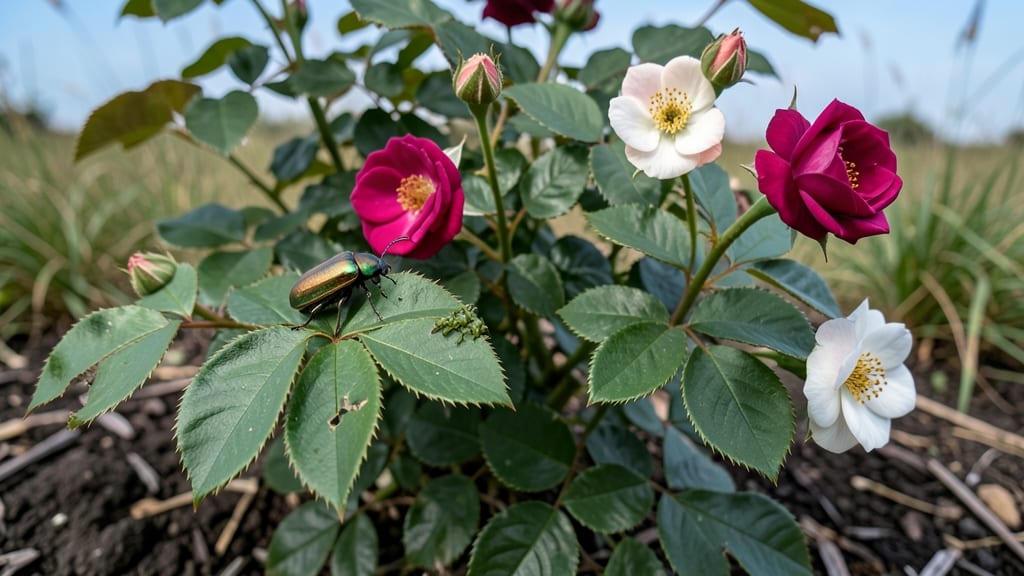
Your roses are sending up distress signals—skeletons of leaves, chewed edges, or sticky residue—and you're staring at the damage wondering, "What is eating my rose leaves?" 🌿 The culprits are sneaky, but I’ve tracked down the top 10 pests wreaking this havoc, from aphids to Japanese beetles, and the fast fixes that work in hours, not weeks.
Most damage happens when roses are stressed—overwatered, underfed, or crowded. Aphids cluster on new growth, leaving curled leaves and honeydew; Japanese beetles skeletonize foliage in minutes; slugs leave shiny trails and ragged holes.
The good news? You can spot these pests by their damage patterns and act before they strip your bushes bare.
Here’s the game-changer: manual removal (like squishing beetles or hand-picking caterpillars) combined with targeted sprays (neem oil, soapy water, or kaolin clay) stops the onslaught within 24-48 hours. I’ve used these methods to rescue roses that looked doomed—now they’re thriving again.
Long-term, focus on healthy roses: prune for airflow, mulch to deter slugs, and introduce predator insects like ladybugs. The key is acting fast—before the pests move on to your next favorite plant. Let’s get your roses back to their full, lush glory.
Root Causes Behind Leaf Loss
Watching your prized rose bushes lose leaves to hungry pests can feel like a slow-motion nightmare—especially when you’re left wondering why it’s happening in the first place. The truth?
Rose leaf damage isn’t just random; it’s often a direct result of environmental triggers, plant stress, or the relentless feeding habits of specific pests.
Below, we break down the science-backed reasons your roses are becoming a buffet for critters, so you can address the root cause (pun intended) and protect your garden.
Roses thrive when they’re healthy, well-spaced, and receiving the right care. But when they’re crowded, underwatered, or nutrient-deficient, their defenses weaken—making them prime targets for pests. Here’s why:
- Poor air circulation: Dense foliage traps moisture, creating a humid microclimate that attracts Japanese beetles and rose slugs (sawfly larvae). These pests love damp, shaded conditions where they can feed undisturbed.
- Weakened immunity: Roses deprived of nitrogen (a key nutrient for leaf growth) produce thinner, more tender leaves—an all-you-can-eat buffet for chewing insects like rose chafers or leafcutter bees.
- Root stress: Compacted soil or overwatering suffocates roots, starving the plant. Stressed roses release volatile organic compounds (VOCs) that unintentionally signal pests like aphids to “come and get it.”
💡 Pro Tip: Prune roses annually to improve airflow, and conduct a soil test to check pH/nutrient levels. Aim for 6.0–6.5 pH and add compost to boost resilience.
Not all pests are born equal—and some reproduce at alarming rates when conditions are perfect. Here’s how infestations spiral out of control:
| Pest | Why They Multiply Fast | Trigger Factors |
|---|---|---|
| Japanese Beetles | Adults lay eggs in soil; larvae (grubs) thrive in warm, moist turf. | Hot summers, lawns near rose beds, lack of natural predators (birds, toads). |
| Aphids | Reproduce asexually—a single aphid can birth 80+ nymphs in weeks! | New growth (soft, sugary sap), mild winters, nearby weeds (dandelions, clover). |
| Rose Slugs (Sawfly Larvae) | Larvae hatch synchronously in spring, devouring leaves in mass waves. | Cool, wet springs, unpruned roses with dense canes. |
✨ Key Insight: Many pests are opportunistic. If your roses are already struggling (e.g., from drought or disease), pests will detect the weakness via chemical cues and move in en masse.
Pests don’t attack randomly—they follow a seasonal script tied to rose growth cycles. Here’s when damage peaks and why:
- Spring: Rose slugs and leafcutter bees emerge as new leaves unfurl (their favorite snack: tender, protein-rich tissue).
- Summer: Japanese beetles and aphids flock to roses when temperatures hit 75–85°F—their metabolic rate (and appetite) spikes.
- Fall: Spider mites and thrips target stressed roses as daylight shortens, triggering osmotic stress (plants lose water faster, becoming crispy and vulnerable).
📊 Data Point: Studies show Japanese beetle populations can increase by 400% in a single season if no predators (like parasitic wasps) are present.
Ever notice how pests seem to appear out of nowhere? That’s because they’re often hiding in plain sight—literally. Rose beds with:
- Leaf litter or mulch piles: Provides shelter for earwigs, slugs, and overwintering beetle larvae.
- Dead wood or canes: Hollow stems trap rose borers (larvae chew into living tissue) and scale insects.
- Weeds at the base: Many pests (e.g., rose chafer beetles) use weeds like henbit or creeping charlie as a nursery before migrating to roses.
🔥 Quick Fix: Clear debris 3 feet around rose bushes in early spring. Use a stiff brush to dislodge eggs laid in crevices.
Quick Fixes for Chewed Rose Leaves
If your roses are looking like a buffet for hungry pests, don’t panic—there’s a solution for every leaf-munching culprit! Below, we’ve mapped out practical, step-by-step fixes tailored to the most common pests, plus prevention tips to keep your roses lush and pest-free.
Act fast, but stay calm—your roses can bounce back!
These shiny green-and-gold invaders can devour leaves in hours. Here’s how to evict them:
🔥 Step 1: Handpick the Beetles
Early morning or late evening (when they’re sluggish), shake them into a bucket of soapy water. Wear gloves—they can pinch!
🍳 Step 2: Use Milky Spore or Neem Oil
- Milky spore: A natural bacteria that targets beetle grubs in the soil. Sprinkle it around your roses in spring.
- Neem oil: Mix 2 tbsp with 1 quart of water + a drop of dish soap. Spray undersides of leaves where beetles hide. Reapply every 5–7 days.
🌡️ Prevention Tip: Trap Crops
Plant marigolds or cosmos nearby—beetles flock to them first. Check traps daily and drown them.
These fuzzy caterpillar-like pests skeletonize leaves overnight. They’re not actual slugs—they’re sawfly larvae!
👨🍳 Step 1: Drop Them in Soapy Water
Grab a jar of soapy water and shake them off leaves into it. Do this in the morning before they pupate.
🔪 Step 2: Apply Bacillus Thuringiensis (Bt)
This organic bacteria kills larvae within 48 hours. Mix according to package instructions and spray directly on leaves.
✨ Prevention Tip: Prune and Clean
Remove heavily infested leaves and drop them in a sealed bag. Never compost them! Also, prune roses in early spring to reduce hiding spots.
Tiny but mighty, these red or yellow pests weave webs and suck sap, causing stippled leaves. They thrive in dry heat.
💦 Step 1: Blast Off with Water
Use a hose with a jet nozzle to knock them off leaves. Do this every 2–3 days during infestations.
🌿 Step 2: Neem Oil or Insecticidal Soap
Mix 1 tbsp neem oil or insecticidal soap per quart of water and spray both sides of leaves. Repeat every 5–7 days.
🎯 Prevention Tip: Increase Humidity
Spider mites hate moisture. Mist roses daily or install a drip irrigation system to keep foliage damp.
These tiny, jumping pests speckle leaves with white or yellow spots and excrete sticky honeydew (which attracts mold).
🕷️ Step 1: Use Fine Mesh Netting
Cover young rose plants with lightweight netting to block adults from laying eggs.
🍎 Step 2: Apply Horticultural Oil
Spray horticultural oil (like JMS Stylet Oil) in early spring to suffocate eggs and nymphs.
🔥 Prevention Tip: Remove Weeds
Leafhoppers love weeds like clover and dandelions. Keep your garden weed-free to reduce their habitat.
These tiny, sap-sucking pests cluster on new growth and leave behind sticky residue. They’re easy to control!
🧼 Step 1: Spray with Soap Solution
Mix 1 tbsp mild dish soap per gallon of water and spray directly on aphids. They’ll drop off within minutes.
🐞 Step 2: Introduce Beneficial Insects
Release ladybugs, lacewings, or parasitic wasps (available at garden centers). They love eating aphids!
💡 Prevention Tip: Encourage Ants’ Enemies
Aphids farm ants. To deter ants, sprinkle diatomaceous earth or plant mint nearby—they hate it.
Stop pests before they start with these year-round habits:
- ✅ Inspect leaves daily—catch infestations early!
- ✅ Prune regularly—remove dead/diseased leaves to reduce hiding spots.
- ✅ Water in the morning—wet leaves dry faster, deterring fungi and pests.
- ✅ Rotate organic sprays—pests build resistance, so switch between neem, Bt, and insecticidal soap.
- ✅ Plant companion flowers—marigolds, garlic, and chives repel many pests.
With these targeted fixes, your roses will be back to their thorny, beautiful selves in no time. 🌹💪 Happy gardening!
Frequently asked questions
Why do some pests only attack new rose leaves?
New growth is packed with sugary sap and tender tissue, making it a prime target for pests like aphids and Japanese beetles. These pests prefer the soft, nutrient-rich leaves over older, tougher foliage. Prune regularly to remove tempting new shoots and reduce their food source.
Can I use the same spray for all rose pests?
No—different pests need different solutions. For example, neem oil works on aphids and spider mites, but Bacillus thuringiensis (Bt) is required for rose slugs. Always match the treatment to the specific pest you're dealing with for best results.
How do I tell if my rose leaves are being eaten by insects or diseased?
Look for key differences: insect damage shows irregular holes or skeletonized leaves, while disease often causes yellowing, spots, or powdery coatings. Check the undersides of leaves for pests or sticky residue (honeydew). Disease rarely leaves physical signs of chewing.
Will my roses recover if I remove all the damaged leaves?
Yes, but only if the root system is healthy! Remove up to 30% of leaves to help the plant focus energy on new growth. Avoid removing more than that, as it can stress the plant further. Always prune in the morning when pests are least active.
How often should I check my roses for pests?
Inspect your roses every 3-5 days during growing season (spring-fall). Early detection is key—catching pests before they spread means less damage and fewer treatments. Focus on new growth and leaf undersides where pests hide.