
Blooming
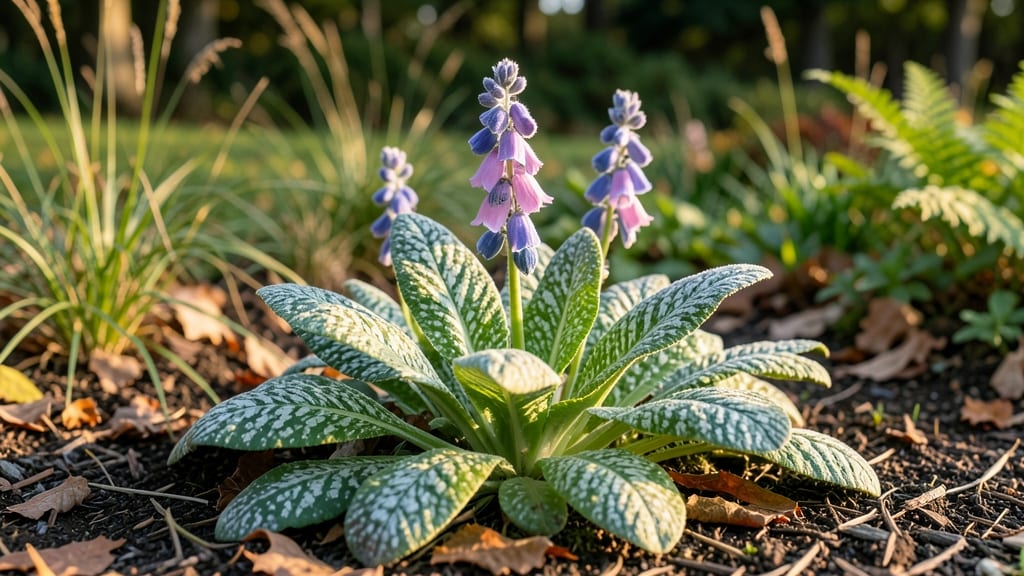
The lungwort bloom time is a garden highlight—those striking purple spikes emerge like clockwork every year in early spring when most perennials are still sleeping. 💜 I’ve watched mine push through snowmelt in late March, their fuzzy leaves already turning silver-spotted, while neighbors’ gardens stay bare.
This frost-hardy plant thrives where others falter, turning shady corners into vibrant focal points.
The timing depends on your zone, but generally March to May works for most temperate climates. Southern gardens might see blooms as early as February, while colder regions wait until April.
Light levels matter too—partial shade extends bloom time, while full sun can make flowers fade faster. Well-drained soil with organic matter keeps roots happy, and consistent moisture prevents floppy stems.
You’ll get 4-6 weeks of color if you deadhead spent blooms and feed lightly in early spring. Pair lungwort with hellebores, ferns, or hostas for a woodland understory that stays interesting all season.
The silver-spotted foliage keeps the show going long after the flowers fade, making it a low-maintenance star for shade gardens.
Pro tip: Mulch heavily in fall to protect roots through winter—this is the secret to reliable yearly blooms. Even in tough climates, lungwort delivers color when you need it most, proving that patience in planting pays off in purple perfection. Ready to make it your garden’s early spring hero?
📚 In This Guide
- What you need
- Instructions
- Tips and common mistakes
- Wrapping up and next steps
What you need
- ● Lungwort plants (Pulmonaria spp.) – Choose Pulmonaria officinalis or Pulmonaria saccharata for classic purple blooms. Quantity: 3–5 plants for a small garden cluster.
- ● Well-draining potting mix – Type: 60% peat or coconut coir, 30% perlite, 10% compost. Quantity: 2–3 gallons per plant.
- ● Garden soil amendment – Option 1: 1 part compost + 1 part leaf mold (for moisture retention). Option 2: Slow-release organic fertilizer (5-10-5 ratio).
- ○ Mulch (optional but recommended) – Type: 2–3 inches of shredded bark, straw, or wood chips to protect roots in winter.
- ● Trowel or hand shovel (for planting)
- ● Garden gloves (for handling soil and plants)
- ● Watering can or hose with a gentle spray nozzle (for hydration)
- ● Pruners (for trimming spent blooms)
- ○ Garden twine or stakes (optional, for support in windy areas)
- ● Location: Partial to full shade (dappled sunlight works best). Avoid harsh afternoon sun.
- ● Climate: Hardy in USDA Zones 3–8 (frost-resistant!).
- ● Soil pH: Slightly acidic to neutral (6.0–7.0). Test with a soil kit if unsure.
- ● Watering schedule: Keep soil consistently moist (not soggy) during the first growing season.
How to time lungwort blooms for season-long color
Here’s how I predict and extend those signature purple flower spikes—so you’ll enjoy them from early spring through summer.
🌱 Step 1: Identify Your Lungwort Variety’s Natural Bloom Window
Lungwort (Pulmonaria) blooms vary by species, but most produce purple-blue flowers in late winter to early spring (February–April), followed by silvery foliage that fades to green. The key is knowing your type: P. officinalis blooms earliest, while P. saccharata often flowers later. I always check the foliage first—if the leaves are still silver, expect flowers soon.
Watch for buds forming along the stems in late winter. These will swell and turn purple before opening. In my zone 5 garden, buds appear around mid-March, with flowers lasting 3–4 weeks if conditions are right. If your climate is warmer, expect blooms 2–3 weeks earlier—just track the first frost date to anticipate timing.
☀️ Step 2: Optimize Light and Soil for Extended Blooming
Lungwort thrives in partial shade (3–6 hours of morning sun), which is why it blooms reliably year after year. Too much direct sun scorches leaves, while too little shade delays flowering. I plant mine under dappled oak trees—the filtered light keeps foliage lush while encouraging steady blooms.
The secret to prolonged flowering is moist, well-draining soil with organic matter. Amend heavy clay with compost (I use 2–3 inches mixed into the top 6 inches of soil) to prevent waterlogging, which causes buds to drop. After blooms fade, the silvery foliage becomes the star—so don’t prune until late summer, when leaves turn fully green.
💧 Step 3: Water Strategically to Prolong Flowering
Consistent moisture is critical during bloom time. Water deeply once a week (or more in dry spells) to encourage strong root growth, which supports more flower spikes. The rule: Soil should feel damp 2 inches down—if it’s bone-dry, you’re watering too little. Overwatering, though, causes bud rot, so always check drainage.
I mulch with 2–3 inches of shredded leaves in early spring to retain moisture and insulate roots. This extends the bloom period by 1–2 weeks by keeping soil temperatures stable. If you notice wilting leaves or drooping stems, it’s a sign of underwatering—adjust immediately to save the flowers.
✂️ Step 4: Deadhead and Feed for Next Year’s Blooms
After flowers fade, snip spent spikes at the base with clean pruners to redirect energy to foliage and next year’s buds. I deadhead in late May, just as new leaves emerge. This prevents seed formation, which can weaken the plant. Leave the silvery foliage intact—it’s a striking feature and protects new growth.
Feed with a balanced 10-10-10 fertilizer in early spring (just as buds form) to boost flowering. I apply ½ teaspoon per plant and water it in. Avoid high-nitrogen fertilizers—they promote leafy growth at the expense of blooms. In fall, add a layer of compost to replenish nutrients for next year’s purple spikes.
⏰ Step 5: Plan for Year-Round Interest Beyond Blooms
Lungwort’s real magic is its two-season show: flowers in spring, then silvery foliage that turns green. To maximize this, plant in groups of 3–5 for a bold display. Pair with hostas (for shade) or ferns (for texture) to create a layered effect. In my garden, lungwort anchors woodland borders and thrives with minimal care.
If you want even more blooms, divide clumps every 3–4 years in early spring. Dig up the plant, separate the roots, and replant sections 6–12 inches apart. This rejuvenates growth and ensures vibrant purple spikes for decades. The older the plant, the more reliable the blooms—so patience pays off.
Tips & tricks for perfect lungwort bloom timing
These practical insights will help you maximize those vibrant purple blooms year after year—no gardening degree required.
Variety Matters: The timing differences between P. officinalis and P. saccharata are critical. I’ve found that P. officinalis often blooms 2-3 weeks earlier than P. saccharata, so if you mix varieties, expect a staggered display. Watch for the silver foliage turning green—this is your first clue buds are forming. In my experience, this happens about 4-6 weeks before actual blooms appear, giving you plenty of warning to prepare for the show.
Lighting Strategy: That 3-6 hours of morning sun mentioned in Step 2 is non-negotiable for consistent blooming. I’ve planted lungwort under various trees and found that oak trees with dappled shade provide the perfect balance. If you’re in a particularly sunny climate, consider using shade cloth (30-50%) during peak afternoon hours to prevent leaf scorch. The goal is to keep foliage healthy enough to support those vibrant purple spikes.
Watering Precision: The "damp 2 inches down" rule in Step 3 is your best friend for preventing bud drop. I’ve learned this the hard way—overwatering causes bud rot, while underwatering leads to weak stems that can’t support the flower spikes. For containers, I check soil moisture daily during bloom time, while in-ground plants typically need that weekly deep watering. A moisture meter is worth the investment if you’re serious about maximizing blooms.
Fertilizer Timing: That ½ teaspoon of 10-10-10 fertilizer per plant in early spring is just the beginning. I’ve found that applying another ¼ teaspoon when buds first appear (about 4-6 weeks after the initial feeding) gives an extra boost without overstimulating leaf growth. Always water it in thoroughly to prevent root burn. And remember—compost in fall is your secret weapon for building soil fertility over time.
Pro Tips for Lungwort Bloom Time
- These practical insights will help you maximize those vibrant purple blooms year after year—no gardening degree required.
- Variety Matters: The timing differences between P. officinalis and P. saccharata are critical.
- Lighting Strategy: That 3-6 hours of morning sun mentioned in Step 2 is non-negotiable for consistent blooming.
Frequently asked questions
Got questions about when and how to enjoy lungwort’s stunning purple blooms? Here are answers to the most common queries—because every gardener deserves a little clarity!
When does lungwort typically bloom?
Lungwort usually blooms in early to mid-spring (March–April in most U.S. zones), though timing varies by climate. Its pinkish-purple flower spikes appear before or alongside its distinctive silver-spotted foliage. In colder regions, expect blooms slightly later—patience pays off!
Will lungwort bloom if planted in late fall?
Yes! Lungwort is frost-hardy and can handle late fall planting. However, blooms may be delayed until the following spring. For faster results, plant in early fall (6–8 weeks before frost) to give roots time to establish before winter.
Why isn’t my lungwort blooming?
Common culprits include too much shade (it needs partial sun), overcrowding, or rich soil (which encourages foliage over flowers). Try trimming back dead leaves in early spring and relocating to a sunnier spot if needed.
Are there alternatives to lungwort for early spring color?
Try heuchera (coral bells), bleeding heart (Dicentra), or pulmonaria (lungwort’s cousin). All thrive in shade and offer vibrant blooms. Bonus: Pulmonaria also has striking spotted leaves!
How long do lungwort flowers last?
Individual blooms last 2–3 weeks, but the plant’s foliage remains attractive year-round. For prolonged color, deadhead spent spikes (though this may reduce seed production). The silver-spotted leaves steal the show long after blooms fade!
Wrapping up and next steps
Discovering the lungwort bloom time reveals a hardy, frost-resistant perennial that rewards patience with stunning purple spikes year after year. Whether you're a seasoned gardener or a beginner, this resilient plant is a fantastic addition to your landscape—just give it the right conditions and a little care! 🌿
Ready to bring more color to your garden? Start planning your lungwort planting now—mark your calendar for early spring or fall, gather your supplies, and watch this beauty thrive in your outdoor space!