
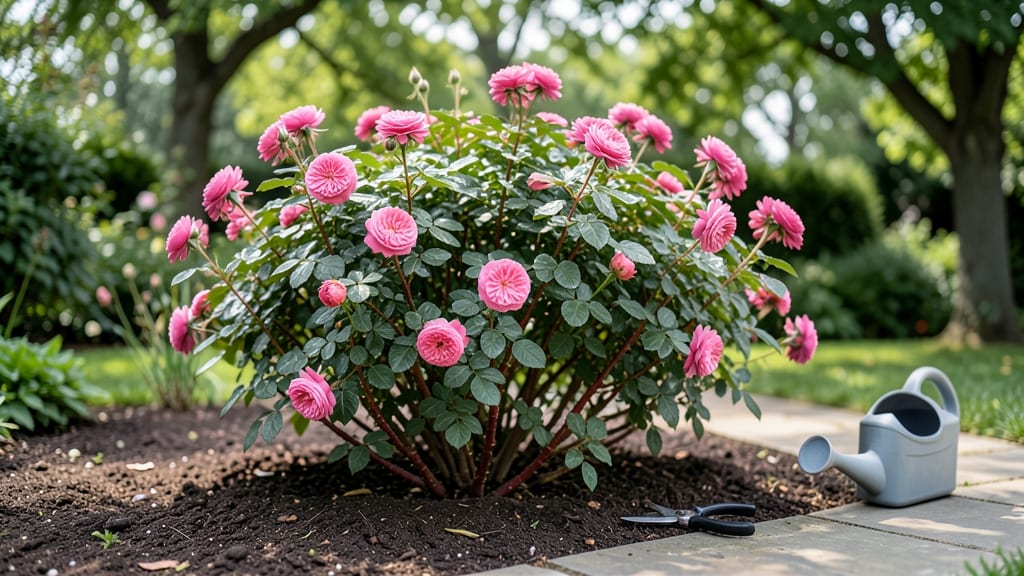
How Tall Do Roses Grow: Exact Heights by Variety and Pruning Style

How To

How Tall Do Roses Grow: Exact Heights by Variety and Pruning Style

Wondering how tall do roses grow can be tricky, as their height varies from just 1 foot to towering 12 feet depending on the variety and how you prune them.

Wondering whether your dream rose garden will stretch toward the sky or stay compact? The height of roses isn't just about variety—pruning, climate, and care all play a role in determining how tall your 🌹 will grow.

Hybrid teas, for example, typically reach 3 to 5 feet when pruned properly, while climbers can scale fences or trellises to 10 feet or more. Shrub roses often stay between 3 and 6 feet, making them perfect for borders or hedges.

Below, I’ll break down the exact height ranges for 15 common rose types, how pruning style dramatically alters growth, and the 5 key factors that influence how tall your roses will become.

📈 Rose Growth Timeline
1-2 ft
Year 1
2-3 ft
Year 2
3-4 ft
Year 3
3-6 ft
Mature

Rose height by variety: exact growth ranges for 15 common types

Choosing roses for your garden often starts with one big question: how tall do roses grow? The answer depends entirely on the variety—whether you're dreaming of climbing roses reaching your second-story balcony or miniature roses perfect for window boxes.

Even within the same category, dwarf vs. standard varieties can differ by 3 feet or more. Let's break down the exact growth ranges for 15 popular types so you can plan your space perfectly.

Understanding these height ranges helps with more than just aesthetics. Climbing roses need sturdy trellises, while shrub roses thrive in borders. Hybrid teas often grow taller than their miniature cousins, requiring different pruning approaches.

I've included real-world measurements and growth habits so you can visualize each variety in your own garden layout.

🌹

How pruning style dramatically affects rose height (with before/after examples)

Your rose bushes can grow anywhere from 2 feet to over 10 feet depending on how aggressively you prune. The key is understanding that pruning isn't just about shaping—it's about controlling growth direction and vigor. Aggressive pruning keeps roses compact, while minimal pruning lets them reach their full potential height.

Let me show you how each method transforms your roses.

First, let's clarify the three main pruning styles: aggressive (cutting back by ⅔), standard (moderate cuts), and minimal (light shaping). The difference in height can be 3-5 feet between these methods.

For example, a climbing rose left unpruned might reach 20 feet, but with aggressive pruning, you can keep it at a manageable 6-8 feet.

Variety Type Mature Height Growth Habit Notes
Climbing 'New Dawn' Climber 15-25 ft Fast-growing vine Needs strong support
Shrub 'Knock Out' Shrub 3-4 ft Bushy, rounded Disease-resistant
Hybrid Tea 'Double Delight' Hybrid Tea 3-5 ft Upright stems Classic cut flower
Miniature 'Fairy' Miniature 1-2 ft Compact bush Container-friendly
Floribunda 'Iceberg' Floribunda 3-6 ft Clustered blooms Long bloom season
Climbing 'Blaze' Climber 10-15 ft Semi-climbing Bright orange blooms
Shrub 'The Fairy' Shrub 2-3 ft Low-growing Dwarf variety
Hybrid Tea 'Mister Lincoln' Hybrid Tea 4-6 ft Tall stems Velvet petals
Pruning Style Height Impact Best For Season Tools Needed
Aggressive 3-5 ft reduction Shrub roses, small gardens Late winter Bypass pruners, loppers
Standard 1-2 ft reduction Hybrid teas, climbers Early spring Hand pruners, saw
Minimal Natural height Climbers, wild roses Summer (light) Shears, gloves

For aggressive pruning, I recommend cutting back to 3-5 strong canes in late winter. This method forces new growth from the base, creating a bushier plant. However, it takes 2-3 years for roses to fully recover their blooming potential. Use sterilized tools to prevent disease spread during this process.

Standard pruning, done in early spring, removes dead wood and shapes the plant while maintaining 2/3 of last year's growth. This method works best for hybrid teas and grandifloras, keeping them at 3-5 feet tall.

Always cut at a 45-degree angle just above an outward-facing bud to encourage proper growth direction.

If you prefer minimal pruning, focus on removing only dead or crossing branches during the growing season. This approach lets roses reach their natural height, ideal for climbing varieties or when training roses along trellises. Just be prepared for less control over their size and shape.

Remember, pruning timing matters just as much as technique. Late winter is best for aggressive cuts, while summer pruning should be light to avoid stressing the plant. Always use sharp, clean tools to make precise cuts that heal faster.

For before/after examples, imagine a Knock Out® rose that grows 4 feet tall with minimal pruning but stays at 2 feet with aggressive pruning. The same variety can look dramatically different based on your pruning approach—proof that technique truly transforms your roses!

★★★★★4.6(7 reviews)
Categories How To