
Blooming
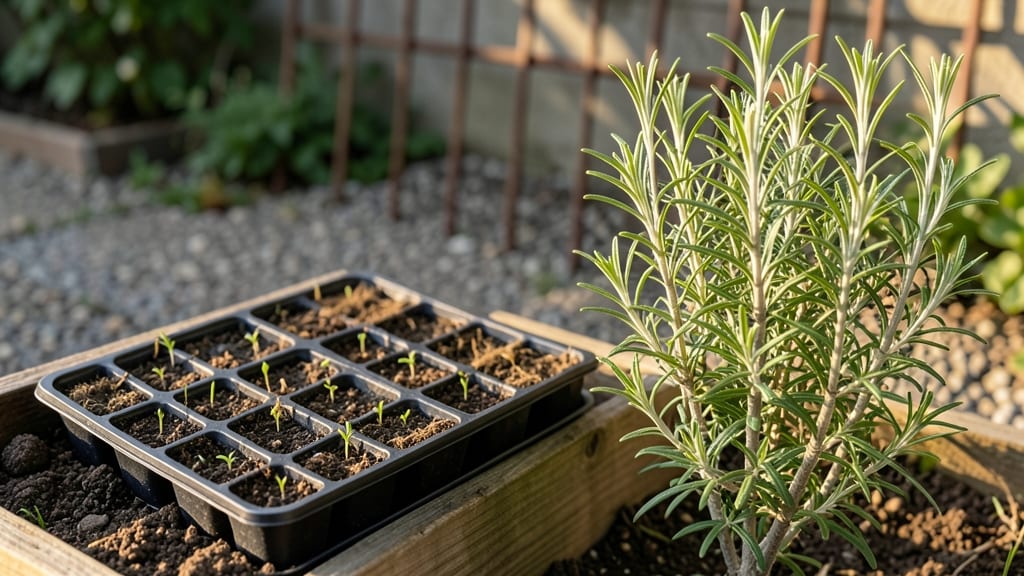
Rosemary seeds take 14 to 30 days to sprout, with some varieties needing up to 60 days because of their tough outer shells and slow germination process. Using warm water soaking or a heat mat can cut this time by nearly half.
Rosemary’s slow start isn’t just patience—it’s biology. The seeds’ thick, waxy coating blocks moisture, forcing them to wait for perfect conditions before breaking through. 🌱 I’ve found that maintaining steady soil temperatures between 65–75°F and keeping humidity high (like under a plastic dome) can make all the difference.
Unlike basil or cilantro, which pop up in days, rosemary seeds need consistency, which is why many gardeners opt for cuttings instead of seeds entirely.
For those eager to see green faster, try scarification—lightly sanding the seed’s surface to weaken its protective layer. Another trick? Plant seeds just ¼-inch deep in well-draining soil and water gently to avoid displacing them.
Even with these shortcuts, expect at least 2 weeks before you spot those first tiny leaves.
💡 In This Article
- Rosemary Germination Science: Why Sprouting Takes So Long
- Pro Tips to Speed Up Rosemary Seed Germination
Rosemary germination science: why sprouting takes so long
Rosemary seeds have a thick, waxy outer shell called the testa, which acts like nature's built-in time-release capsule. This protective layer blocks both water and oxygen, forcing seeds to wait for ideal conditions before breaking dormancy.
Unlike fast-sprouting herbs like basil (which germinates in 5-7 days), rosemary's testa can take 2-4 weeks just to soften enough for the embryonic root to emerge. The process is similar to how poppy seeds need scarification to break their dormancy, but rosemary's shell is particularly resilient.
The optimal temperature range for rosemary germination is 60–75°F, where enzymes inside the seed activate most efficiently. Below 55°F, metabolic processes slow dramatically, extending germination to 60+ days. Above 80°F, seeds may rot before sprouting due to fungal growth.
This narrow window explains why indoor growers often struggle—most household thermostats hover around 68°F, but consistent warmth is key. 🌡️ The seed's moisture retention is also critical; rosemary seeds absorb water at only 10% of their weight before germination begins, compared to 30%+ for faster-sprouting seeds like cilantro.
Here's what happens under the soil: Once moisture penetrates the testa, the seed swells and releases gibberellins—plant hormones that trigger the root (radicle) to break through. This initial root growth is the most vulnerable stage, which is why overwatering can drown seedlings before they surface.
The first true leaves appear only after the root establishes a network, typically 7-14 days after germination begins. This two-phase process (root development + shoot emergence) is why rosemary's timeline stretches longer than herbs with simultaneous root-and-shoot growth.
Comparing rosemary to its herbaceous cousins reveals fascinating contrasts. Basil seeds germinate in 3-5 days because their testa is paper-thin, while rosemary's is 3x thicker relative to seed size. Even rosemary's close relative, lavender, sprouts in 21-28 days—half the time—due to a slightly less impermeable seed coat.
The evolutionary trade-off? Rosemary's slow start ensures its seedlings have deep roots before facing drought, a survival advantage in its Mediterranean native habitat where water is scarce.
Light plays an unexpected role too. Rosemary seeds require 12+ hours of daylight per day to germinate efficiently, as photosynthesis in the embryonic leaves provides early energy. Without sufficient light, seedlings may emerge but grow leggy and weak.
This photoperiod requirement is why indoor growers often see slower results—most homes provide only 8-10 hours of artificial light unless supplemented. 💡 The combination of these factors (thick testa, temperature sensitivity, moisture needs, and light requirements) creates rosemary's famously patient germination schedule.
What most gardeners don't realize is that rosemary seeds actually prefer partial shade during germination. Direct sunlight can overheat the soil surface, creating a temperature gradient that's too extreme for the delicate radicle. The ideal scenario?
A 50% shade cloth or placing the seed tray in a spot with morning sun and afternoon shade. This nuance explains why outdoor plantings in hot climates often struggle—seeds may absorb too much heat before sprouting, leading to higher failure rates.