
Blooming
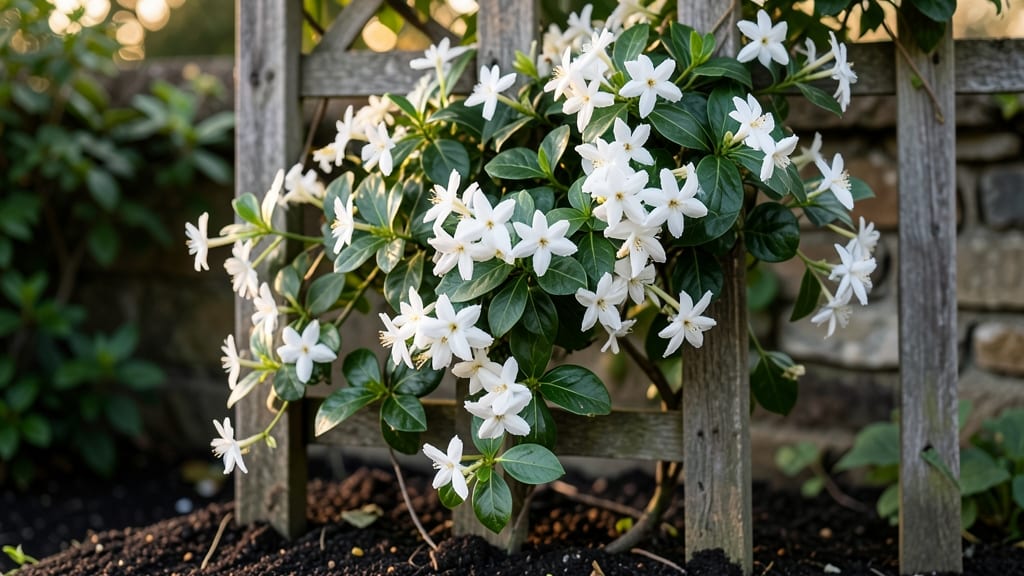
Star jasmine blooms all summer long under perfect growing conditions, with its signature fragrant white flowers appearing from early June until the first frost. However, extreme heat or drought can cause temporary pauses in blooming, and consistent care helps maintain its flowering display.
This climbing vine thrives when temperatures stay between 60°F and 85°F, making summer its natural blooming peak. 🌸 The scent intensifies in the evening, which is why it's often called "evening jasmine"—perfect for gardeners who want fragrant summer nights.
What's interesting is how it responds to stress: when summer heat spikes above 90°F or water becomes scarce, the plant may drop flowers temporarily to conserve energy, but it usually rebounds with proper care.
To keep those white blossoms coming, I focus on three key factors: watering consistency (about 1 inch per week), light pruning after each bloom cycle, and ensuring it gets morning sun with afternoon shade.
The more you maintain these conditions, the longer your star jasmine will keep you in fragrant flowers—sometimes even into early fall if you're in a mild climate.
💡 In This Article
- Star Jasmine Flowering Cycle: Heat and Light Triggers
- Maximizing Star Jasmine Blooms Year-Round: Pruning and Care Tips
Star jasmine flowering cycle: heat and light triggers
Star jasmine's blooming patterns are tightly linked to its natural photoperiodism—the plant's internal response to daylight length and temperature. The flowers typically initiate in late spring when days reach 14-16 hours of sunlight, which triggers the plant's hormonal signals to produce blooms.
The key hormone here is florigen, which moves from leaves to flower buds when daylight exceeds 12 hours—this explains why blooming peaks in summer when days are longest. 🌞 What's fascinating is how heat acts as both a catalyst and potential stressor: temperatures between 70°F and 80°F create ideal conditions for flower development, but anything above 90°F can cause the plant to temporarily halt blooming as a survival mechanism.
The plant's native habitat in Southeast Asia's subtropical climates gives us clues about its preferences. In the wild, star jasmine experiences 60-80% humidity levels and receives gentle afternoon rains that keep roots moist without waterlogging.
When humidity drops below 50%—common in dry summer heatwaves—the plant conserves water by shedding buds and flowers. This explains why you might see fewer blooms during drought conditions, even when temperatures seem ideal.
The flowers themselves are also sensitive to temperature fluctuations: they open fully only when daytime highs are between 75°F and 85°F, which is why evening fragrance peaks when air cools slightly after sunset.
Here's what's actually happening botanically: each flower bud contains a delicate balance of auxin and cytokinin hormones that regulate growth. When stressed by heat or drought, the plant redirects these hormones toward root development to seek water, temporarily pausing flower production.
This survival strategy is why you'll often see star jasmine rebound with a second flush of blooms after a rainstorm or when temperatures moderate. The plant's ability to "reset" makes it remarkably resilient—with proper care, it can compensate for summer slumps and extend its blooming season well into fall. 🌿
Light quality matters just as much as quantity. Star jasmine thrives with direct morning sunlight (6-8 hours) but needs afternoon shade to prevent leaf scorch, which can indirectly reduce flowering.
The plant's leaves contain chlorophyll that converts sunlight into energy for blooms, but too much intense afternoon sun (especially above 85°F) causes the leaves to close slightly—a protective mechanism that reduces photosynthesis efficiency.
This is why vines grown in full sun without afternoon protection often show fewer flowers despite seemingly perfect conditions.
Consider these environmental factors when planning your star jasmine's location:
- Optimal temperature range: 60°F-85°F for consistent blooming
- Critical humidity threshold: Maintain above 50% to prevent bud drop
- Light exposure: Morning sun + afternoon shade creates ideal conditions
- Heatwave response: Buds may abort when temps exceed 90°F for >3 days
The plant's flowering cycle also follows a fascinating circadian rhythm: buds typically open in the late afternoon and release their full fragrance as temperatures drop below 80°F in the evening.
This nocturnal scent release is an evolutionary adaptation to attract night-flying pollinators like moths, which explains why star jasmine's aroma intensifies after sunset. Understanding this rhythm helps explain why some gardeners report stronger fragrance in cooler summer evenings compared to hot midday periods. 🌙