
Flowers
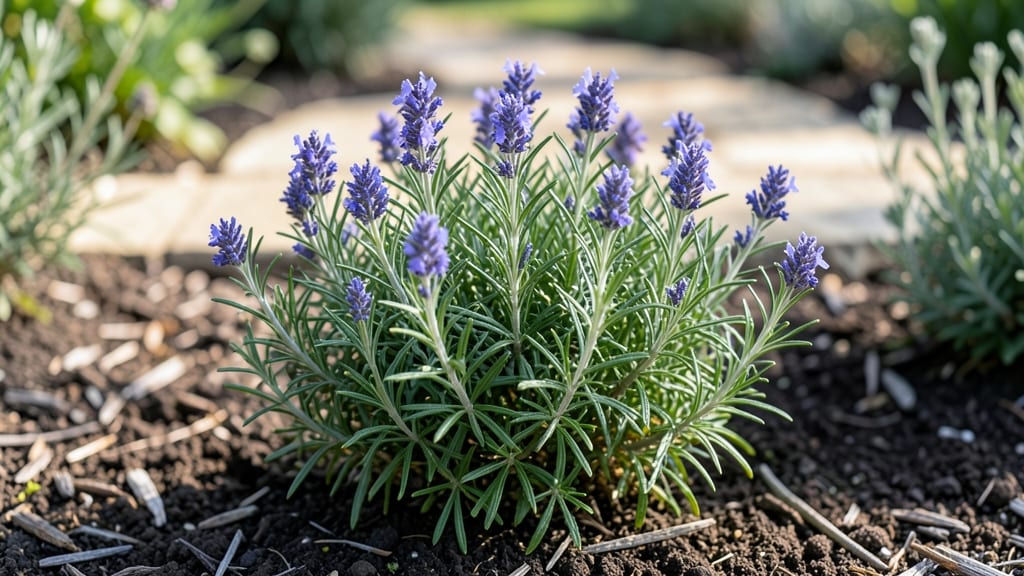
Yes, rosemary plants do have purple flowers, though they’re not the focus of cultivation. These small, fragrant blooms appear in spring or early summer on mature bushes, adding ornamental value while attracting pollinators like bees. Pruning after flowering encourages bushier growth and more foliage for culinary use.
Rosemary's purple flowers aren't just a pretty surprise—they're a sign of a healthy, mature plant. 🌸 These delicate blooms typically emerge when the plant is at least 2-3 years old, triggered by longer daylight hours and warmer temperatures.
While they're not edible like the leaves, they're a magnet for bees and other pollinators, making your garden more vibrant. The flowers also contain trace amounts of rosemary's signature compounds, though their flavor is too subtle for culinary use.
What's fascinating is how these flowers influence the plant's growth cycle. After blooming, the plant redirects energy toward producing more aromatic leaves, which is why gardeners often prune right after flowering. This practice not only keeps your rosemary looking neat but also boosts its culinary potential.
Just remember—if your rosemary isn't flowering, it might be getting too much nitrogen or not enough sunlight, both of which prioritize leaf growth over blooms.
💡 In This Article
- Why Rosemary Produces Purple Flowers Naturally
- Encouraging Purple Flowers on Your Rosemary Plant
Why rosemary produces purple flowers naturally
The purple flowers on rosemary aren't just ornamental—they're a critical part of the plant's reproductive cycle.
These blooms appear when the plant reaches a certain maturity, typically between 2-3 years old, as a response to hormonal signals like florigen, a flowering hormone produced in leaves under specific light conditions.
The longer daylight hours of spring and summer trigger this process, with temperatures ideally between 65-75°F for optimal bloom production.
The flowers themselves are tiny—about 0.5-1 inch long—and grow in clusters along the woody stems. Their deep purple hue comes from anthocyanin pigments, the same compounds that give blueberries and eggplants their color.
These pigments act as natural sunscreens, protecting the plant's reproductive structures while also attracting pollinators like bees and butterflies. The scent of the flowers is subtle but distinct, with hints of the same camphor-like aroma found in the leaves, though much more delicate.
What's fascinating is how these flowers influence the plant's growth pattern. After blooming, rosemary shifts its energy from reproduction to vegetative growth, producing more aromatic leaves.
This is why gardeners often prune rosemary right after flowering—it encourages the plant to focus on leaf production, resulting in a bushier, more productive culinary herb.
The flowers also contain trace amounts of rosmarinic acid, a compound found in the leaves, though in such small quantities that they're not useful for cooking.
Not all rosemary varieties produce flowers equally. Ornamental cultivars like 'Rosemary Prostratus' often have more abundant blooms, while culinary varieties like 'Tuscan Blue' may produce fewer flowers but with more intense leaf flavor.
Stress factors like drought or overwatering can actually accelerate flowering, as the plant perceives these conditions as signals to reproduce before potential death. However, this can compromise the plant's overall health and leaf quality.
Seasonal timing is everything for rosemary flowers. In temperate climates, blooms typically appear between late spring and early summer, coinciding with peak pollinator activity. In warmer climates, you might see multiple bloom cycles throughout the year.
The flowers themselves last only about 5-7 days before wilting, but their presence is a clear indicator that your rosemary plant is thriving and ready to focus on its next growth phase.
Interestingly, the flowers' subtle fragrance plays a role in their survival strategy. While not as potent as the leaves, the aroma contains compounds that may help attract pollinators while also repelling certain herbivores. This dual function makes rosemary's flowers a perfect example of nature's efficiency in plant reproduction strategies. 🌿