
Blooming
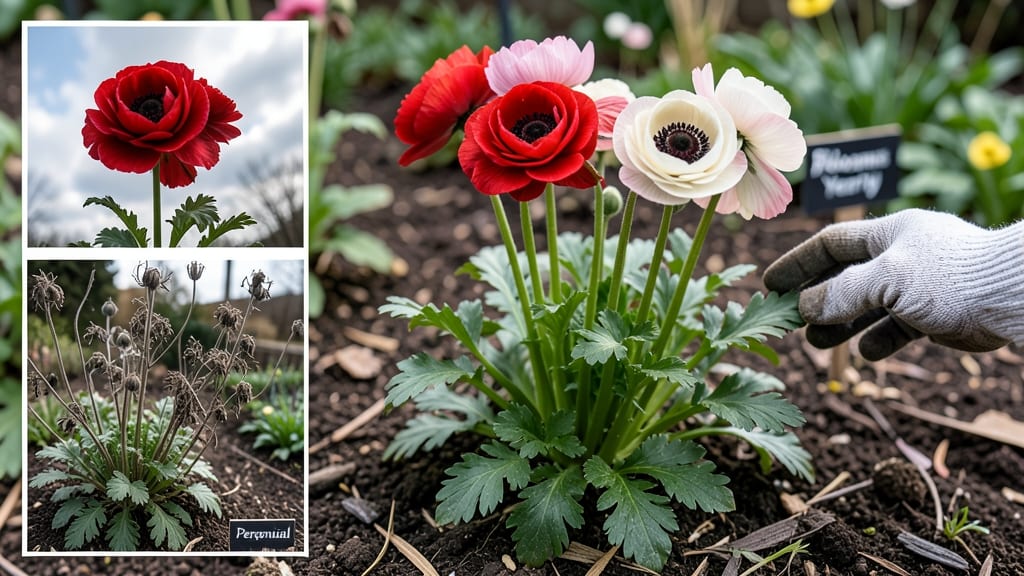
Ranunculus typically don't bloom every year as perennials in most climates, acting more like annuals that die back after their spring flowering, though some varieties may rebloom with proper care and ideal growing conditions.
Most gardeners treat ranunculus as annuals because their tuberous roots enter dormancy after blooming, often dying back in summer heat. 🌸 The key to extending their life is understanding their natural growth cycle—these beauties store energy in their tubers, which can be saved and replanted for next season's flowers.
In milder climates (USDA zones 8-10), some varieties naturally persist longer, but even then, they typically need annual care to thrive.
What sets ranunculus apart is their dramatic spring display, which makes them worth the effort to preserve. I've found that deadheading spent blooms and providing consistent moisture during their active growing season can encourage limited reblooming in the same year.
For true perennial behavior, storing tubers in a cool, dry place over winter and replanting in early spring is the secret.
💡 In This Article
- Why Ranunculus Act Like Annuals in Most Gardens
- How to Extend Ranunculus Blooms and Save Tubers for Next Year
Why ranunculus act like annuals in most gardens
Ranunculus behave like annuals because their growth cycle is tightly linked to tuber dormancy. These flowers store energy in their thick, carrot-like tubers during summer and winter months, but unlike true perennials (such as peonies or daylilies), they don't consistently regrow from the same root system year after year.
Instead, their tubers enter a dormant phase after blooming, often shriveling up in heat or dry conditions—a survival mechanism common in Mediterranean climates where they originate.
The key difference lies in their cold sensitivity. Ranunculus tubers need a period of cool temperatures (40-50°F) to break dormancy, but they can't tolerate freezing. In USDA zones 5-7, where winters dip below 20°F, tubers often fail to survive in the ground.
Even in milder zones (8-10), they'll still die back after flowering unless you intervene with storage. This is why gardeners in colder regions treat them as annuals—replanting fresh tubers each spring mimics their natural lifecycle in the wild.
Compare this to daffodils or tulips, which have hardier bulbs that survive winter's freeze-thaw cycles. Ranunculus tubers lack this resilience; their thin skin and moisture sensitivity make them prone to rot if left in damp soil.
The plant's energy focus shifts entirely to reproduction during spring, leaving little reserve for perennial regrowth. This biological trade-off explains why their blooms are so spectacular but short-lived.
Climate plays a huge role in their lifespan. In USDA zone 10, where winters rarely drop below 30°F, some ranunculus varieties may persist for 2-3 years without human intervention, but even then, they'll still require deadheading and consistent moisture to encourage reblooming.
The plant's native habitat—rocky, well-drained Mediterranean slopes—mirrors what gardeners must replicate to extend their life.
What most gardeners miss is how light exposure affects tuber dormancy. Ranunculus tubers need 6-8 weeks of darkness after flowering to properly rest before regrowth. If you leave them in bright light during summer, they'll stay dormant indefinitely.
This is why storing tubers in cool, dark conditions (like a basement) is critical for next year's blooms—it mimics the natural shade they'd experience underground in their native environment.
Here's the botanical reality: ranunculus are short-lived perennials, not true annuals, but their lifecycle is optimized for one dramatic spring show rather than multi-year reliability. This makes them perfect for gardeners who want seasonal color but don't want to commit to long-term perennial care.
The trade-off? You'll need to put in extra effort to save tubers if you want to see them again next year.