
Blooming
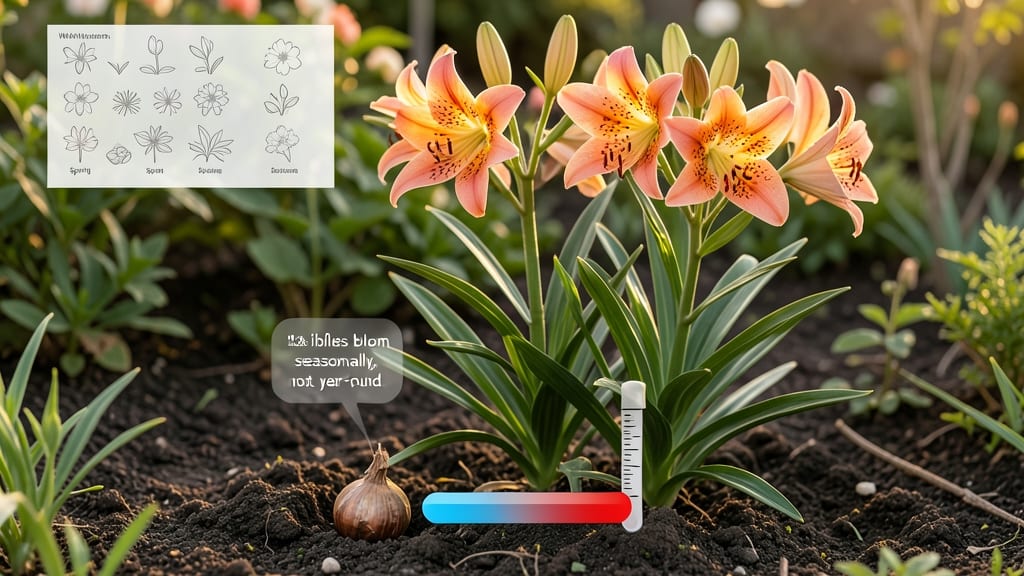
Lilies don't bloom all year—they follow seasonal cycles, typically flowering in late spring to summer with dormant periods in winter, though tropical varieties may bloom longer in warm climates.
Lilies are seasonal plants, meaning their blooming cycles align with natural temperature shifts.
Most varieties—like Asiatic and Oriental lilies—enter dormancy in winter, conserving energy until spring. 🌸 The key difference lies in climate: hardy lilies in cooler zones may only bloom 2-3 months annually, while tropical species in warmer regions can extend their flowering period into fall.
Understanding your specific lily type and local growing conditions helps set realistic expectations for when to expect those stunning blooms.
For gardeners eager to enjoy lilies year-round, strategic care makes a difference. Deadheading spent blooms encourages reblooming, while proper fertilization—especially with phosphorus—supports stronger flower production. Container-grown lilies in controlled environments (like greenhouses) can also break seasonal norms, though they still need rest periods for optimal health.
The trade-off? Extended blooming often requires more maintenance than letting nature take its course.
💡 In This Article
- Lily Blooming Seasons by Variety and Climate
- Extending Lily Blooms: Pruning, Fertilizing, and Year-Round Care
Lily blooming seasons by variety and climate
Lilies follow strict seasonal rhythms tied to temperature and daylight, with most varieties blooming between late spring and early summer. Asiatic lilies, for example, typically flower from May to June, while Oriental lilies peak in June and July.
The difference comes down to their native habitats: Asiatics thrive in cooler climates (USDA zones 3-9), while Orientals prefer warmer zones (6-9). Trumpet lilies, like the regal lily, bloom slightly later—July to August—because they need more heat to trigger their flower buds.
Climate plays a critical role in blooming windows. In temperate zones, lilies enter dormancy when temperatures drop below 50°F in fall, conserving energy until spring. Tropical lilies, however, can bloom year-round in zones 10-12, though they often have shorter rest periods between flushes.
Daylilies (Hemerocallis), while often called "lilies," are botanically different and can rebloom in warm climates, unlike true lilies (Lilium species) which require a full dormancy cycle. 🌿 This is why a lily in Florida might flower in March, while one in Minnesota waits until June.
The science behind this involves photoperiodism—lilies need specific daylight lengths to trigger blooming. Short-day lilies (like some Asiatics) bloom when days shorten, while long-day lilies (like martagon lilies) need extended daylight.
Temperature also cues dormancy: below 40°F for 4-6 weeks signals true lilies to stop flowering and focus on bulb development. This explains why forcing blooms in winter often fails—lilies won't flower without this cold period to reset their biological clocks.
One exception is the Easter lily (Lilium longiflorum), which can bloom in late winter if given controlled conditions (like greenhouse warmth). However, even these need a 6-8 week chilling period at 35-45°F before flowering.
The trade-off is that artificial conditions often produce smaller, less vibrant blooms compared to natural seasonal cycles. For gardeners in cooler climates, this means planning ahead: plant bulbs in fall to ensure they've had enough chilling before spring blooming.
Color also hints at blooming time. Early-season lilies like 'Stargazer' (Asiatic) often have brighter colors (reds, oranges), while later bloomers like 'Casa Blanca' (Oriental) feature softer whites and pinks. This isn't coincidence—earlier bloomers prioritize energy for vibrant pigments, while later varieties conserve resources for structure and fragrance.
Understanding these patterns helps gardeners choose varieties that align with their local climate and desired blooming windows.