Blooming
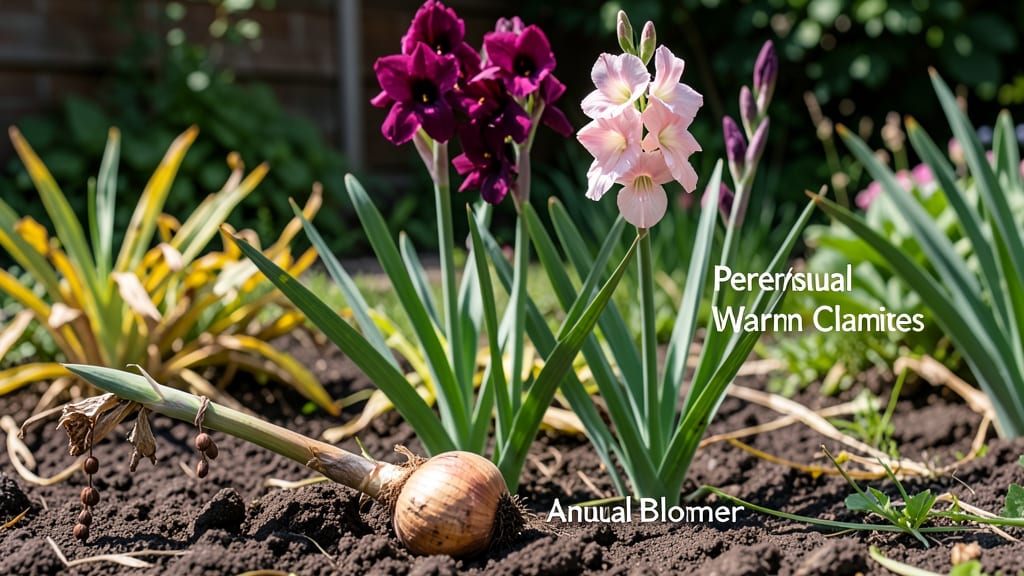
Gladiolus do not bloom every year as perennials—their underground corms naturally produce one strong flowering cycle annually before entering dormancy. Reblooming success depends on your climate zone, corm health, and seasonal care practices.
Gladiolus behave more like seasonal perennials than true annuals, meaning their blooming cycle is tied to corm dormancy rather than continuous growth. 🌱 In colder climates, most varieties need winter dormancy to reset, while milder zones may see sporadic reblooms.
The key is understanding your local frost dates—planting corms too early in warm zones can trigger premature dormancy, while late planting may prevent flowering entirely.
To maximize reblooming potential, focus on corm health and nutrient timing. Divide overcrowded clumps every 3-4 years to refresh growth, and apply a balanced 10-10-10 fertilizer in early spring.
Mulching with 3-4 inches of straw over winter protects corms in colder regions, while consistent moisture (but not soggy soil) keeps them vigorous. Some hybrid varieties, like 'Sarah' or 'Picasso,' are bred for better reblooming tendencies—worth testing if you're patient!
💡 In This Article
- Why Gladiolus Act Like Perennials (But Often Don’t)
- How to Encourage Gladiolus Reblooms Year After Year
Why gladiolus act like perennials (but often don’t)
Gladiolus rely on corms—thickened underground stems—that store energy for growth and flowering. Unlike true perennials like peonies, which regrow from roots year-round, gladiolus corms follow a strict one-season bloom cycle before entering dormancy.
This happens because their growth is triggered by specific temperature cues: corms need 60-90 days of warm soil (60-70°F) to mature enough for flowering, then require a cooling period (below 50°F) to reset their biological clock. 🌱 In colder climates (USDA zones 3-6), this dormancy is essential for survival, but it also means blooms appear only once per year.
What sets gladiolus apart is their photoperiod sensitivity—they detect day length changes that signal seasonal shifts. When days shorten in fall, corms begin storing energy for next year's growth, while extended daylight in spring triggers flowering.
In warmer zones (USDA 7-10), some varieties may attempt reblooming if conditions remain ideal, but this often results in weaker stems and smaller blooms due to nutrient depletion in the corm.
True perennials like hostas or daylilies continuously regenerate from roots, but gladiolus corms are more like "built-in clocks." Their three-year lifespan means each corm typically produces one strong bloom cycle, then gradually shrinks unless divided.
This is why gardeners often see gladiolus treated as annuals—what appears to be yearly planting is actually replacing spent corms rather than true perennial reblooming. 💫
The key difference lies in corm health: healthy, undivided corms may produce 2-3 stems in their first year, but subsequent blooms weaken unless the corm is refreshed through division. In contrast, true perennials like lavender or salvia regrow from established root systems without needing replacement.
This biological quirk explains why gladiolus often disappoint gardeners expecting perennial behavior—they're more like "seasonal perennials" with built-in dormancy requirements.
Climate plays a critical role: in USDA zones 7-10, where winters rarely drop below freezing, some varieties might attempt reblooming if given consistent moisture and nutrients. However, even in mild climates, the first bloom is always the strongest—subsequent attempts draw from depleted corm reserves.
This is why professional growers often harvest and store corms annually rather than leaving them in the ground, ensuring they can control dormancy cycles for consistent production.
Consider this comparison: a peony (true perennial) might produce 50+ blooms over its lifetime with minimal care, while a gladiolus corm typically yields just 1-3 blooms before needing replacement.
The trade-off is gladiolus's dramatic, 6-foot-tall spikes packed with vibrant blooms—worth the annual investment for gardeners who love bold summer displays. 🌸