
Blooming
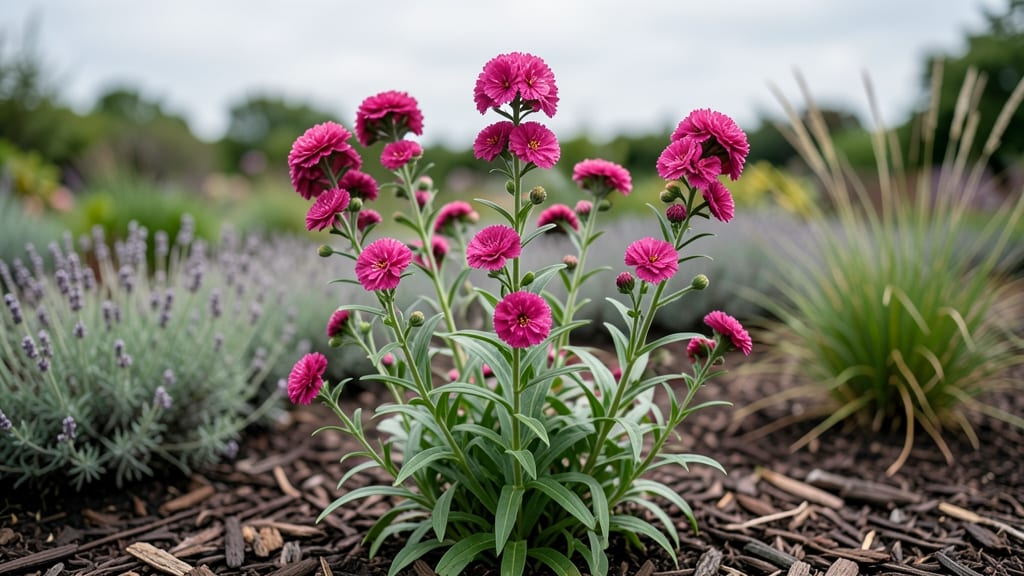
Dianthus blooms all summer only when given cool evenings, steady moisture, and partial shade—but intense heat and dry spells will cut their flowering short. Regular deadheading and mulching can help prolong blooms in warmer climates.
Dianthus thrives in cooler temperatures, and when summer heat kicks in, their blooms often fade faster than expected. 🌸 The key is mimicking their natural habitat—think Mediterranean climates with warm days but cooler nights.
I’ve seen firsthand how even a few degrees of evening chill can make a difference in keeping those vibrant flowers going. Annual varieties tend to handle heat better than perennials, which is why many gardeners opt for them in hotter regions.
What really helps is adjusting your care routine. For instance, watering deeply in the morning instead of evening prevents fungal issues, while a light layer of mulch keeps roots cooler. Pruning back faded blooms redirects the plant’s energy toward new growth, which can extend the season by weeks.
It’s all about working with the plant’s natural rhythms rather than forcing it to bloom against the heat.
💡 In This Article
- Why Dianthus Struggles in Summer Heat
- Extending Dianthus Blooms Through Late Summer
Why dianthus struggles in summer heat
Dianthus plants originate from Mediterranean and alpine regions where daytime temperatures rarely exceed 85°F—their natural tolerance threshold.
When summer heat spikes above 90°F, the plant's metabolic processes slow down, particularly photosynthesis in the leaves. 🌡️ This happens because high temperatures cause stomata (tiny pores) to close, reducing water uptake and nutrient absorption. The result?
Wilting leaves, stunted growth, and fewer blooms as the plant conserves energy instead of producing flowers.
The real issue lies in their shallow root systems, which can't access deep moisture during droughts. Perennial dianthus varieties (like Dianthus barbatus) have even less resilience because their roots mature more slowly.
Annual varieties, however, develop stronger root networks faster, which is why they often bloom longer in heat—up to 4-6 weeks more than perennials. The trade-off? Annuals may not rebloom as prolifically after pruning compared to perennials that establish deeper roots over time.
Heat also disrupts pollination, another critical factor. Bees and butterflies—the primary pollinators—are less active in extreme heat (above 95°F), leaving flowers unpollinated. This means fewer seeds develop, and the plant shifts energy toward survival rather than producing new blooms.
Even if flowers appear, they often drop prematurely due to heat stress. The visual cue? Flowers that open but fail to stay vibrant or develop fully.
Another key factor is soil moisture retention. Sandy soils (common in Mediterranean climates) dry out quickly, while heavier clays hold moisture but suffocate roots.
The ideal soil mix for heat tolerance should retain 30-40% moisture while allowing airflow—think 50% organic matter (compost, peat) mixed with 50% perlite or coarse sand. Without this balance, roots overheat, and the plant signals distress by dropping buds.
What most gardeners miss is how evening temperatures matter just as much as daytime heat. Dianthus thrive when nighttime temps stay between 60-70°F. If evenings stay above 75°F for more than 3-4 days, the plant’s circadian rhythm disrupts, leading to slower growth and fewer blooms.
This is why urban gardens with heat islands (like paved areas) often see shorter flowering seasons—even with perfect daytime care.
Consider this comparison: In Zone 5 climates (cool summers), dianthus may bloom continuously from early June to frost. But in Zone 9 (hot summers), the same variety might only bloom for 6-8 weeks unless given afternoon shade and consistent moisture.
The difference? 10-15°F cooler evenings in Zone 5 preserve the plant’s energy for flowering.