
Blooming
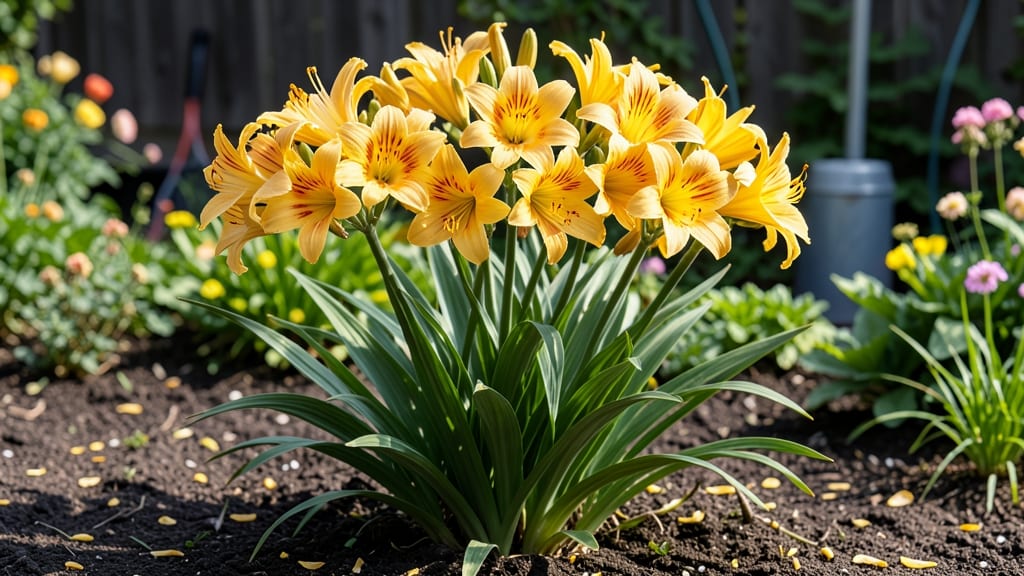
Day lilies bloom all summer long in warm climates, producing vibrant flowers in successive waves triggered by heat and sunlight, then entering dormancy when frost arrives—but they regrow robustly from their rhizomes each spring. This hardy cycle makes them a gardener's dream for nonstop color.
These perennials are heat-lovers, not frost-fans—their blooming rhythm is directly tied to temperature. 🌸 When daytime highs hit 75°F+, they kick into overdrive, producing flowers in batches over weeks rather than all at once. That's why your garden can look like a summer-long fireworks display!
The secret lies in their ability to respond to warmth, not just daylight hours, which sets them apart from many other perennials that bloom just once per season.
What's fascinating is how they handle winter: when frost hits, their above-ground foliage dies back completely, but their underground rhizomes stay alive and dormant. This built-in survival mechanism means you don't need to dig them up—just let nature do its work.
I've seen day lilies come back stronger after winter, often producing even more blooms the following summer because their energy gets focused on root development during dormancy.
💡 In This Article
- Heat-Triggered Blooming Stages in Day Lilies
- Winter Care for Day Lilies: Frost Survival and Spring Revival
Heat-triggered blooming stages in day lilies
Day lilies (Hemerocallis species) are masters of heat-responsive blooming, unlike most perennials that rely solely on daylight hours. Their flowering cycle is primarily triggered by consistent daytime temperatures above 75°F, which activates a hormonal cascade in their rhizomes.
This process begins when warm weather stimulates the plant to produce florigen, a flowering hormone, in its leaves—similar to how photoperiod plants respond to light. The difference? Day lilies don't need short days; they need heat to "turn on" their bloom factories.
What creates those famous successive waves of blooms is their unique acropetal flowering pattern. Each flower stem (scape) produces buds from the bottom up, with older blooms opening first and newer ones following.
A single mature plant can produce 50-100 flowers per season, but they don't all open at once. Instead, you'll see 3-5 new blooms per day during peak summer, creating that continuous display.
The plant's internal clock also responds to temperature fluctuations—cooler nights (below 60°F) can temporarily pause blooming until warmth returns, which is why you might see gaps in flowering during heat waves followed by sudden cool spells.
Color plays a fascinating role too. Studies show that day lilies with darker pigmentation (like deep reds and purples) tend to bloom slightly later in the season than lighter varieties (like yellows and whites), as their pigments absorb more heat.
This thermal regulation helps them time their blooming to avoid late-summer heat stress.
The flowers themselves last just 24 hours (hence "day lily"), but since buds form continuously, the plant appears in constant bloom. 🌿 What's remarkable is how this process is hardwired—even if you cut back blooms, new ones will emerge as long as temperatures stay favorable.
Light intensity matters just as much as temperature. Day lilies thrive in full sun (6+ hours daily), but their blooming efficiency drops by 30-40% in partial shade. The reason? Sunlight boosts photosynthesis, which provides the energy for flower production.
In shadier conditions, the plant diverts more energy to leaf growth than blooms. That's why gardeners in cooler climates often see reduced flowering—they're not just fighting frost, but also lower light intensity during summer months.
Here's what's actually happening at the cellular level: Warmth increases the activity of enzymes like phenylalanine ammonia-lyase (PAL), which are crucial for producing anthocyanins—the pigments that give day lilies their vibrant colors. This biochemical process is why you'll often see deeper colors developing as summer progresses and temperatures climb.
The plant's ability to regulate this process through temperature makes it uniquely adaptable to different climates, from Zone 3 (cold winters) to Zone 10 (mild winters), as long as summers are warm enough to trigger blooming.
The continuous blooming isn't just about aesthetics—it's an evolutionary survival strategy. By spreading out their reproductive period, day lilies increase the chances that at least some flowers will be pollinated before frost arrives.
This staggered approach also means they're less vulnerable to single pest outbreaks that might target a plant with all flowers open simultaneously. 🌸 The result? A low-maintenance plant that rewards gardeners with color from early summer until frost, often with minimal care beyond proper planting.