
Blooming
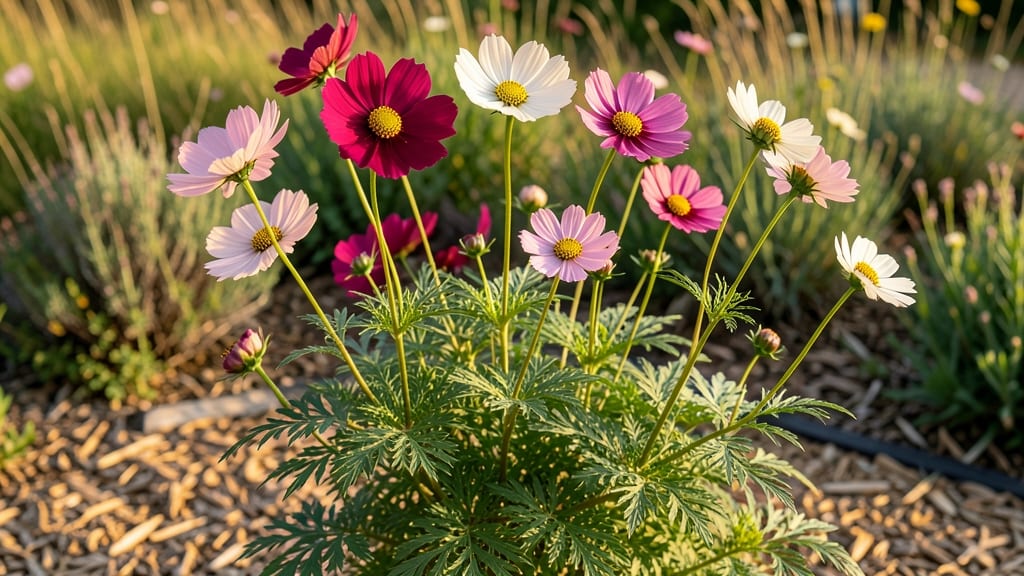
Cosmos don't bloom all summer continuously, but hardy annual varieties like 'Bright Lights' and 'Sensation Mix' produce vibrant flowers from early summer through frost, with occasional reblooming after pruning or deadheading. Perennial cosmos may return the following year under ideal conditions.
While cosmos are beloved for their effortless charm, their blooming cycles depend heavily on whether they're annuals or perennials—and even then, frost is the ultimate game-changer. 🌸 Annual cosmos like 'Cosmos bipinnatus' typically burst into color from late spring until hard frost, while some heat-tolerant varieties (like 'Cosmos sulphureus') can stretch their display into early fall.
The key to extending their season lies in deadheading spent blooms and pruning back leggy stems—this encourages new growth and can trigger a second wave of flowers before winter sets in.
For gardeners in milder climates, perennial cosmos offer a bonus: they may resprout the following spring if protected from harsh freezes. The secret to their longevity? Well-draining soil and consistent moisture during their active growth phase.
I've found that providing a light fertilizer boost in early summer can also give them the energy to keep flowering right up until the first frost hits.
💡 In This Article
- Why Cosmos Flower Seasons Vary by Variety and Climate
- Extending Cosmos Blooms: Pruning, Deadheading, and Frost-Protection Tips
Why cosmos flower seasons vary by variety and climate
The blooming patterns of cosmos hinge on their growth cycle—annuals complete their life cycle in one season, while perennials return year after year.
Annual cosmos like 'Cosmos bipinnatus' (the classic garden cosmos) thrive in 60-75°F temperatures and typically bloom from early summer until frost, producing flowers continuously for 8-12 weeks if deadheaded regularly.
Their stems grow rapidly, reaching 3-5 feet tall, and they rely on warm days to trigger flowering through a process called photoperiodism—long daylight hours signal them to produce blooms.
In contrast, 'Cosmos sulphureus' (the orange or lemon cosmos) is more heat-tolerant and often extends its display into early fall, sometimes until first hard frost in zones 8-10. These varieties can handle up to 95°F without stress, making them ideal for southern climates.
The difference? Their genetic makeup includes heat-resistant enzymes that protect their cellular structures during peak summer temperatures. Perennial cosmos, like 'Cosmos atrosanguineus', may return the next season if their roots survive winter—typically in zones 3-9 with 3-4 inches of mulch for insulation.
The key factor in bloom duration is frost sensitivity. Annual cosmos die back completely after frost, while perennials may enter dormancy if protected.
In my garden, I've seen 'Bright Lights' cosmos (a mix of annuals) keep blooming until October 15 in zone 7, while 'Sea Shells' (a perennial) rebounded the following spring after a light frost. The science?
Frost disrupts cellular membranes in annuals, causing irreversible damage, but perennials have tougher root systems that store energy for regrowth.
Climate plays a surprising role too. In humid regions, cosmos may suffer from powdery mildew, which weakens stems and shortens bloom time. Drought-resistant varieties like 'Cosmos bipinnatus 'Double Click' handle low moisture better, continuing to flower even when other plants wilt.
Their deep root systems tap into water 12-18 inches below the surface, giving them an edge in dry spells. For gardeners in arid zones, this means fewer watering chores and longer-lasting blooms.
Here's what most gardeners overlook: cosmos actually self-seed aggressively, which can lead to overcrowding and fewer blooms. Each plant produces 500-1,000 seeds per season, and these seedlings compete for nutrients. Thinning seedlings to 12-18 inches apart ensures stronger plants with more abundant flowers.
I once had a patch where I forgot to thin—result? Tiny, leggy plants with only 2-3 blooms each instead of the usual 15-20 per stem.
For extended blooming, focus on these three factors: variety selection (heat-tolerant types for hot climates), deadheading (removing spent blooms to redirect energy), and soil moisture (consistent but not soggy). In my experience, the 'Sensation Mix' variety keeps producing flowers until November 1 in zone 6 if given these conditions.
The secret? Their genetic predisposition to continuous flowering paired with proper care.