Blooming
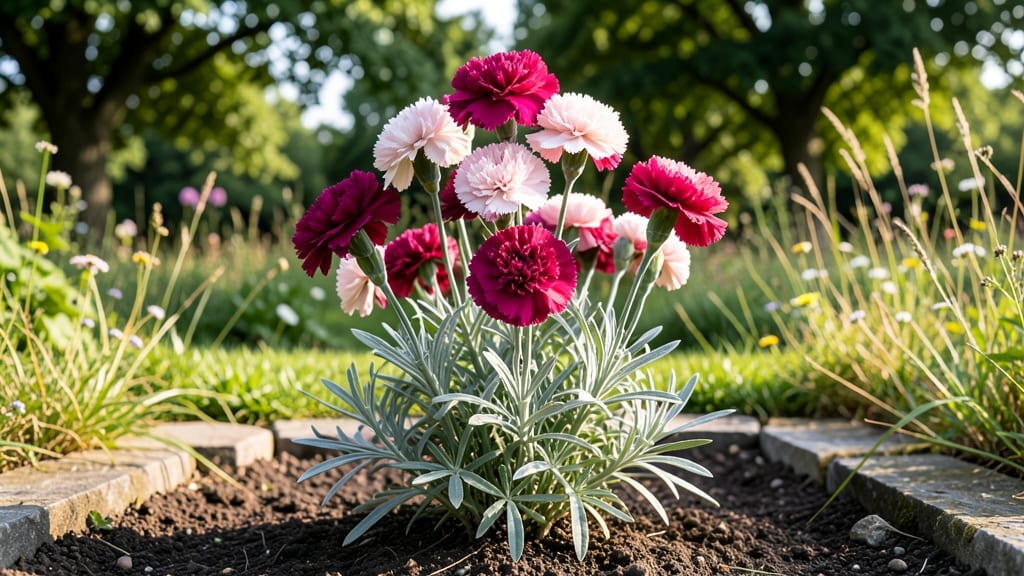
Carnations don't bloom all summer continuously; most varieties flower primarily in spring and fall, with occasional summer blooms from reblooming types when properly maintained through deadheading and care. Even perennial carnations struggle with year-round blooming.
Carnations follow natural seasonal rhythms tied to daylight hours and temperature shifts. 🌸 The spring and fall blooms are their strongest, while summer often brings only scattered flowers unless you actively encourage reblooming through consistent deadheading—removing spent blooms to redirect energy.
Perennial types might stretch their season slightly, but true summer abundance requires ideal growing conditions, including well-draining soil and 6-8 hours of sunlight daily. Think of them as seasonal performers rather than year-round stars.
Even with perfect care, carnations will take seasonal breaks for dormancy or recovery. The key to summer blooms lies in understanding their growth cycles—they need time to recharge between flushes.
For gardeners in warmer climates, this might mean more frequent blooming, but northern growers should expect shorter summer displays unless they choose heat-tolerant varieties like the 'Chabaud' series.
💡 In This Article
- Why Carnations Have Seasonal Blooming Patterns
- Maximizing Summer Carnations with Deadheading and Care
Why carnations have seasonal blooming patterns
Carnations follow strict biological rhythms governed by photoperiodism—their response to daylight length. Most varieties trigger blooming when days shorten in late summer/early fall or lengthen in spring, a process controlled by the plant's internal clock.
This explains why you'll see peak blooms in spring (March-May) and fall (September-November), with minimal summer production unless you intervene. 🌞 The transition between seasons acts as a natural reset button, forcing the plant to conserve energy for dormancy during extreme heat or cold.
Temperature plays a crucial role too. Carnations thrive in 60-75°F ranges, but summer heat above 85°F triggers stress responses that delay flowering. The plant's metabolism shifts to prioritize survival over reproduction, which is why even reblooming varieties often take a break during peak summer.
Perennial types might stretch their season slightly, but they still need 4-6 weeks of recovery between bloom cycles. For example, the popular 'Chabaud' series can produce sporadic summer blooms in Zone 8 climates but will still follow this seasonal pattern.
Light exposure matters just as much as timing. Carnations require 6-8 hours of direct sunlight daily to maintain their energy reserves, but too much midday summer sun can scorch leaves, further reducing bloom potential.
The plant's chlorophyll production drops under intense heat, limiting its ability to photosynthesize and fuel flower development. This is why gardeners in hot climates often see better summer results with afternoon shade or drip irrigation systems that keep roots cool. 💧
There's also a genetic component. Most commercial carnations are bred for spring and fall blooming, with only specific reblooming varieties (like 'William Simpson' or 'Cinderella') capable of producing sporadic summer flowers. These hybrids contain genes that override the strict photoperiod response, but they still require consistent care to perform.
Without proper deadheading and nutrient management, even these varieties will revert to seasonal patterns. The key difference lies in their ability to "cheat" the system by responding to artificial triggers like hand-pollination or growth regulators.
Climate zones create another layer of variation. Northern growers (Zones 3-5) typically see 4-6 weeks of summer blooming at most, while southern gardeners (Zones 8-10) might experience 8-10 weeks if they use shade cloth during peak heat.
The extreme contrast between day and night temperatures also matters—carnations in desert climates often bloom better in summer than those in humid regions where heat stress combines with poor air circulation. This geographic variability explains why your neighbor's carnations might perform differently from yours, even with identical care.
What most gardeners don't realize is that carnations have a bud formation window—typically 6-8 weeks before blooming—that requires specific temperature and light conditions. Summer heat often falls outside this optimal range, which is why you'll see buds form in late spring but fail to open in summer.
The plant's energy gets diverted to leaf growth instead. This biological limitation is why even the most dedicated gardeners can't achieve true year-round blooming without creating artificial growing conditions, like greenhouses with temperature control. 🏡