
Pruning
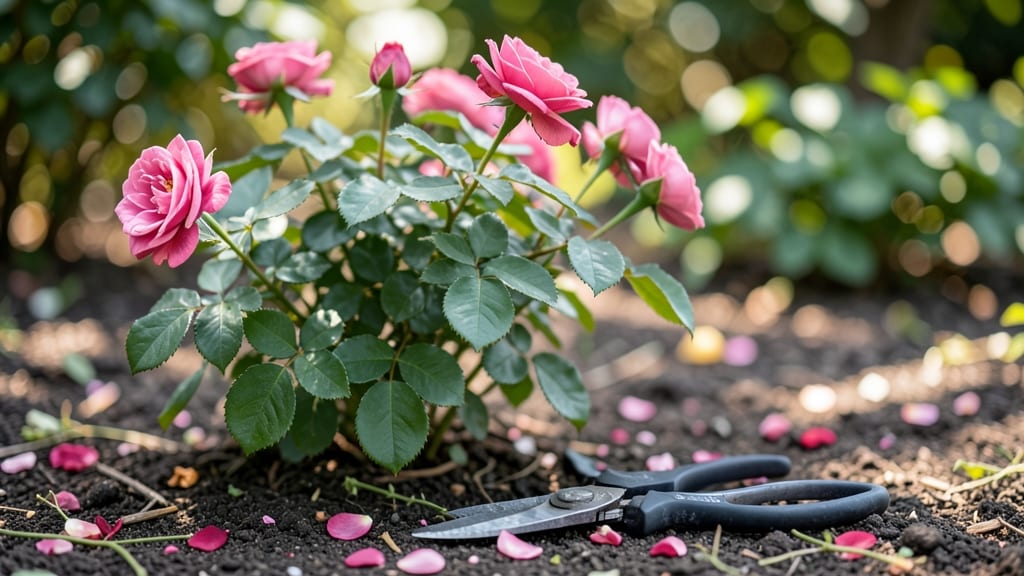
Cutting back Knockout roses in late fall keeps them thriving through winter’s chill—just don’t wait too long. ✂️ I’ve learned the hard way that pruning too early or too late invites disease, while the right timing (after the first hard frost but before deep freeze) ensures strong regrowth.
The key is three strategic cuts: removing dead wood, shaping the bush, and thinning crowded stems to improve airflow.
You’ll need sharp bypass pruners, a clean saw for thicker stems, and a bucket for clippings—no fancy tools, just the right approach. Start by cutting out any blackened or mushy stems at the base, then shape the bush into an open vase shape.
Thinning out every third stem lets sunlight and air reach the center, preventing winter rot. It takes about 30 minutes for a medium-sized bush, and the results are worth it.
What you’re left with is a rose bush that looks like it’s taking a well-earned nap, not a sad, tangled mess. Come spring, those same cuts will spur fresh, vibrant green growth and abundant blooms from June until frost.
The secret? Prune when the plant is dormant but still has some life left—never in the dead of winter or you’ll shock the roots.
Works in zones 5-10, though exact timing shifts north to south. In colder climates, wait until after the ground freezes; in milder areas, prune before winter rains. Either way, the goal is the same: give your Knockout roses a clean start for another season of effortless blooms.
The Hidden Triggers Behind Winter Pruning Needs
When your Knockout Roses start looking ragged before winter, it’s not just bad luck—it’s a mix of natural growth cycles, environmental stress, and human habits. Understanding the why behind winter pruning needs helps you avoid common mistakes and set your roses up for a stronger spring comeback.
Here’s what’s really going on:
Knockout Roses are famous for their non-stop blooming, but that relentless growth takes a toll. By late fall, the plant has spent months producing flowers, leaves, and new stems, draining its stored energy reserves. Without a strategic cutback, the plant struggles to:
- Rebuild root systems – Weak roots can’t support new growth in spring.
- Store carbohydrates – Excess foliage and stems block sunlight, preventing the plant from photosynthesizing and stockpiling energy for dormancy.
- Avoid disease buildup – Dense, unpruned canes trap moisture, creating the perfect breeding ground for black spot and powdery mildew, which weaken the plant over time.
Pro Tip: 💡 If your roses look like they’re exhausted (yellowing leaves, sparse blooms, or leggy stems), it’s a clear sign they’re overworked and need a reset before winter.
Knockout Roses are hardy, but they’re not immune to winter’s harsh realities. Three key environmental factors force your hands:
| Factor | How It Hurts Roses | Pruning Fix |
|---|---|---|
| 🌡️ Temperature Swings | Sudden freezes can kill tender new growth at the tips of canes, leaving them vulnerable to rot or dieback. Without pruning, these dead sections remain, inviting pests and disease. | Cut back to healthy, brown wood (not green) to remove damaged areas and encourage new growth from lower buds. |
| ❄️ Heavy Snow or Ice | Accumulated snow can break weak, unpruned canes, creating open wounds that won’t heal properly. Broken stems also lose their structural integrity, leading to a messy, sprawling plant. | Prune to open the center of the bush (3–4 main stems) so snow can slide off easily and airflow improves. |
| 💧 Moisture Trapping | Unpruned foliage holds snowmelt and rainwater against the plant, promoting fungal diseases like rose canker or botrytis, which can kill the plant over winter. | Remove all leaves and deadheading (spent blooms) to eliminate hiding spots for pathogens. |
Pro Tip: 🌡️ If you’re in a Zone 6 or colder, wait until after the first hard freeze (when temps drop below 20°F) to prune—this helps you see which canes are truly dead vs. dormant.
Timing and method matter more than you might think. Here’s how wrong pruning backfires:
- Pruning too early (before winter):
- Removes energy storage in the canes (carbohydrates built up in woody stems).
- Exposes new growth that can’t harden off before cold snaps, leading to frost damage.
- Pruning too late (after new growth starts in spring):
- Encourages weak, leggy stems that flop under winter weight.
- Misses the chance to remove diseased wood that could spread in warmer weather.
- Cutting at the wrong angle or too close to buds:
- Creates wounds that heal slowly, inviting bacterial infections.
- Leaves no bud eyes (growth points) for spring regrowth.
Pro Tip: ✂️ Always cut just above a outward-facing bud (about ¼” above) at a 45-degree angle. This ensures water runs off the cut and the bud has room to grow outward, not inward.
Now that you know why Knockout Roses need a winter haircut, the next step is how to do it right—without sacrificing next year’s blooms. Stay tuned!
Revive Your Roses With These Pruning Fixes
Winterizing your Knockout roses isn’t just about trimming—it’s about giving them the best chance to bounce back stronger than ever. If your roses look tired, leggy, or diseased after summer, these targeted solutions will help you cut back with confidence.
Below, we’ve mapped common issues to step-by-step fixes, plus prevention tips to keep your roses thriving year after year.
If your Knockout roses have sprawling canes, tangled stems, or a messy shape, they’re not just unsightly—they’re also more susceptible to pests and disease.
🔪 Fix: The "Three-Cut Method" for Renewal
- 🌿 Step 1: Remove the Dead or Diseased
- Grab your pruners and snip off any canes that are blackened, mushy, or covered in spots. Dispose of these in the trash—not the compost!
- ✂️ Step 2: Trim Back by One-Third
- Cut the remaining healthy canes back to about 12–18 inches tall. This encourages bushier growth and prevents weak, floppy stems.
- 🌱 Step 3: Shape for Airflow
- Thin out crowded canes to improve circulation. Aim for an open vase shape—this reduces humidity buildup, which can lead to fungal issues.
💡 Prevention Tip:
Prune lightly in early spring (March–April) to maintain shape and remove any weak growth before it becomes a problem. Think of it as a mid-season tune-up!
If your roses have long, thin canes with few blooms, they’re likely overpruned in the past or didn’t get enough sunlight. Leggy growth is a sign your plant is stretching for light instead of putting energy into strong blooms.
🌟 Fix: The "Rejuvenation Cut"
- 🌳 Step 1: Identify the Strongest Canes
- Look for thick, healthy canes (about pencil-sized or thicker). These are your plant’s best bet for rebounding.
- ✂️ Step 2: Cut Back Harder
- For leggy canes, prune back to just above a healthy bud or lateral branch. This forces the plant to send out new, stronger growth from the base.
- ☀️ Step 3: Boost Sunlight & Fertilizer
- After pruning, move your roses to a sunnier spot (at least 6–8 hours of sunlight daily). Feed with a balanced rose fertilizer (like 10-10-10) in early spring to support new growth.
💡 Prevention Tip:
If your roses are chronically leggy, consider staking or trellising them to encourage upward growth. And remember: Knockout roses bloom on new wood, so don’t be afraid to prune boldly!
If your rose leaves are yellowing, spotted, or covered in black spots, fungal diseases like black spot or powdery mildew are likely the culprits. These thrive in damp, crowded conditions—perfect for unpruned roses.
🧼 Fix: Sanitize & Renew
- 🧴 Step 1: Clean Up Debris
- Remove all infected leaves, stems, and mulch within a 3-foot radius of the plant. Fungal spores love hiding in old plant matter!
- ✂️ Step 2: Prune for Airflow
- Cut back canes to open up the center of the bush. This reduces humidity and lets sunlight hit the lower leaves.
- 🍄 Step 3: Treat & Prevent
- Spray the plant with a fungicide (like neem oil or copper-based spray) before new growth starts in spring. For prevention, water at the base of the plant (not overhead) and avoid pruning when leaves are wet.
💡 Prevention Tip:
Plant your Knockout roses in full sun and well-draining soil. Fungal diseases hate sunlight and dry conditions! Also, mulch lightly (2–3 inches) to retain moisture without suffocating the roots.
If your roses look crispy, brown, or mushy after winter, they may have suffered from freeze damage, sunscald, or poor insulation. Knockout roses are hardy, but extreme cold or sudden temperature swings can take a toll.
🔥 Fix: Insulate & Revive
- 🌡️ Step 1: Assess the Damage
- Gently tug on stems—if they snap easily, they’re dead. If they’re bendy but green inside, they’ll likely recover.
- ✂️ Step 2: Prune Dead Wood
- Cut back any blackened, shriveled, or hollow canes to the nearest healthy bud. No need to rush—wait until late winter or early spring when new growth is visible.
- 🛡️ Step 3: Protect for Next Winter
- After pruning, pile mulch (4–6 inches) around the base and loosely wrap the bush in burlap or rose cones for extra insulation. Remove wraps in early spring to avoid trapping heat.
💡 Prevention Tip:
Choose a sheltered location (like near a fence or wall) to protect roses from harsh winds. And avoid heavy pruning in late summer—this can stimulate tender new growth that won’t survive frost!
To avoid mistakes, follow this simple schedule:
| Time | Task |
|---|---|
| Late Fall (Nov–Dec) | Remove dead/diseased canes; add mulch |
| Winter (Dormant Season) | No pruning—let the plant rest! |
| Early Spring (March–April) | Light shaping prune; fertilize |
| Mid-Summer (June–July) | Deadhead spent blooms; thin leggy growth |
By sticking to this plan, your Knockout roses will bloom bigger, stronger, and healthier every season!
Frequently asked questions
When is the absolute best time to prune Knockout roses for winter?
Prune after your first hard frost (when temps drop below 20°F) but before deep freeze sets in. In Zones 5-7, aim for late November to mid-December. In milder Zones 8-10, wait until January to avoid stimulating new growth that won't harden off.
How much should I cut back Knockout roses in winter?
Reduce each healthy cane by about one-third (to 12-18 inches tall). Remove all dead/diseased wood completely. The goal is to create an open vase shape that improves airflow and sunlight penetration.
What if I accidentally prune too early in fall?
Don't panic! If you prune before winter, your roses may produce tender new growth that can't survive frost. To fix it, apply a thick layer of mulch (4-6 inches) around the base and wrap the bush in burlap for extra protection. This helps insulate the plant until proper dormancy sets in.
Can I use hedge trimmers instead of pruners?
No, hedge trimmers crush stems and create jagged cuts that heal poorly. Always use sharp bypass pruners for clean cuts. For thicker stems over ½ inch, use a pruning saw. Clean your tools with rubbing alcohol between cuts to prevent disease spread.
What should I do with all the pruned branches?
Never compost diseased branches - dispose of them in the trash. For healthy prunings, you can:
- Use as mulch around perennials (not back on roses)
- Bundle and store in a dry place for spring kindling
- Soak in water for 24 hours, then use as fish fertilizer The key is removing all plant debris from your rose bed to prevent fungal overwintering.