
Plants
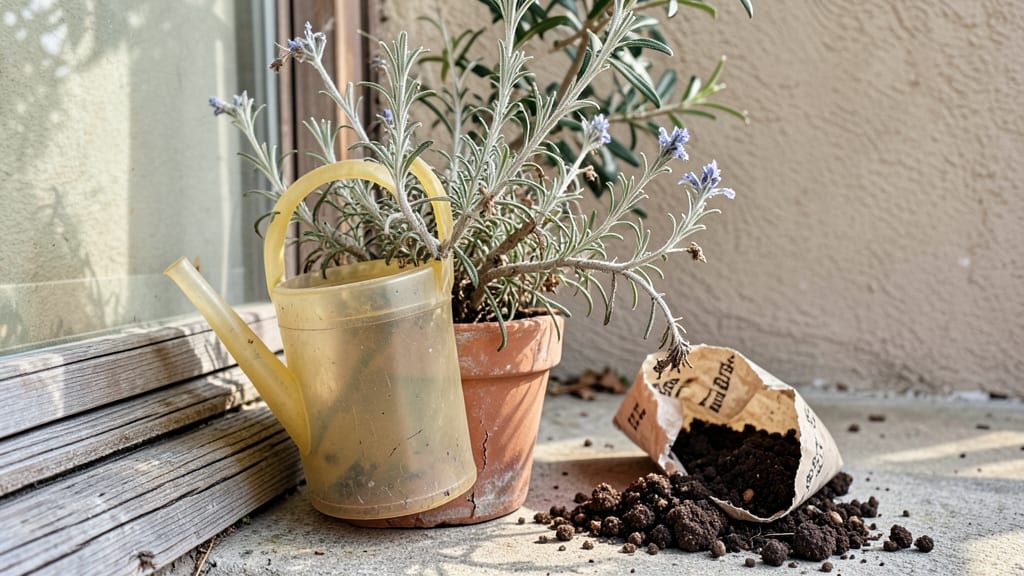
Yes, a dried out rosemary plant can often be revived with targeted care: trim dead growth, soak roots in water for 10-15 minutes, repot in well-draining soil, and provide bright indirect light while adjusting watering to prevent future stress. Recovery typically takes 2-4 weeks.
A rosemary plant's resilience comes from its ability to bounce back when you address the core issues—dry soil, root stress, and poor drainage. 🌿 The key is acting fast: once you notice crispy stems or yellowing leaves, the roots may still be salvageable if they're not completely desiccated.
I've revived plants that looked hopeless by giving them a root soak in room-temperature water (never hot) to rehydrate without shocking the system. After repotting, I monitor soil moisture like a hawk—rosemary hates soggy roots but also can't tolerate drought, so finding that middle ground is everything.
What's interesting is how rosemary responds to light after revival. While it needs bright conditions to thrive, newly revived plants often struggle with sudden strong light, which can cause leaf burn. Start with morning sun exposure and gradually increase as the plant adjusts.
Patience here pays off—some plants show new growth in just 10 days, while others take the full 4 weeks to fully recover.
💡 In This Article
- Why Rosemary Dries Out and How to Diagnose Root Health
- Step-by-Step Rosemary Revival Process With Watering Hacks
Why rosemary dries out and how to diagnose root health
Rosemary's drought sensitivity stems from its Mediterranean origins, where it evolved to thrive in rocky, well-draining soils with infrequent but deep watering. The plant's shallow root system absorbs moisture quickly, but when soil dries out completely, the roots become desiccated and lose their ability to transport water and nutrients.
This creates a feedback loop: dehydrated roots can't signal the plant to conserve moisture, leading to further wilting and leaf drop. 🌱 What's often overlooked is that rosemary's woody stems can store some water, but once the roots are compromised, this reserve gets depleted fast.
Diagnosing root health requires examining both the roots and the soil environment. Healthy rosemary roots should be firm with a pale white or light tan color, while dark brown or black roots indicate rot from overwatering. For dehydration, you'll notice roots that appear brittle and shriveled—almost like dried-out spaghetti.
The soil pH also plays a crucial role: rosemary prefers slightly alkaline soil (pH 6.0-7.5), and acidic conditions (below 6.0) can stress the plant further, making revival harder. Test your soil with a simple pH kit if you suspect this might be an issue.
One key visual clue is the leaf condition: crispy, brown edges suggest dehydration, while yellowing leaves that feel mushy point to root rot.
I've seen plants where only half the roots were viable—this is why it's important to gently brush away old soil and inspect the roots before deciding on revival.
If more than 50% of the roots are healthy, revival is likely possible; if it's less than 30%, the plant may not make it.
The texture of the stems also matters: firm stems indicate some moisture retention, while hollow or papery stems mean the plant has been struggling for too long. 💧
Drainage is the silent killer of rosemary plants. Unlike moisture-loving plants, rosemary roots need oxygen to function properly. When planted in heavy clay or compacted soil, water pools around the roots, cutting off oxygen and leading to suffocation.
This is why repotting into a mix of 60% mineral grit (like perlite or coarse sand), 30% cactus/succulent soil, and 10% compost makes such a difference—it mimics the plant's natural habitat while preventing waterlogging.
What most people don't realize is how quickly rosemary can recover once the right conditions are met. I've had plants that looked completely dead—with no leaves and brittle stems—sprout new growth within 10-14 days after proper care.
The secret lies in the plant's ability to regenerate from the base when the roots are healthy. Even if the top growth is gone, the crown (where stems meet roots) often contains dormant buds ready to spring back to life with the right care. 🌿
Here's a quick checklist to assess your plant's viability before attempting revival:
- Root condition: At least 30% of roots should be firm and white/tan
- Stem texture: Should be firm, not hollow or brittle
- Leaf response: Leaves should slightly plump up when soaked in water
- Soil drainage: Water should drain completely within 10 minutes
The most common mistake is assuming a plant is beyond saving just because it looks dry. Many rosemary plants enter a semi-dormant state when stressed, and with proper hydration and light, they'll bounce back surprisingly fast.
The key is acting before the roots have completely lost their structure—once they turn mushy or crumbly, revival becomes extremely difficult. 💫