
Pests and Diseases
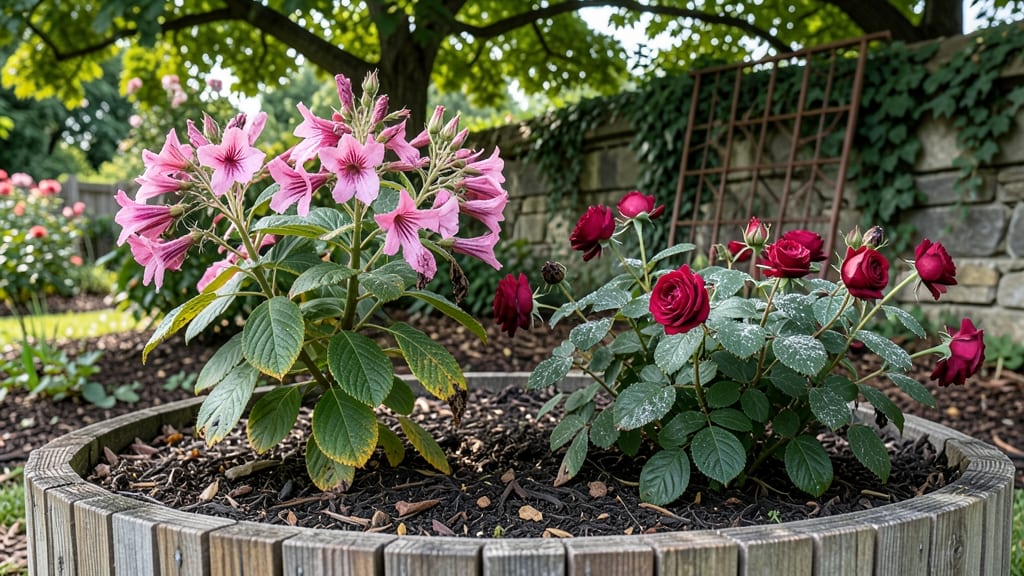
Even if your wine and roses Weigela sport sad, blackened stems and dusty leaves, don’t despair—those are just signs of canker and powdery mildew, two of the most common Weigela problems. 🌿 I’ve nursed back plants with these issues, and the fixes are simpler than you’d think. once you know what to look for and when to act.
Canker shows up as sunken, oozing sores on stems, while powdery mildew coats leaves in a chalky white film. Both thrive in damp, crowded conditions, but the good news? Pruning out infected parts early and improving airflow can stop them in their tracks.
I’ve saved plants that looked doomed by mid-July with just a few sharp cuts and a baking soda spray.
You’ll see fresh, vibrant growth within weeks of treating the problem. The key is acting fast—before the fungus spreads to next year’s blooms.
With the right approach, your Weigela can bounce back stronger than ever, putting on a show of pink or red trumpet-shaped flowers that’ll make your neighbors green with envy.
Works for both shrub and vine varieties, and the methods adapt to organic or chemical preferences. Let’s get those plants thriving again—no more sad stems or fuzzy leaves in sight.
Root Causes Of Weigela Woes
When your Wine and Roses Weigela starts looking sad—drooping leaves, blackened stems, or a dusty white coating—it’s usually a sign of stress from one (or more) of these common culprits. Understanding why these problems happen is the first step to saving your shrub. Let’s break it down scientifically and practically.
Weigelas thrive in moderate airflow, but when they’re planted too closely together or tucked into tight corners, stagnant air becomes a breeding ground for fungal diseases like powdery mildew and canker.
- Why it happens:
- Fungal spores (like Erysiphe for powdery mildew or Leptosphaeria for canker) love moisture and spread when humidity stays above 75% for prolonged periods.
- Dense foliage traps condensation on leaves, creating a damp microclimate—perfect for fungal growth.
- Overcrowded plantings block sunlight, slowing leaf drying after morning dew.
- Actionable fix:
- Space Weigelas 3–5 feet apart for airflow.
- Prune to open the canopy (remove crossing branches).
- Water early in the day so leaves dry before nightfall.
Weigelas hate soggy roots and wet leaves. Overwatering (or poor drainage) leads to:
- Root rot (from Phytophthora fungi)
- Canker lesions (when stems stay damp)
- Powdery mildew (from prolonged leaf moisture)
- Why it happens:
- Weigelas prefer well-draining soil—clay or compacted soil holds excess water, suffocating roots.
- Splashing water onto leaves (especially from overhead sprinklers) spreads fungal spores.
- Container-grown Weigelas dry out faster but can still rot if pots lack drainage holes.
- Actionable fix:
- Test soil moisture—stick your finger 2 inches deep; water only if dry.
- Avoid overhead watering—use drip irrigation or soaker hoses.
- Raise containers to prevent water pooling.
Insects like Japanese beetles, aphids, and spider mites don’t just eat leaves—they stress the plant, making it more susceptible to fungal infections.
- Why it happens:
- Aphids excrete honeydew, a sugary film that attracts sooty mold (a secondary fungus).
- Japanese beetles chew leaves, creating wounds where canker fungi (Leptosphaeria coniothyrium) can enter.
- Spider mites in dry conditions weaken cell walls, making leaves more vulnerable to powdery mildew.
- Actionable fix:
- Inspect leaves weekly—look for sticky residue (honeydew) or tiny webs (mites).
- Blast pests off with a strong stream of water (early morning).
- Use neem oil or insecticidal soap for severe infestations.
Weigelas prefer moderate climates (USDA Zones 4–8). Sudden cold snaps or heatwaves shock the plant, lowering its resistance to disease.
- Why it happens:
- Late spring frosts damage new growth, creating entry points for canker.
- Summer heat + drought stress weakens leaves, making them more prone to powdery mildew.
- Winter desiccation (dry winds + cold) cracks bark, inviting fungal infections.
- Actionable fix:
- Mulch heavily (3–4 inches) to regulate soil temp.
- Water deeply in summer (1 inch per week) to reduce heat stress.
- Protect from late frosts with frost cloth if your area gets unpredictable springs.
A Weigela that’s starving or overfed is more prone to disease. Too much nitrogen (from fertilizer) leads to soft, lush growth—a fungal buffet. Too little phosphorus or potassium weakens cell walls.
- Why it happens:
- Excess nitrogen = rapid, weak growth = more surface area for fungal spores to latch onto.
- Deficient potassium = poor disease resistance (potassium strengthens cell membranes).
- Compacted or poor soil = nutrient deficiencies = stressed plants.
- Actionable fix:
- Test soil (pH 6.0–7.0 is ideal) and amend with compost if needed.
- Use balanced fertilizer (10-10-10 or 5-10-10) in early spring.
- Avoid high-nitrogen fertilizers (like lawn fertilizer) in summer.
Every time you prune, you create an open wound—and if your tools are dirty, you’re spreading disease.
- Why it happens:
- Dirty pruners can transfer canker spores from infected branches to healthy ones.
- Ragged cuts (instead of clean, sloped cuts) slow healing, inviting infections.
- Pruning in wet weather keeps wounds damp longer, delaying callus formation.
- Actionable fix:
- Sterilize tools with rubbing alcohol between cuts.
- Prune in dry weather (early morning is best).
- Make cuts at a 45° angle, 1/4 inch above a bud or node.
Most Weigela problems stem from one (or more) of these stress factors: poor airflow, overwatering, pests, temperature extremes, or improper care.
The good news? Fixing one often fixes the others—start with spacing, watering habits, and pest control, and your Wine and Roses will bounce back stronger. 🌿✨
Fixing Your Weigela’s Common Woes
Now that you know the culprits behind your Wine and Roses Weigela’s struggles—canker disease and powdery mildew—let’s roll up our sleeves and get to work! These problems are fixable with the right care, and with a little prevention, your shrub will bounce back stronger than ever.
Below, we’ve mapped out practical, step-by-step solutions tailored to each issue, plus tips to keep your Weigela thriving long-term.
Canker is a bacterial or fungal infection that creates sunken, oozing sores on stems. The key to beating it? Aggressive pruning and sterilization to stop the spread.
🍳 Step 1: Remove Infected Stems
- When to act: Early spring or late winter (before new growth starts) is ideal, but you can prune infected branches anytime.
- How to prune:
- Use clean, sharp pruners (sterilize with rubbing alcohol or a 10% bleach solution between cuts).
- Cut 6–12 inches below the infected area—don’t just trim off the obvious canker.
Healthy tissue beneath is key! - Dispose of infected branches in the trash (not compost)—don’t leave them in the yard where spores can linger.
👨🍳 Step 2: Sterilize Tools and Surfaces
- Wipe down pruners with 70% isopropyl alcohol or a bleach solution (1 part bleach to 9 parts water).
- Clean up fallen leaves/debris around the plant—bag and toss them to prevent reinfection.
🥘 Step 3: Boost Plant Health
- Water at the base (avoid overhead watering, which spreads bacteria).
- Improve airflow by thinning out dense foliage nearby.
- Fertilize lightly in early spring with a balanced, slow-release fertilizer (10-10-10) to strengthen the plant’s defenses.
⏰ Prevention for Next Year
- Plant in well-draining soil—Weigelas hate soggy roots!
- Avoid wounding stems (e.g., rough pruning or damage from tools).
- Monitor for stress—drought or nutrient deficiencies weaken plants, making them susceptible.
Powdery mildew coats leaves in a white, flour-like dust, but it’s easy to control with fungicides and cultural fixes.
🔪 Step 1: Prune Affected Foliage
- Remove heavily infected leaves (especially older ones) and dispose of them in the trash.
- Focus on lower branches first—powdery mildew thrives in shaded, humid areas.
💡 Step 2: Apply Fungicide
- Neem oil (natural, organic option): Mix 1–2 tbsp per gallon of water + a drop of dish soap (as a surfactant).
Spray every 7–10 days until the mildew clears. - Baking soda spray (DIY): 1 tsp baking soda + 1 tsp horticultural oil + 1 tsp soap per quart of water. Test on a small leaf first! - Chemical fungicides (for severe cases): Use sulfur-based or copper fungicides (follow label instructions).
🎯 Step 3: Adjust Growing Conditions
- Increase airflow by spacing plants 3–4 feet apart and pruning to open the center.
- Water in the morning so foliage dries quickly—avoid evening watering, which promotes humidity.
- Mulch properly (2–3 inches of organic mulch) to keep soil moist but not soggy.
✨ Prevention Tips
- Choose resistant varieties (e.g., Weigela florida ‘Wine and Roses’ is moderately resistant but still needs care).
- Avoid overhead irrigation—drip systems or soaker hoses work best.
- Clean up fallen leaves regularly—mildew spores hibernate in debris!
No matter the issue, healthy plants resist pests and diseases better. Keep your Weigela happy with these year-round tips:
| Task | When to Do It | How to Do It |
|---|---|---|
| Prune for airflow | Late winter/early spring | Remove 1/3 of oldest stems to open the center. |
| Fertilize | Early spring | Use a balanced fertilizer (10-10-10). |
| Mulch | Spring/fall | Apply 2–3 inches of organic mulch. |
| Water deeply | Early morning | 1–1.5 inches per week; avoid wetting leaves. |
| Inspect regularly | Monthly | Check for spots, wilting, or unusual growth. |
Pro Tip: 💡 If your Weigela is chronically troubled, it might be in the wrong spot. Weigelas thrive in full sun (6+ hours/day) and well-draining soil. If yours is shaded or waterlogged, consider relocating it!
With these fixes, your Wine and Roses Weigela should bounce back beautifully—and stay that way with a little proactive care. Happy gardening! 🌿🍷
Frequently asked questions
Why does my Weigela keep getting blackened stems even after pruning?
Blackened stems are likely canker disease, which spreads through infected tools or wet conditions. Cut 6-12 inches below the visible damage and sterilize your pruners with rubbing alcohol between cuts. The fungus thrives in damp, crowded areas, so improve airflow by spacing plants 3-5 feet apart.
Can I save my Weigela if powdery mildew covers most of the leaves?
Yes! Start by removing heavily infected leaves and spraying with a baking soda mix (1 tsp baking soda + 1 tsp soap per quart of water). For severe cases, use neem oil every 7-10 days until new growth appears. Increase airflow by pruning to open the center and water only in the morning.
Will my Weigela bloom again if I've had fungal problems?
With proper care, your Weigela will rebound and produce vibrant trumpet-shaped flowers next season. Focus on early spring pruning (remove 1/3 of oldest stems), use balanced fertilizer, and maintain well-draining soil. Healthy plants resist diseases better and bloom more abundantly.
How do I know if my Weigela has canker vs. powdery mildew?
Canker shows as sunken, oozing sores on stems (often with dark edges), while powdery mildew appears as a white, chalky coating on leaves. Check stems first for canker—if you see leaf issues without stem damage, it's likely mildew. Both thrive in damp conditions, but canker is more serious and requires deeper pruning.
Can I use the same fungicide for both canker and powdery mildew?
No—canker requires bacterial/fungal-specific treatments (like copper fungicides), while powdery mildew responds to neem oil or sulfur-based sprays. For canker, focus on pruning out infected wood and improving drainage. Always sterilize tools between cuts to prevent spreading spores.