
Flowers
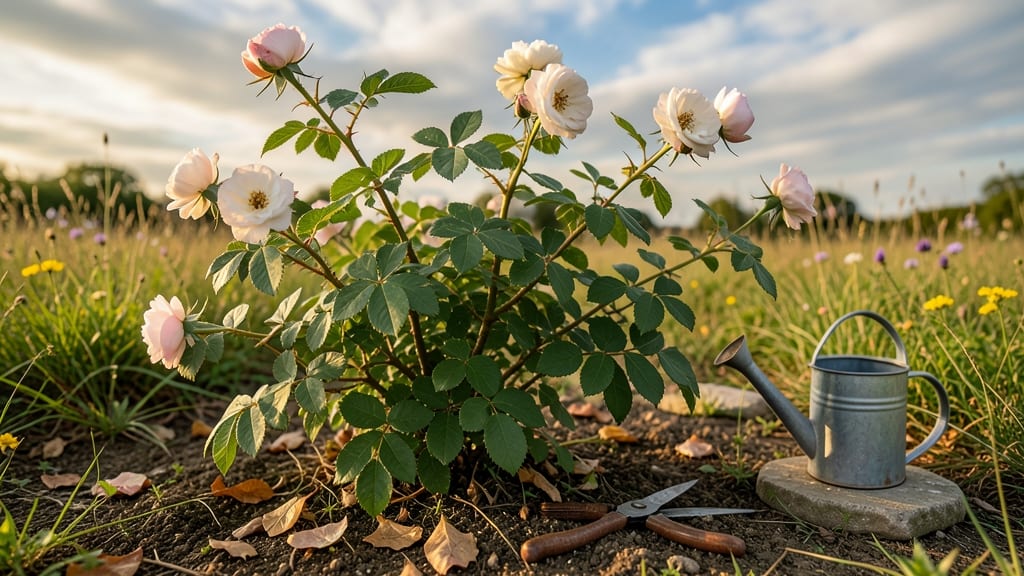
White roses can thrive wild without losing their elegance—just pair them with the right shade-loving companions. 🌿 I’ve turned my shady corner into a fragrant cottage garden retreat where climbing roses mingle with native wildflowers, creating a romantic yet effortless look.
The secret is blending their delicate blooms with bold foliage and textures that hide their need for occasional pruning.
Start with dwarf white climbing roses like ‘Blanc Double de Coubert’ or ‘The Fairy’—they’re hardy, fragrant, and happy in partial shade. Let them scramble over arbors or drift naturally along fences, then tuck in hostas, ferns, and astilbes for lush contrast.
The key is layering height and color: deep purple salvia, silver lamb’s ear, and golden rod will make those white blooms pop without competing.
📚 In This Guide
- What you need
- Instructions
- Tips and common mistakes
- Wrapping up and next steps
What you need
- ● White rose plants: Choose Rosa 'Blanc Double de Coubert' or Rosa 'Iceberg' (both thrive in partial shade). Opt for 1-3 bare-root plants (fall planting) or container-grown plants (spring/summer).
- ● Well-draining soil: Mix 50% native soil with 50% compost or peat moss for moisture retention. Test pH—aim for 6.0–6.5.
- ● Support structure: Arbor or trellis: 6–10 ft tall, sturdy enough to support 10–15 lb vines (e.g., metal or wooden lattice).
- ● OR obelisk: 4–6 ft tall, ideal for smaller spaces.
- ● Mulch: 2–3 inches of wood chips or shredded bark to retain moisture and suppress weeds.
- ● Organic fertilizer: Balanced 10-10-10 or rose-specific fertilizer (apply every 4–6 weeks during growing season).
- ● Garden tools: Trowel or spade
- ● Pruning shears (sterilized with rubbing alcohol)
- ○ Gloves (optional but recommended—roses can be thorny!)
- ● Watering can or hose: With a gentle spray nozzle (roses hate soggy roots).
- ● Staking twine: Soft garden twine (for training young vines).
- ○ Fungicide (optional): Copper-based or neem oil spray (prevents black spot in humid shade).
- ● Epsom salt: 1 tbsp/month dissolved in water (boosts magnesium for lush blooms).
- ● Companion plants: Ferns, hostas, or astilbes (thrive in shade and complement the roses’ elegance).
- ● Drip irrigation system: Automates watering (ideal for busy gardeners!).
- ● Rose food spikes: Slow-release granules for hassle-free feeding.
How to grow white climbing roses in shade gardens
Here’s how to cultivate fragrant white roses that thrive even in shadier spots—no special skills needed.
☀️ Step 1: Choose the Right Location and Prepare the Soil
White climbing roses need partial shade—think 4-6 hours of morning sun and dappled light the rest of the day. Avoid deep shade, or you’ll struggle with weak growth. I dig a hole twice as wide as the root ball but only as deep—this encourages roots to spread horizontally for stability.
Amend the soil with 3 inches of compost and a handful of bone meal (for phosphorus) to support strong root development. If your soil drains poorly, mix in sand or perlite to prevent waterlogging. The goal is loose, fertile soil that holds moisture but doesn’t stay soggy.
🌱 Step 2: Plant Bare-Root Roses at the Correct Time
Plant in early spring when soil is workable but frost has passed. Soak the bare roots in lukewarm water for 2 hours before planting to revive them. Position the rose so the graft union (the swollen bump on the stem) sits 2-3 inches below soil level—this protects it from temperature swings.
Spread roots outward in the hole and backfill with soil, pressing gently to remove air pockets. Water deeply right after planting to settle the soil. I always add a 3-inch layer of mulch (like shredded bark) around the base to retain moisture and regulate temperature.
💧 Step 3: Water and Fertilize for Strong Growth
Keep the soil evenly moist but not waterlogged—white roses hate soggy roots. Water deeply once a week (or more in hot weather) until the top 2 inches of soil feel damp. Overhead watering can spread disease, so use a soaker hose or water at the base.
Fertilize twice a year: once in early spring with a balanced rose fertilizer (like 10-10-10) and again in mid-summer with a low-nitrogen, high-phosphorus blend to boost blooms. I avoid high-nitrogen fertilizers—they encourage leafy growth over flowers.
✂️ Step 4: Prune and Train for a Fragrant Climber
Prune in late winter or early spring before new growth starts. Remove dead, crossing, or weak branches, cutting just above an outward-facing bud. For climbing roses, keep 3-5 strong canes—they’ll support the weight of blooms. I tie new growth to the trellis with soft plant ties to avoid damaging the stems.
Deadhead spent blooms regularly to encourage more flowers. In late summer, cut back any long, leggy growth by one-third to promote bushier, healthier growth. This is also when I add a slow-release rose fertilizer to extend the blooming season.
🌿 Step 5: Protect and Maintain for Long-Term Beauty
Watch for black spot or powdery mildew—common in shady, humid conditions. At the first sign of disease, remove affected leaves and spray with a copper fungicide or neem oil. I also space plants 4-6 feet apart to improve airflow and reduce moisture buildup.
In fall, apply a 3-inch layer of mulch around the base to insulate roots over winter. Reduce watering as temperatures drop, but don’t let the soil dry out completely. With proper care, your white climbing rose will reward you with fragrant blooms for years.
Tips & tricks for perfect white climbing roses in shade
Took me a while to figure these out, so here goes—your secret to thriving white climbers without the fuss.
Location is Everything: That 4-6 hours of morning sun is non-negotiable—it’s what triggers the blooming process. I’ve seen roses in deep shade struggle for years, so if your spot only gets afternoon light, consider a reflective surface like a white fence to bounce extra light onto the plant. The key is that morning sunlight gives them the energy boost they need for those fragrant blooms.
Soil Prep Secret: When mixing in that 3 inches of compost and handful of bone meal, don’t just dump it in—work it into the existing soil until it’s completely blended. I like to use my hands to create pockets of rich soil around the roots where they’ll establish first. This gives your rose a nutrient head start that makes all the difference in early growth.
Post-Planting Care: After planting, I always give the soil one final press-down with my foot around the base—this eliminates air pockets that could strangle new roots. Then I water again, this time slowly until water pools on the surface. This ensures the roots make immediate contact with moist soil rather than sitting in dry pockets. The mulch layer should be kept about 2 inches away from the stem to prevent rot.
Pruning Precision: When you’re cutting back that leggy growth in late summer, make sure your cuts are clean and at a 45-degree angle just above an outward-facing bud. This encourages new growth in the right direction and prevents water from pooling on the cut. I’ve seen too many gardeners make ragged cuts that invite disease—take your time here for healthier canes next season.
Pro Tips for White Roses Wild
- Took me a while to figure these out, so here goes—your secret to thriving white climbers without the fuss.
- Location is Everything: That 4-6 hours of morning sun is non-negotiable—it’s what triggers the blooming process.
- Soil Prep Secret: When mixing in that 3 inches of compost and handful of bone meal, don’t just dump it in—work it into the existing soil until it’s completely blended.
Frequently asked questions
Can white roses thrive in full shade?
While white roses wild tolerate partial shade (4–6 hours of sunlight), they struggle in deep, dense shade. Aim for dappled light or morning sun paired with afternoon shade. If your garden is fully shaded, opt for shade-tolerant varieties like Rosa 'Blanc Double de Coubert'—they’ll still bloom but may produce fewer flowers.
How long does it take for wild white roses to bloom?
Patience is key! Seed-grown wild white roses may take 2–3 years to establish and bloom, while grafted varieties (like climbing roses) can flower in 1–2 years. Prune lightly in early spring to encourage robust growth and earlier blooms. Pro tip: Fertilize with compost in spring to speed up flowering!
Why aren’t my white roses climbing as expected?
If your roses are growing bushy but not climbing, they likely need support and training. Use a trellis, arbor, or sturdy fence, and tie stems gently with soft twine. Prune back long, unruly canes in late winter to redirect energy upward. Warning: Avoid heavy pruning in fall—it can stunt next year’s blooms.
Are there non-climbing alternatives for shade?
Yes! If climbing isn’t your style, try shade-friendly white rose shrubs like:
- Rosa 'Iceberg' (compact, repeat blooms)
- Rosa 'White Meidiland' (fragrant, disease-resistant)
- Rosa 'The Fairy' (miniature, perfect for containers)
How do I protect wild white roses from pests in shade gardens?
Shady, humid conditions attract aphids, spider mites, and fungal diseases. Prevent issues with:
- Good airflow (space plants 3–4 feet apart)
- Neem oil sprays (organic pest control)
- Mulch with bark to deter slugs
Wrapping up and next steps
White roses wild—like Rosa blanda—bring a breath of fresh air to shade gardens, blending effortless beauty with hardy resilience. 🌿 Their fragrant blooms and adaptable nature prove that even the most serene corners can thrive with the right touch.
Whether you're a seasoned gardener or just starting, this elegant climber is your ticket to a lush, low-maintenance retreat.
Ready to transform your garden? Start small! Plant a single cutting or a few bare-root roses this season, and watch as their wild charm takes root—literally. Happy gardening! 🌸