
Pruning
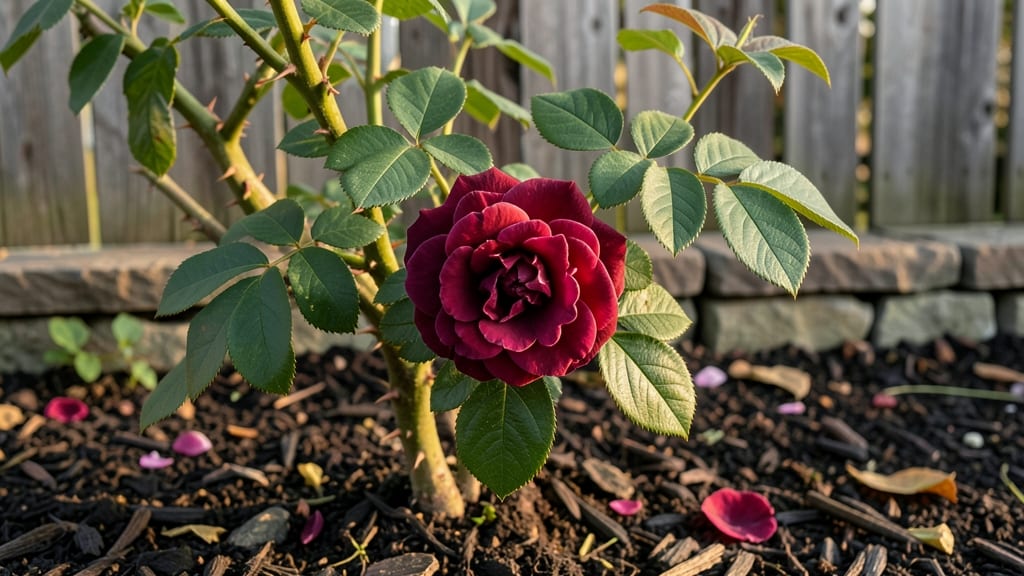
Roses originated in the rugged highlands of Central Asia, particularly the Himalayan foothills and Caucasus Mountains, where hardy species like Rosa fedtschenkoana and Rosa gallica evolved over thousands of years before being cultivated and spread worldwide.
These wild roses thrived in Central Asia's harsh climates, developing deep root systems and disease resistance that modern cultivars still carry. 🌿 The region's diverse microclimates—from alpine meadows to semi-arid steppes—created the perfect conditions for genetic diversity, allowing roses to adapt to everything from freezing winters to scorching summers.
What's fascinating is how these ancient varieties laid the foundation for today's hybrid roses, which now grow in everything from temperate Europe to tropical Ecuador.
While Central Asia remains the ancestral homeland, today's most innovative rose breeding happens in regions like Provence, France—known for its fragrant floriculture—and Ecuador's high-altitude valleys, where roses bloom year-round thanks to cool nights and sunny days.
These modern cultivation hubs have turned roses from wild survivors into the globally beloved flowers we know today.
💡 In This Article
- The Ancient Origins of Wild Roses in Central Asia
- Modern Rose Cultivation Hubs Around the World
The ancient origins of wild roses in Central Asia
The wild roses we trace back to Central Asia weren't just surviving—they were thriving in some of Earth's most extreme environments.
In the Himalayan foothills, species like Rosa fedtschenkoana developed thick, woody stems to withstand -40°F winters, while in the Caucasus Mountains, Rosa gallica adapted to rocky, nutrient-poor soils with deep taproots reaching 10+ feet underground.
These adaptations weren't random; they were shaped by 10,000+ years of evolutionary pressure where only the hardiest plants could reproduce. 🌿
What makes this region so special is its microclimate diversity. The area spans from alpine meadows at 10,000 feet elevation—where roses grow in sparse, cold-resistant clusters—to semi-arid steppes where drought-tolerant species evolved.
This environmental range created a genetic playground where roses could develop hundreds of natural hybrids, each with unique petal shapes, colors, and fragrances. For comparison, modern roses today have only about 30% of the genetic diversity found in these ancient Central Asian populations.
The story of how these wild roses spread begins with human migration. As early civilizations moved along trade routes like the Silk Road (active from 200 BCE onward), they unknowingly carried rose seeds in their clothing, food, and tools.
Archaeologists have found rose petals preserved in 3,000-year-old Persian tombs, proving their cultural significance long before formal cultivation. The seeds would germinate in new climates, creating the first "accidental hybrids" as different species cross-pollinated in gardens and wild landscapes. 🌍
One of the most fascinating discoveries comes from genetic studies in the 2000s. Researchers found that modern roses share 90% of their DNA with Central Asian wild species, confirming their ancestral roots.
The remaining 10% comes from later crossbreeding in regions like China and Persia, where gardeners began intentionally cultivating roses for their beauty and fragrance around 500 BCE.
This genetic continuity explains why roses today still exhibit many of the same hardy traits—like disease resistance and cold tolerance—that their wild ancestors developed in Central Asia's harsh conditions.
Consider this: The Caucasus Mountains remain a biodiversity hotspot for roses, hosting over 50 wild species in a single region. This concentration is unmatched anywhere else on Earth.
For rose breeders, these ancient populations serve as a living gene bank, offering traits that modern roses have lost through selective breeding.
When you see a deeply fragrant rose today, you're experiencing a direct descendant of those wild Central Asian ancestors that first learned to survive—and thrive—in some of the planet's toughest environments. 🌸
The legacy of Central Asia's wild roses extends beyond their genetic contributions. These ancient plants also shaped human culture and medicine. The Hippocratic Corpus (4th century BCE) mentions rose petals for wound healing, while Persian poets like Firdawsi (10th century CE) immortalized roses in epic poetry.
The same hardy species that survived Central Asia's extremes eventually became the foundation for the 200+ rose species we cultivate today—from climbing varieties to miniature roses—all tracing back to that rugged ancestral homeland. 💫