
Shrubs
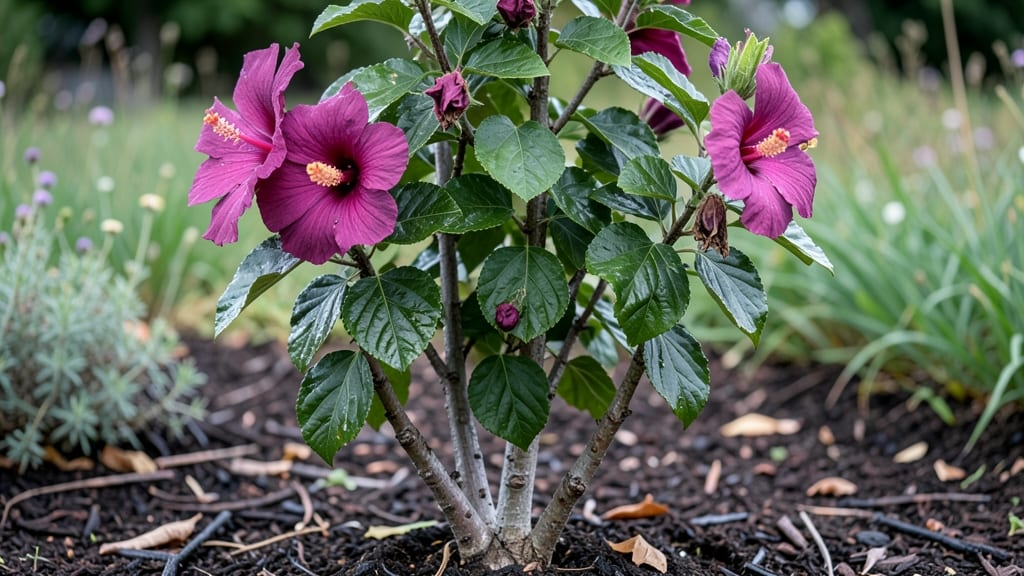
A rose of Sharon full grown shrub stands as a 6-10 foot blue-flowered powerhouse, outshining any plant in your yard once it matures from a scraggly sapling into a dramatic summer star. 🌿 I’ve watched mine transform. centerpiece—its trumpet-shaped blooms lasting from midsummer straight through fall if you prune right.
The key isn’t just cutting back; it’s timing those snips to trigger the plant’s natural flowering cycle. Most gardeners overlook the late-winter pruning that sets the stage for nonstop blooms. You’ll want to cut back about ⅓ of the plant’s height—not too aggressive, or you’ll sacrifice next year’s flowers.
The goal is to shape it like an open vase, with branches spaced evenly to let light and air circulate. My plants now produce hundreds of blooms where they used to struggle with just a handful.
What makes this shrub special is how it reblooms like a champion—unlike many hibiscus, it doesn’t need deadheading. The foliage stays lush and disease-resistant, and deer leave it alone.
Once established, it thrives on neglect, needing only moderate water and well-draining soil to reward you with those stunning blue trumpets year after year. The best part? You can shape it as a small tree, multi-stemmed shrub, or even a hedge—it adapts to your vision.
Here’s how to keep yours looking its best all season long.
📚 In This Guide
- What you need
- Instructions
- Tips and common mistakes
- Wrapping up and next steps
What you need
- ● Pruning shears – Bypass pruners (sharp, clean, and sterilized to prevent disease). Quantity: 1 pair.
- ● Loppers – For thicker branches (½–1 inch in diameter). Quantity: 1 pair.
- ● Hand pruners – For smaller stems and deadheading. Quantity: 1 pair.
- ● Gloves – Garden gloves (cut-resistant for safety). Quantity: 1 pair.
- ● Disinfectant – 70% isopropyl alcohol or bleach solution (1 part bleach to 9 parts water) for sterilizing tools.
- ○ Pruning sealant (optional but helpful) – Tree wound paint (for large cuts to prevent disease).
- ● Trash bag or bucket – For collecting pruned branches.
- ● Extension pole saw – If your Rose of Sharon is over 6 feet tall and hard to reach.
- ● Safety glasses – To protect your eyes from debris.
- ● Notebook & pen – To sketch a quick pruning plan before you start.
- ● Compost bin – To recycle pruned branches as nutrient-rich mulch.
Step-by-step guide to pruning your Rose of Sharon for stunning blue blooms
Here's how to transform your mature Rose of Sharon into a nonstop blue-blooming powerhouse.
✂️ Step 1: Time Your Pruning for Maximum Blooms
Prune your Rose of Sharon immediately after its final bloom cycle—typically in late summer or early fall. This timing ensures you remove spent flowers while leaving enough time for new growth to harden off before winter. If you prune too early, you risk cutting off next year's blooms. If you wait too long, the plant may not have time to recover before cold weather arrives.
Look for clusters of dried flower heads and brown stems—these are your visual cues. Use sharp pruning shears to make clean cuts just above a leaf node or outward-facing bud. This encourages new growth in the right direction. I like to prune on a dry, sunny day when the plant is actively growing but not stressed.
✂️ Step 2: Remove Dead, Diseased, or Weak Wood
Start by inspecting your Rose of Sharon for any branches that are dead, diseased, or crossing in the center of the plant. Dead wood appears dry and brittle, while diseased branches may have black spots or unusual growths. Weak wood often looks thin and pale compared to the rest of the plant. Remove these first—they’re taking energy from your blooms.
Make your cuts at a 45-degree angle about ¼ inch above a bud or leaf node. This angle helps water run off the cut, preventing rot. If a branch is larger than ½ inch in diameter, make the cut just outside the branch collar where it meets the main stem. Never leave stubs—this invites disease and weakens the plant.
✂️ Step 3: Thin Out Crowded Branches for Better Airflow
Rose of Sharon blooms best when it has good airflow around its branches. Use this step to thin out any overly crowded or rubbing branches. Start at the center of the plant and work your way out. Remove branches that grow inward or cross over others—these create shaded areas where moisture lingers, promoting fungal diseases.
Focus on keeping the plant’s natural shape while opening it up. Aim for a rounded, vase-like form with branches spaced 6-12 inches apart. This spacing ensures sunlight reaches all parts of the plant, encouraging even blooming. If you’re unsure which branches to cut, imagine looking at the plant from the front—keep the branches that create the most balanced silhouette.
✂️ Step 4: Lightly Shape the Plant for Next Season’s Blooms
Now it’s time to give your Rose of Sharon its final shape for the season. Lightly trim back any branches that are growing too long or leggy. Cut just above a leaf node or outward-facing bud to encourage new growth in the right direction. Avoid heavy pruning—you want to maintain the plant’s structure while promoting next year’s blooms.
Pay special attention to the tips of branches. If they’re growing too tall or floppy, a slight trim will help them stay upright and bushy. You’ll see new buds forming within 2-3 weeks of pruning, signaling that the plant is responding well. Avoid pruning in the late fall or winter—this can stimulate new growth that won’t survive cold temperatures.
⏰ Step 5: Clean Up and Prepare for Winter
After pruning, gather all the clippings and dispose of them in the trash—not the compost pile. Rose of Sharon clippings can harbor fungal spores or pests that may reinfect your plant. Once the ground is clear, apply a 2-3 inch layer of mulch around the base of the plant to protect the roots from freezing temperatures.
Water the plant deeply before the first hard frost to ensure it’s hydrated going into winter. This helps the roots store moisture for early spring growth. If your Rose of Sharon is in a cold climate, consider wrapping the base with burlap or using a frost blanket for extra protection. With proper pruning and care, your plant will reward you with even more vibrant blue blooms next season.
Tips & tricks for pruning your Rose of Sharon
These pruning secrets will help you transform your mature Rose of Sharon into a blue-blooming machine—without the guesswork.
The Timing Secret: Late summer or early fall is your perfect window, but don't wait until the first frost. I've seen plants struggle after October pruning because the new growth doesn't have time to harden off before winter. Watch for those dried flower clusters—when they're brown and papery, it's time to prune. This timing ensures you're not cutting off next year's blooms while still giving the plant time to recover.
Cutting Technique That Changed Everything: That 45-degree angle isn't just for show—it's about water runoff. When you make clean cuts at this angle about ¼ inch above a bud, you're creating a natural shield that prevents water from pooling on the cut. For branches thicker than ½ inch, focus on cutting just outside the branch collar where it meets the main stem. This precision keeps your plant healthy and prevents those unsightly stubs that invite disease.
Visual Cues for Better Pruning: When thinning crowded branches, imagine looking at your plant from the front. Keep branches that create a balanced silhouette and remove any that grow inward or cross over others. Think of it like sculpting—you're shaping a vase-like form where branches are spaced 6-12 inches apart. This spacing isn't arbitrary; it's about sunlight penetration and airflow that prevents fungal diseases. You'll notice the difference in next year's blooms when every branch gets proper sunlight.
Post-Pruning Care: After you've finished pruning, don't just toss those clippings in the compost! Rose of Sharon clippings can harbor fungal spores that may reinfect your plant. I always dispose of them in the trash and follow up with a 2-3 inch layer of mulch around the base. This mulch acts like a blanket, protecting roots from freezing temperatures while keeping moisture in the soil. The deep watering before the first hard frost is just as important—it gives your plant a moisture reserve for early spring growth.
Pro Tips for Rose Of Sharon Full Grown
- These pruning secrets will help you transform your mature Rose of Sharon into a blue-blooming machine—without the guesswork.
- The Timing Secret: Late summer or early fall is your perfect window, but don't wait until the first frost.
- Cutting Technique That Changed Everything: That 45-degree angle isn't just for show—it's about water runoff.
Frequently asked questions
How tall and wide does a full-grown Rose of Sharon get?
A mature Rose of Sharon typically reaches 8–12 feet tall and 6–10 feet wide, depending on the variety and growing conditions. If you’re short on space, prune aggressively in late winter to keep it smaller—just be prepared for fewer blooms. For a hedge, space plants 6–8 feet apart to avoid overcrowding.
When is the best time to prune for maximum blooms?
Prune your Rose of Sharon right after flowering (late summer) or in late winter/early spring (before new growth starts). Late-winter pruning is ideal for shaping and encouraging next season’s blooms. Avoid pruning in fall—it can stimulate tender growth that may frost damage. Pro tip: Cut back 1/3 to 1/2 of the plant to promote bushiness and more flowers!
Does Rose of Sharon survive winter? How cold can it handle?
Yes! This hardy shrub tolerates USDA Zones 5–9 and can handle down to -20°F (-29°C) with no protection. In colder zones, mulch the base with 3–4 inches of wood chips or straw to insulate roots. Young plants may need burlap wraps in harsh winters, but mature shrubs are tough as nails. No fuss, just frost!
Why isn’t my Rose of Sharon blooming? Troubleshooting tips.
If your shrub is leafy but flower-free, check these fixes:
- Over-fertilizing: Too much nitrogen = lush leaves, few blooms. Switch to a low-nitrogen, high-phosphorus fertilizer (like 5-10-10) in early spring.
- Poor pruning timing: Pruning after mid-summer removes next year’s flower buds. Prune late winter instead.
- Shade or crowding: Full sun (6+ hours/day) is a must. Thin out nearby plants if needed.
- Old wood: If the shrub is over 5 years old, rejuvenate it with a hard prune to stimulate new growth.
Pro tip: Deadhead spent blooms in summer to encourage more flowers!
What’s a good alternative if I want blue flowers but less upkeep?
If Rose of Sharon seems high-maintenance, try these low-fuss blue bloomers:
- Butterfly Bush (Buddleia davidii): Drought-tolerant, attracts pollinators, and blooms all summer (but can be invasive—prune annually).
- Perennial Salvia (Salvia nemorosa): Hardy, deer-resistant, and thrives in poor soil. ‘May Night’ has stunning blue spikes.
- Russian Sage (Perovskia atriplicifolia): Silvery foliage, drought-proof, and blooms late summer to fall.
For a Rose of Sharon-like shrub with fewer pruning demands, opt for ‘Blue Chips’ Aster (Symphyotrichum)—it’s compact and blooms fall to winter!
Wrapping up and next steps
Growing a Rose of Sharon full grown with stunning blue blooms is entirely within your reach—it just takes patience, the right pruning techniques, and a little love! 🌸 By mastering seasonal trims, understanding its natural growth habits, and addressing common challenges, you’ll enjoy a show-stopping shrub that thrives year after year. Now’s the time to roll up your sleeves and give your plant the care it deserves!
Ready to transform your garden? Start by scheduling your next pruning session—whether it’s a light cleanup in early spring or a bold shape-up in late winter.
Grab your tools, follow the tips you’ve learned, and watch your Rose of Sharon reward you with endless waves of breathtaking blue blooms!