
Pruning
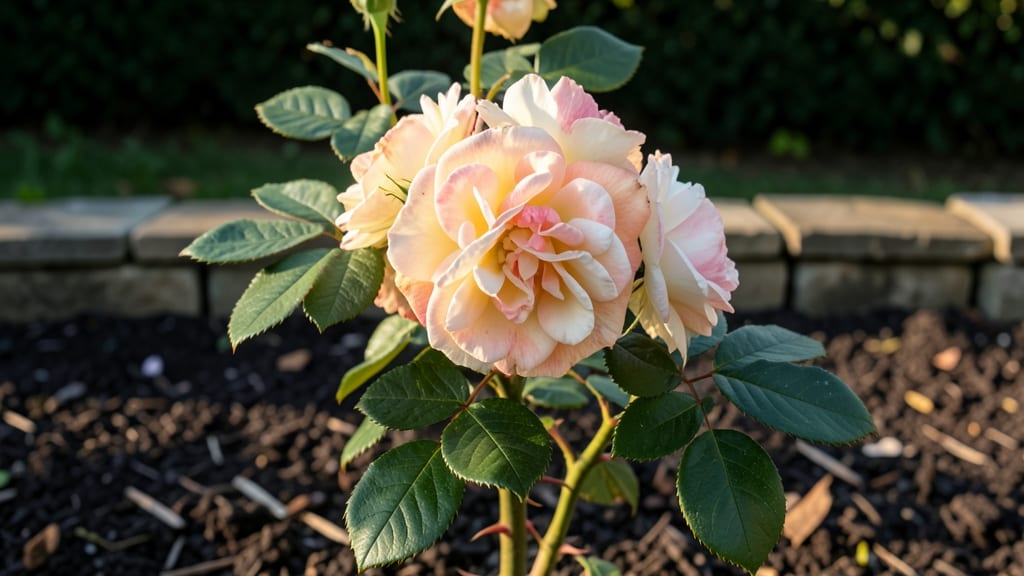
The natural multi-colored roses in your garden aren’t just a trick of the light—they’re nature’s own masterpiece. ✨ These stunning blooms add drama to any garden, blending pinks, whites, and reds in single petals that make neighbors stop and stare.
My first season with them proved they're not just pretty; they're the star of the show, blooming from early summer until frost.
You don't need a huge yard to make them shine. A single 3-foot-tall bush creates a focal point in borders, while smaller varieties thrive in containers or mixed beds. Pair them with lavender for contrast or salvia for height—both love the same sunny spot and drought-tolerant conditions.
The key is pruning them right after blooming to encourage that second flush of flowers.
Imagine your garden in July: roses overflowing with jewel-toned petals, their scent heavy in the air, and bees buzzing from bloom to bloom. These roses attract pollinators all season, turning your yard into a living tapestry.
The secret? Plant them where they get 6+ hours of sun and feed them rich soil once a month.
They work in cottage gardens, modern landscapes, or even as dramatic centerpieces in large pots. Start with one bush this year—you'll be hooked by next spring when those first buds appear. The drama starts small but grows into something unforgettable.
📚 In This Guide
- What you need
- Instructions
- Tips and common mistakes
- Wrapping up and next steps
What you need
- ● Rose bushes: Choose disease-resistant varieties like 'Rainbow Connection', 'Double Delight', or 'Black Baccara' (multi-colored or variegated types). Quantity: 3–5 plants for a striking display.
- ● Pruning shears: Sharp, bypass-style shears (avoid anvil types—they crush stems). Spec: 6–8" blades, stainless steel.
- ● Disinfectant (70% isopropyl alcohol or bleach solution): 1 part bleach to 9 parts water (for sterilizing tools).
- ● Compost or organic fertilizer: Balanced (10-10-10) or rose-specific (higher phosphorus for blooms). Amount: 2–3 cups per plant, 2x/year.
- ● Mulch: Organic (shredded bark, straw) to retain moisture and suppress weeds. Depth: 2–3 inches.
- ● Garden gloves: Heavy-duty, nitrile-coated for protection (thorns are no joke!).
- ● Rose food (liquid or granular): For extra color intensity during blooming season.
- ● Epsom salt: 1 tbsp/month in water (boosts magnesium for vibrant blooms).
- ● Color-enhancing foliar spray: Natural options like kelp extract or fish emulsion (follow label rates).
- ● Staking or trellis: For climbing roses or heavy blooms (use flexible ties).
- ● Rain gauge or moisture meter: Roses love consistent watering—1–1.5 inches/week.
Step-by-Step instructions for planting and caring for multi-colored roses
Here's how to create a stunning, naturally multi-hued rose display that blooms all season long.
🌱 Step 1: Choose and Prepare the Right Location
Select a spot that gets 6-8 hours of direct sun daily—multi-colored roses thrive with plenty of light. I always test the area for a full day first; if shadows linger for more than 2 hours, find a sunnier location. The soil should drain well, so avoid low spots where water pools after rain.
Dig a hole twice as wide as the root ball but only as deep. This encourages roots to spread horizontally rather than settling too deep, which can stress the plant. Loosen the sides of the hole with a garden fork to help roots penetrate easily. Here's the thing—amend heavy clay soil with 2-3 inches of compost mixed into the bottom of the hole to improve drainage and fertility.
🪴 Step 2: Plant Roses at the Correct Depth and Spacing
Remove the rose from its container and gently tease apart any circling roots—this prevents girdling as the plant matures. Position the rose so the graft union (a slight bulge near the base) sits 2-3 inches above soil level. If buried too deep, the plant may rot; if too high, it can dry out.
Space plants 3-4 feet apart for hybrid roses or 4-5 feet apart for larger varieties like floribundas. I like to plant in a slight mound to encourage drainage, especially in rainy climates. Backfill with native soil mixed with a handful of balanced rose fertilizer (10-10-10 ratio) to give roots a nutrient boost right away.
☀️ Step 3: Water Deeply and Mulch for Season-Long Blooms
Water immediately after planting to settle the soil and eliminate air pockets. Give the rose 1-2 gallons of water per plant, enough to soak the root zone to a depth of 12 inches. You'll know it's right when water runs out the bottom of the hole—this ensures roots establish quickly.
Spread 2-3 inches of organic mulch (like shredded bark or straw) around the base, keeping it 6 inches away from the stem to prevent rot. Mulch conserves moisture and regulates soil temperature, which is especially important during summer heat. Replenish mulch as it breaks down to maintain that 2-inch layer.
✂️ Step 4: Prune Strategically for Bold, Continuous Blooms
Prune in early spring before new growth starts, cutting back to an outward-facing bud just above a set of 5 leaflets. I always make cuts at a 45-degree angle, about ¼ inch above the bud, to encourage water to run off rather than pool. Remove any dead, diseased, or crossing branches first—they compete with healthy growth.
Deadhead spent blooms regularly to redirect the plant's energy into producing more flowers. For multi-colored roses, this means cutting back to the first healthy leaf below the bloom cluster. You'll see new buds forming within 2-3 weeks if the plant is healthy and well-fed.
💧 Step 5: Feed and Monitor for Season-Long Drama
Fertilize every 4-6 weeks during the growing season with a rose-specific fertilizer or a balanced organic option. I use a liquid feed mixed at half-strength to avoid burning roots. Water deeply before and after feeding to help nutrients penetrate the soil.
Watch for signs of stress like yellowing leaves or stunted growth—these often mean the plant needs more nutrients or water. Multi-colored roses love a little extra attention, so I inspect them weekly for pests like aphids or spider mites. A strong spray of water usually knocks them off, but severe infestations may need neem oil treatment.
Tips & tricks for perfect natural multi-colored roses
Here's what nobody tells you about keeping your vibrant roses blooming like a pro—these are my battle-tested secrets.
Sunlight Strategy: That 6-8 hours of direct sun is non-negotiable, but here's the trick: if your roses get afternoon shade, position them so the morning sun hits the front. Morning sunlight is gentler and helps prevent sunburn on the colorful petals. I've seen roses in partial shade still bloom, but the colors fade faster—worth the extra effort for that bold garden drama.
Root Ball Rescue: When you're teasing apart those circling roots in Step 2, don't just pull them—gently work them apart with your fingers like untangling headphones. The goal is to encourage outward growth, not damage the delicate roots. I've seen gardeners accidentally snap roots this way, which stresses the plant for weeks. Take your time here—it's worth the patience for long-term health.
Watering Wisdom: That 1-2 gallons per plant after planting isn't just about quantity—it's about technique. Use a watering wand or hose with a gentle spray to avoid disturbing the soil around the roots. I like to water in the morning so the roots have all day to absorb moisture before evening. And here's a pro move: water the soil, not the leaves, to prevent fungal issues that can dull those gorgeous colors.
Pruning Precision: For that 45-degree angle cut in Step 4, imagine you're making a tiny roof—water should run off, not pool. I use sharp pruners and make the cut just above a set of 5 leaflets to encourage new growth from that strong point. The first time I pruned wrong, I ended up with bare stems where new blooms should have been. Now I mark my cuts with my thumb to visualize that perfect angle before I slice.
Pro Tips for Natural Multi Colored Roses
- Here's what nobody tells you about keeping your vibrant roses blooming like a pro—these are my battle-tested secrets.
- Sunlight Strategy: That 6-8 hours of direct sun is non-negotiable, but here's the trick: if your roses get afternoon shade, position them so the morning sun hits the front.
- Root Ball Rescue: When you're teasing apart those circling roots in Step 2, don't just pull them—gently work them apart with your fingers like untangling headphones.
Frequently asked questions
Got questions about growing natural multi-colored roses?
You’re not alone! Here are answers to the most common queries—so you can enjoy vibrant blooms all season long.
Why do my multi-colored roses sometimes revert to one color?
Multi-colored roses (like Blaze or Double Delight) may revert to a single hue due to genetic dominance or stress. This is normal! Choose disease-resistant varieties or grafted roses to minimize reversions. Pro tip: Prune back reverted stems to encourage new growth with the desired colors.
How long does it take for multi-colored roses to bloom after planting?
Patience is key! Most roses take 6–12 months to establish roots and bloom after planting. For faster results, buy established bare-root roses in early spring and fertilize regularly. Bonus: Deadhead spent blooms to encourage continuous color.
Can I grow multi-colored roses in containers?
Dwarf or patio varieties (like ‘Playful’ or ‘Julia Child’) thrive in containers. Use well-draining soil, a pot at least 12–15 inches deep, and place them in full sun. Troubleshoot: Move containers indoors during frost or use frost cloth for winter protection.
Are there alternatives to multi-colored roses for bold garden drama?
Yes! Try double-flowered peonies (lush layers of petals), hydrangeas (color-changing blooms), or coral bells (Heuchera) for striped foliage. For roses specifically, ‘The Fairy’ or ‘Pink Parasol’ offer unique patterns without full multi-hue complexity.
Why are my multi-colored roses’ leaves yellowing or curling?
Yellow leaves often signal overwatering or nutrient deficiency (like nitrogen). Curling can mean aphids or powdery mildew. Fix it: Adjust watering, apply balanced rose fertilizer, and spray neem oil for pests. Prune affected leaves to improve airflow.
Wrapping up and next steps
Growing natural multi-colored roses is all about embracing their vibrant, one-of-a-kind beauty while giving them the care they deserve. With the right techniques—like strategic pruning, soil enrichment, and seasonal adjustments—you’ll unlock season-long blooms that turn your garden into a living masterpiece. 🌸
Ready to dive in? Start by observing your roses this season—notice their colors, growth patterns, and blooming cycles. Then, experiment with the tips you’ve learned: prune with purpose, feed them naturally, and protect them from pests.
Every small step brings you closer to a garden bursting with unexpected, eye-catching hues!
Now grab those shears and get growing—your boldest garden drama is just a bloom away! 🌿✨