
Container Gardens
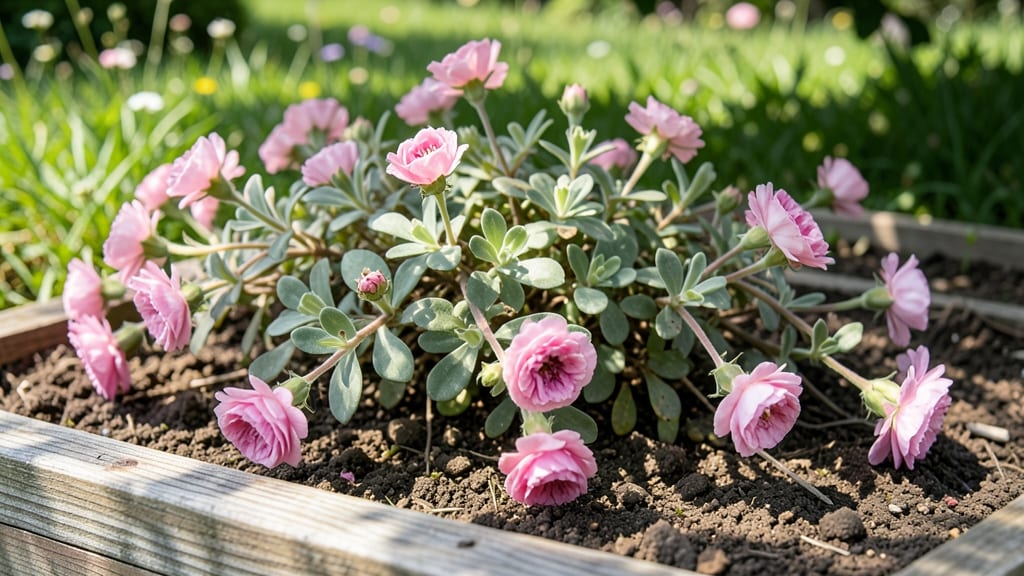
Moss roses spill over hanging baskets like velvety waterfalls of color—bright pinks, fiery oranges, and sunny yellows that never quit. 🌸 Honestly, I’ve tried dozens of trailing plants, but moss roses win for their nonstop blooms and drought-tolerant ease.
They thrive in baskets where other flowers wilt, turning patios and porches into living art. The secret to their success? Full sun, well-draining soil, and a little deadheading to keep flowers coming.
Pair them with sweet potato vine or trailing lobelia for extra drama, and you’ll have a year-round show that even the most skeptical neighbor will admire. Just avoid heavy watering—they hate soggy roots.
By late spring, your baskets will be bursting with blooms, and the fragrance will draw in bees and butterflies. The best part? They bounce back from heat waves and occasional neglect, making them the perfect low-maintenance star for any hanging display.
Works for small balconies or grand entryways—just adjust basket size (12–18 inches works best) and spacing. Let’s get those vines cascading!
📚 In This Guide
- What you need
- Instructions
- Tips and common mistakes
- Wrapping up and next steps
What you need
- ● Moss rose (Portulaca grandiflora) plants: 3–5 healthy, potted plants per basket (choose varieties like 'Sunset,' 'Black Velvet,' or 'Pink Beauty' for vibrant color).
- ● Hanging baskets: 10–14" diameter, with drainage holes (plastic, woven, or metal—your pick!).
- ● High-quality potting mix: 1 bag (1–2 cubic feet) of well-draining, peat-based or cactus/succulent mix (avoid heavy garden soil!).
- ● Moss or sphagnum peat moss: Small handful (for moisture retention and aesthetics).
- ● Slow-release fertilizer: 1 packet (10–12 oz) of balanced 10-10-10 or time-release granules for moss roses.
- ● Scissors or pruning shears: For trimming roots or vines (sterilize with rubbing alcohol!).
- ● Watering can or spray bottle: With a fine rose nozzle for gentle hydration.
- ● Decorative liners: Coconut fiber or moss liners to enhance drainage and add texture.
- ● Liquid fertilizer: Diluted fish emulsion or bloom booster (use every 2–3 weeks).
- ● Garden twine or floral picks: To secure trailing vines for a neater look.
- ● Decorative accents: Small pebbles, seashells, or succulents for a boho-chic touch.
- ● Sun hat or shade cloth: For baskets in intense afternoon sun (moss roses love heat but can scorch!).
How to grow moss rose in hanging baskets
These trailing beauties transform any space with their fragrant blooms and lush foliage—here’s how to coax their best performance.
🪴 Step 1: Select the Right Hanging Basket and Prepare the Growing Medium
Choose a 12-16 inch diameter hanging basket with multiple drainage holes—moss roses despise soggy roots. I prefer coconut fiber baskets because they retain moisture while allowing airflow. Line the bottom with 1-2 inches of sphagnum moss to prevent soil from escaping through the holes, then add a 2-inch layer of perlite or pumice on top to improve drainage.
Fill the basket halfway with a well-draining potting mix formulated for trailing plants—avoid garden soil, which compacts and suffocates roots. Mix in a slow-release fertilizer (10-10-10 ratio) to provide nutrients over time. The goal is a light, airy medium that mimics the mossy, acidic conditions moss roses thrive in.
🌱 Step 2: Plant Moss Rose Cuttings or Young Plants
If using rooted cuttings, space them 6-8 inches apart along the basket’s edge to encourage cascading growth. Gently tease apart the roots and nestle them into the soil, ensuring the base of the cutting sits just below the soil surface. Press lightly to secure but avoid compacting the mix.
For young plants, dig holes slightly larger than the root ball and place each plant at the same depth it grew in its nursery pot. Water immediately after planting to settle the soil around the roots. Moss roses are sensitive to root disturbance, so handle them carefully—never tug or force the stems into place.
☀️ Step 3: Position for Light and Water Consistently
Moss roses crave bright, indirect light—think east or west-facing windows or 4-6 feet under grow lights. Direct midday sun can scorch their delicate foliage, while too little light results in sparse blooms. You’ll know the light is right when new growth appears vibrant green and compact, not stretched or pale.
Water when the top inch of soil feels dry—these plants love humidity but hate soggy roots. I water mine every 2-3 days in summer, using room-temperature water to avoid shocking the roots. Let excess water drain completely, then return the basket to its saucer. Mist the foliage daily in hot weather to replicate their natural, humid habitat.
💧 Step 4: Fertilize and Prune for Continuous Blooms
Feed every 4-6 weeks with a balanced liquid fertilizer (20-20-20) diluted to half strength. I switch to a low-nitrogen, high-phosphorus formula (like 5-10-5) when buds form to encourage longer-lasting blooms. Always water the soil first to prevent root burn—never fertilize dry roots.
Deadhead spent blooms weekly to redirect energy into new flowers. Pinch back leggy stems by one-third in early spring to promote bushier growth. If a vine outgrows its basket, trim it back to 6-8 inches—it’ll bounce back with even more vigor and blooms. Moss roses reward pruning with denser foliage and nonstop color.
✂️ Step 5: Overwinter and Propagate for Next Season
When temperatures drop below 50°F, move baskets indoors near a bright window or under grow lights. Reduce watering to once every 7-10 days and stop fertilizing entirely. Prune back one-third of the growth in late winter to prep for spring. You’ll see new shoots emerge within 3-4 weeks—that’s your cue to resume regular care.
Propagate moss roses easily by taking 4-6 inch cuttings in spring. Dip the ends in rooting hormone, then place in a moistened perlite mix. Keep humid and warm (70-75°F) until roots form (4-6 weeks). These cuttings make perfect gifts—your friends will be hooked on their cascading charm too.
Tips & tricks for perfect moss rose in hanging baskets
Here's what nobody tells you about keeping these fragrant vines thriving—game-changers that'll transform your hanging baskets into cascading blooms.
Basket Selection: While the instructions recommend 12-16 inch baskets, I've found 14-inch diameter baskets strike the perfect balance between drainage and root space for moss roses. The coconut fiber material is ideal, but if you can't find it, plastic-coated wire baskets with good drainage work too—just add an extra layer of sphagnum moss to prevent soil loss. The key is ensuring those drainage holes are unobstructed; I've seen roots get tangled in holes when baskets get old.
Soil Mix Secrets: The light, airy medium is non-negotiable, but here's the trick: mix in one part peat moss to every three parts of your trailing plant mix. This creates the perfect acidic environment moss roses love. I also add a handful of orchid bark chunks for extra aeration—this prevents that dreaded compacted soil feeling that chokes roots. Think of it as giving your moss roses a spa-like growing environment.
Light Positioning: That bright, indirect light is crucial, but here's how to nail it: position your baskets 6-8 feet from south-facing windows to filter the harshest afternoon sun. For indoor grow lights, use full-spectrum LED bulbs on a timer for 12-14 hours daily. I've noticed moss roses develop pale, leggy growth when they're not getting enough light—this is their way of reaching for more sunlight. Rotate your baskets quarter-turn weekly to ensure even growth all around.
Watering Wisdom: The "top inch dry" rule works, but here's the real secret: water early in the morning so the foliage has all day to dry before evening. This prevents fungal issues that can rot those delicate stems. In winter, let the top 2 inches dry out between waterings—your moss roses are essentially dormant then. And always use room-temperature water—cold water shocks their roots, while hot water can damage the tender foliage.
Pro Tips for Moss Rose In Hanging Baskets
- Here's what nobody tells you about keeping these fragrant vines thriving—game-changers that'll transform your hanging baskets into cascading blooms.
- Basket Selection: While the instructions recommend 12-16 inch baskets, I've found 14-inch diameter baskets strike the perfect balance between drainage and root space for moss roses.
- Soil Mix Secrets: The light, airy medium is non-negotiable, but here's the trick: mix in one part peat moss to every three parts of your trailing plant mix.
Frequently asked questions
Got questions about growing moss roses in hanging baskets?
Here are answers to the most common ones to help you create a stunning, fragrant display!
How often should I water moss roses in hanging baskets?
Water moss roses daily during hot, dry weather—they dry out fast in baskets! Check soil moisture by sticking your finger 1–2 inches deep; if it feels dry, water thoroughly until it drains from the bottom. In cooler months, reduce to every 2–3 days. Pro tip: Use a self-watering basket or place it on a saucer to retain moisture.
When is the best time to plant moss roses in hanging baskets?
Plant moss roses in spring after the last frost (USDA Zones 7–10) for best results. They thrive in warm weather and may struggle in winter’s chill. If you’re in a mild climate (Zone 10+), you can plant in early fall too. Pro tip: Pre-soak roots for 10–15 minutes before planting to reduce transplant shock.
Can I grow moss roses in hanging baskets without a trellis?
Yes! Moss roses are self-clinging vines—they’ll cascade beautifully without a trellis. However, if you want them to climb a nearby fence or pergola, add a lightweight mesh or wire support. For pure hanging baskets, let them spill over the edges for a romantic, trailing effect. Pro tip: Choose a basket with deep sides (12+ inches) to accommodate their sprawling roots.
Why are my moss rose leaves turning yellow or dropping?
Yellow leaves often signal overwatering (root rot) or underwatering (stress). Check soil moisture and adjust watering. Other culprits: pests (aphids, spider mites) or nutrient deficiency. Treat pests with neem oil and fertilize monthly with a balanced, water-soluble formula. Pro tip: Ensure baskets have drainage holes to prevent soggy roots.
How do I keep moss roses blooming all season?
Deadhead faded flowers regularly to encourage new blooms. Feed every 2–4 weeks with a high-phosphorus fertilizer (like 10-30-20) during spring/summer. Prune leggy stems in early spring to promote bushier growth. Pro tip: Place baskets in morning sun and afternoon shade to prevent wilting while keeping blooms vibrant.
Wrapping up and next steps
Transforming your space with moss roses in hanging baskets is a rewarding way to add fragrant beauty and year-round color to any corner! 🌸 These cascading vines thrive with minimal effort, offering a burst of charm that brightens up patios, balconies, or even indoor spots.
Whether you're a seasoned gardener or just starting out, their resilience and vibrant blooms make them a must-try for effortless elegance.
Ready to dive in? Grab your baskets, pick your favorite varieties, and let the magic unfold! Start small—plant a single basket or create a stunning display with multiple tiers—and watch your garden come to life with lush, fragrant vines that never stop impressing. Happy gardening! 🌿✨