
Shrubs
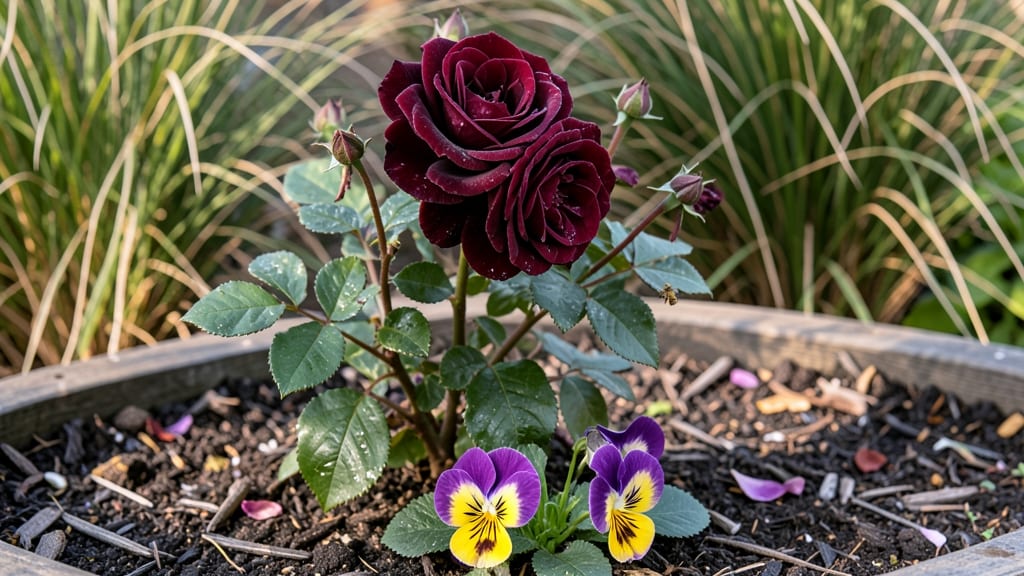
Growing Matrix Rose Pansies means never saying goodbye to color—these fragrant climbers bloom from early spring until frost. 🌸 I’ve grown them for years, and their secret lies in the right balance of sunlight, soil, and strategic pruning that keeps them flowering nonstop.
These pansies thrive in partial shade with morning sun, making them perfect for shady gardens or containers. They love well-draining soil rich in organic matter, and a light feeding every 4-6 weeks keeps blooms abundant.
The real magic happens when you prune spent flowers—this simple step encourages new blooms and extends the season. By mid-summer, you’ll have a lush, fragrant display that attracts pollinators and brightens any space.
The key is consistent care: water at the base to avoid mildew, mulch to retain moisture, and prune regularly to maintain shape and encourage more flowers. Works in garden beds, hanging baskets, or even as a fragrant ground cover. Here’s how to keep them thriving all season long!
📚 In This Guide
- What you need
- Instructions
- Tips and common mistakes
- Wrapping up and next steps
What you need
- ● Matrix Rose Pansy plants: 3–5 healthy nursery-grown plants (choose mature specimens for quicker blooms).
- ● Well-draining potting mix: 10–15 gallons of high-quality garden soil amended with 30% perlite or vermiculite (or a 50/50 blend of soil and compost).
- ● Slow-release fertilizer: 5–10 lbs of 10-10-10 NPK (or a rose-specific formula).
- ● Pruning shears: Bypass pruners (sharp, sterilized) for clean cuts.
- ● Garden gloves: Heavy-duty, cut-resistant (to protect from thorns).
- ● Mulch: 3–5 inches of wood chips or straw to retain moisture.
- ● Stakes or trellis: 4–6 ft tall (for climbing support).
- ● Pruning saw (for thick stems).
- ● Hose with nozzle (for deep watering).
- ● pH test kit (ideal range: 6.0–6.5).
- ● Organic fungicide (preventative for powdery mildew).
- ● Garden kneeler pad (for comfort during pruning).
Step-by-step instructions for pruning Matrix Rose Pansies
Here’s how I keep my Matrix Rose Pansies blooming nonstop—with fragrant climbers that stay lush all season.
✂️ Step 1: Time Your First Pruning for Peak Growth
Wait until after the first flush of blooms—usually 4-6 weeks after planting—before your first major prune. This gives the plant energy to establish roots and stems. Look for healthy, woody stems (about ¼-inch thick) as your signal. I prune in early spring (just as new growth starts) and again in late summer to encourage a second flush.
Use clean, sharp pruners (sterilized with rubbing alcohol) to make 45-degree cuts just above a leaf node. This angle helps water run off, preventing rot. Never cut into old, bare wood—you’ll sacrifice next year’s blooms. If you see yellowing leaves, prune those off immediately to redirect energy to flowering stems.
🌿 Step 2: Shape for Airflow and Light Penetration
Step back and visualize an open, rounded canopy—this is key for Matrix Rose Pansies. Thin out overcrowded stems first, removing every third branch starting from the base. You’re aiming for light filtering through the center so no stem stays shaded. I like to leave 3-5 main branches as the framework, then prune side shoots back to half their length to encourage bushiness.
Watch for crossing branches—these rub together and create wounds where disease lurks. Snip them at the base. If a stem grows straight up like a pole, cut it back hard to force branching lower down. The goal is balanced growth, not just more blooms. A well-pruned plant will have compact, layered foliage by midsummer.
☀️ Step 3: Deadhead and Feed for Continuous Blooms
Deadhead spent blooms weekly—this isn’t optional. Pinch off faded flowers right at the base (don’t leave stubs) to prevent seed formation. Seed pods drain energy from new blooms. I do this every Monday morning—it takes 10 minutes per plant but keeps flowers coming. After deadheading, water deeply (until top 6 inches of soil feel moist) and fertilize with a balanced 10-10-10 to replenish nutrients.
Here’s the thing—Matrix Rose Pansies thrive on regular feeding. I apply slow-release granules in early spring and liquid feed every 4 weeks during bloom season. You’ll know it’s working when new buds form within 2 weeks of feeding. If blooms slow down in late summer, give them a low-nitrogen, high-phosphorus boost (like 5-10-10) to kickstart fall color.
⏰ Step 4: Prepare for Winter Dormancy
Stop pruning 6 weeks before your first frost. Let the plant harden off naturally—this builds cold resistance. In Zone 5-7, I wrap the base with burlap and mulch heavily (4-6 inches of straw) to protect roots. For Zones 8-10, a light prune to remove dead or diseased wood is enough—these climbers handle mild winters fine. The key is never pruning into winter—dormant stems can’t heal, and you’ll risk dieback.
In early spring, before buds swell, do a light cleanup prune. Remove any blackened or brittle stems (they won’t recover) and thin out weak growth. Water sparingly until new shoots appear—overwatering in cold soil causes root rot. You’ll see pink or purple buds in 3-4 weeks, signaling it’s time to resume regular care.
🌱 Step 5: Renew Old Wood for Long-Term Health
Every 3-4 years, Matrix Rose Pansies need a rejuvenation prune. On a dry, mild day in late winter, cut back one-third of the oldest stems to the ground. This forces new, vigorous growth from the base. I rotate which stems I prune each year so the plant never gets over-stressed. After pruning, feed with compost and water deeply to support recovery.
Don’t panic if the plant looks bare for a season—this is normal. New shoots will emerge from the roots, and by next summer, you’ll have a youthful, dense climber with more blooms than ever. I’ve seen Matrix Rose Pansies rebloom within 8 weeks of this prune, proving it’s worth the wait. Just avoid heavy pruning in wet weather—wet cuts invite fungal infections.
Tips & tricks for pruning Matrix Rose Pansies
Real talk: Pruning these climbers isn't rocket science, but these small details make all the difference between a plant that blooms beautifully and one that struggles. Here's what nobody tells you—
Timing is Everything: The 4-6 week window after planting is critical for that first major prune. I learned this the hard way after pruning too early and seeing new growth get nipped by frost. Wait until you see those woody stems about ¼-inch thick—that's your green light. And remember, early spring and late summer are your prime windows for encouraging those second flushes of blooms. The plant needs time to recover between prunings, so don't rush the process.
Pruning Angle Matters: Those 45-degree cuts above leaf nodes aren't just arbitrary—they're about water management. The angle helps rainwater run off cleanly, preventing rot that can creep into your cuts. I always sterilize my pruners with rubbing alcohol between plants to prevent spreading disease. And here's a secret: if you see yellowing leaves, snip them immediately—they're sapping energy that could go toward those gorgeous blooms.
Visualize the Canopy: Step back and imagine sunlight filtering through your plant like a dappled forest floor. That's what you're aiming for in Step 2. When I thin out every third branch starting from the base, I'm creating a framework where light can reach all parts of the plant. Leave those 3-5 main branches as your skeleton, then prune side shoots back to half their length. This might seem counterintuitive—why cut back healthy growth?—but it forces the plant to branch out lower, creating that lush, layered look by midsummer.
Deadheading Discipline: That 10-minute weekly commitment to deadheading is non-negotiable for continuous blooms. I do it every Monday morning like clockwork because those seed pods are energy vampires—they'll steal nutrients meant for new flowers. And here's the thing about the 10-10-10 fertilizer: the numbers aren't just random. That balanced ratio gives your pansies everything they need without favoring just leaves or roots over blooms. After deadheading, I always water until the top 6 inches of soil are moist—this keeps the roots happy while the plant focuses on producing new growth.
Pro Tips for Matrix Rose Pansy
- Real talk: Pruning these climbers isn't rocket science, but these small details make all the difference between a plant that blooms beautifully and one that struggles.
- Timing is Everything: The 4-6 week window after planting is critical for that first major prune.
- Pruning Angle Matters: Those 45-degree cuts above leaf nodes aren't just arbitrary—they're about water management.
Frequently asked questions
Got questions about growing and caring for Matrix Rose Pansy? You’re not alone! Here are some of the most common queries gardeners have—plus quick, practical answers to keep your fragrant climber thriving.
How fast does Matrix Rose Pansy grow, and when will I see flowers?
Matrix Rose Pansy
is a moderate grower, typically adding 6–12 inches per year under ideal conditions. With proper care, you can expect first blooms within 6–12 months after planting. For faster results, opt for container-grown plants or give it a slow-release fertilizer boost in spring.
When and how often should I prune Matrix Rose Pansy for best results?
Prune Matrix Rose Pansy twice a year:
- Spring (late February–March): Trim back 1/3 of the previous year’s growth to encourage bushier, healthier growth and prepare for summer blooms.
- Fall (October–November): Lightly prune to remove dead or crossing branches, but avoid heavy cuts—this helps protect tender stems over winter.
Is Matrix Rose Pansy cold-hardy? How do I protect it in winter?
Yes! Matrix Rose Pansy is USDA Zones 5–9 hardy, but young plants or harsh winters may need extra care.
- Mulch heavily (3–4 inches) with wood chips or straw around the base.
- Wrap the base in burlap or frost cloth for extra insulation.
- Avoid pruning in late fall—wait until spring to assess damage.
Can I grow Matrix Rose Pansy in containers? What’s the best setup?
Matrix Rose Pansy
thrives in containers with well-draining soil and 5+ gallons of space per plant. Use a large pot (18+ inches wide) with drainage holes and a mix of potting soil + perlite for aeration.
- Place in full sun to partial shade (6+ hours of light).
- Water when the top inch of soil is dry—containers dry out faster!
- Fertilize monthly in spring/summer with a balanced 10-10-10 formula.
Why aren’t my Matrix Rose Pansy flowers lasting long, and how can I fix it?
Short-lived blooms often signal over-ripening or lack of care. Try these fixes:
- Deadhead spent flowers regularly to encourage new blooms.
- Ensure consistent moisture—drought stress reduces bloom time.
- Fertilize with low-nitrogen, high-phosphorus (e.g., 5-10-5) to boost flowering.
- Check for pests (aphids, spider mites)—they sap energy from blooms.
Wrapping up and next steps
Growing a matrix rose pansy is a rewarding journey that brings vibrant blooms and intoxicating fragrance to your garden year-round—with a little patience and the right pruning techniques!
Remember, these fragrant climbers thrive on consistent care, whether it’s deadheading spent blooms, shaping their growth, or protecting them in colder months. Your efforts will be met with lush, colorful displays that turn heads and fill the air with sweetness.
Ready to take the next step? Start small—pick one plant to refine your skills, then expand your matrix rose pansy collection with confidence! Share your progress with fellow gardeners or experiment with new pruning styles to keep the adventure fresh. Happy growing! 🌸✨