
Flowers
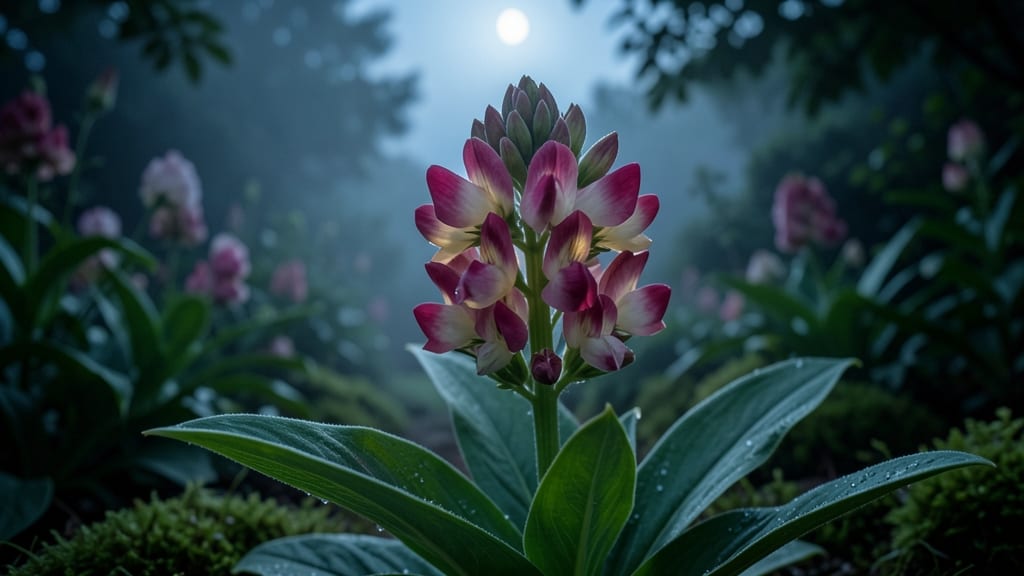
Transform your garden into a magical nighttime retreat with these stunning nocturnal bloomers. Their delicate beauty under moonlight creates unforgettable evening displays that attract pollinators and enchant visitors after dark.
Moonflower Vine with Fragrant Evening Blooms
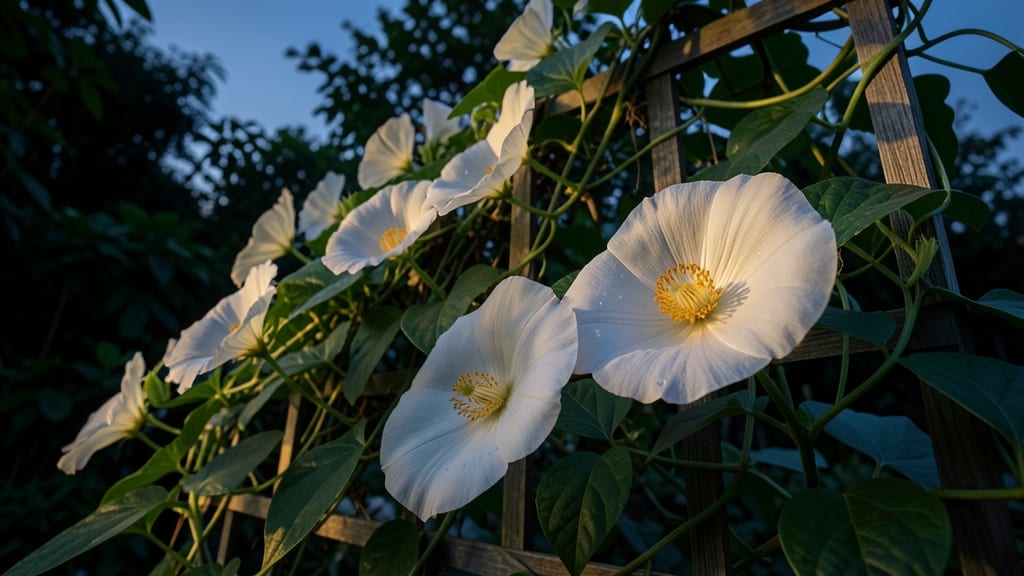
Imagine stepping into your garden as the sun sets and being greeted by moonflowers—giant, ghostly white blooms with golden centers unfurling right before your eyes. This fast-growing annual (Ipomoea alba) is nature’s own nightlight, releasing a sweet, intoxicating fragrance that peaks after dark, making it a star for moon gardens and romantic evenings.
Moonflowers thrive in warm climates and grow aggressively, climbing trellises or fences in just two to three months. Plant seeds directly in well-draining soil after the last frost, spacing them 12 inches apart for optimal air circulation. The vines can reach 10–15 feet, so provide sturdy support. Deadhead spent blooms to encourage more flowers, though they’re short-lived—each bloom lasts only one night but opens new ones daily.
Perfect for beginners or urban gardeners with limited space, moonflowers add drama without fuss. Pair them with evening-scented plants like jasmine or evening primrose for a sensory garden that comes alive after sunset. 🌿
Night-Blooming Jasmine for Sweet Nighttime Aromas
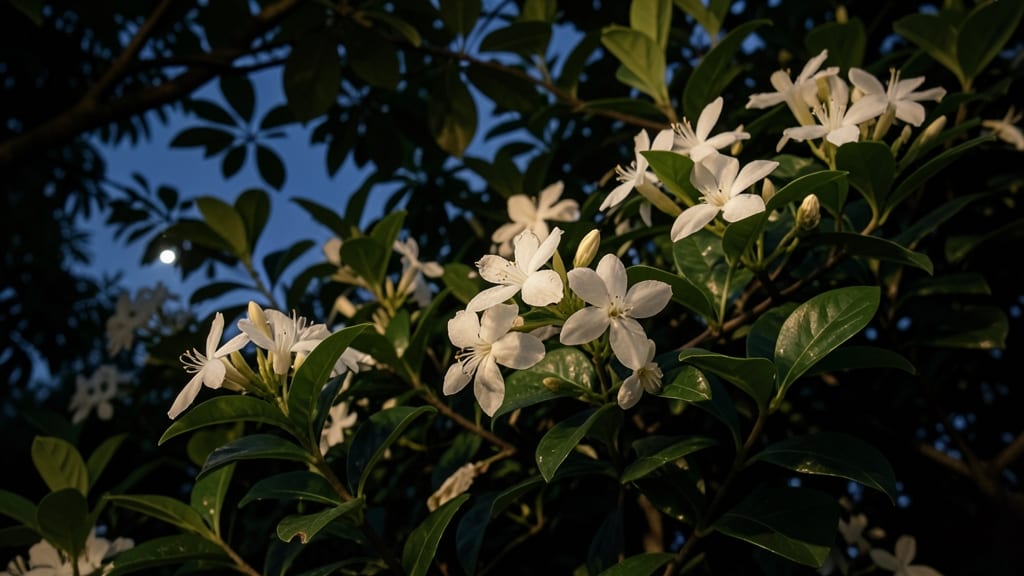
Tired of daytime-only gardens? Night-blooming jasmine (Jasminum sambac) transforms your space into a fragrant sanctuary when the sun sets, releasing its intoxicating scent as its delicate white flowers unfurl after dark.
This evergreen shrub thrives in warm climates (USDA zones 9-11) and can be grown in containers or as a low hedge, making it perfect for patios, balconies, or small yards. Plant it in well-draining soil with 6+ hours of sun daily and prune lightly after blooming to encourage bushier growth. Its star-shaped flowers and glossy leaves add year-round interest, even when not in bloom.
Urban gardeners and small-space enthusiasts will love how jasmine adapts to containers, while its sweet aroma attracts night-flying pollinators like moths. Perfect for creating a romantic, low-maintenance night garden! 🌿
Evening Primrose with Golden Yellow Petals
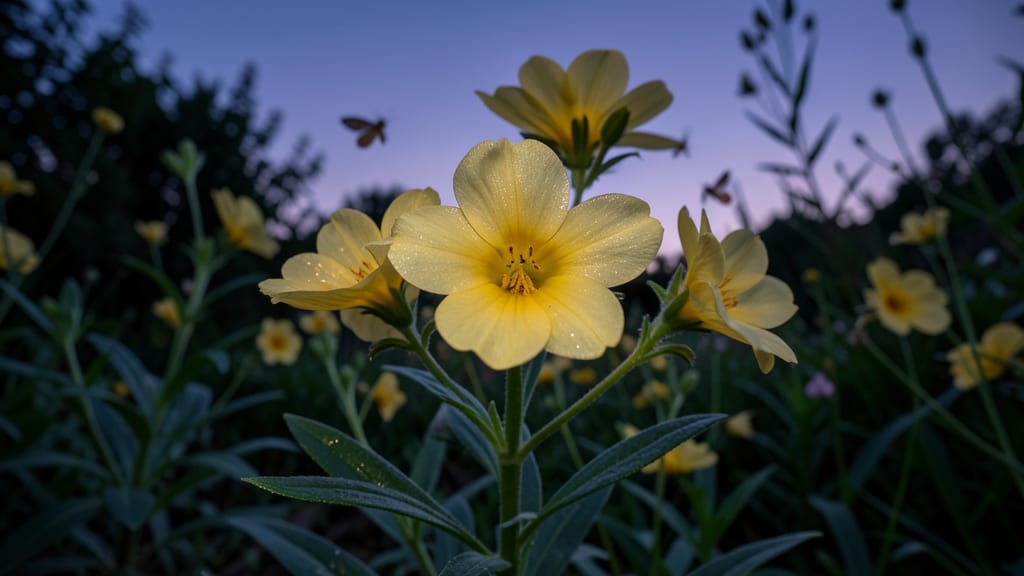
If you love cottage gardens that buzz with life after dark, evening primrose is your secret weapon. This cheerful hardy perennial unfurls golden-yellow blooms precisely at dusk, creating a sunburst effect that lights up your garden when most flowers have closed for the night.
Beyond its stunning evening display, evening primrose attracts moths and other nocturnal pollinators while offering a bonus: its young leaves are edible and perfect for adding to salads. Plant it in well-drained soil with full sun exposure—it thrives in USDA zones 3-9 and self-seeds readily, making it a low-maintenance choice for pollinator-friendly landscapes.
This versatile plant works beautifully in wildflower meadows, cottage-style borders, or even as a container specimen. It's especially rewarding for gardeners who want both beauty and function without the fuss of tropical plants. 🌻
Queen of the Night Cactus with Dramatic White Flowers
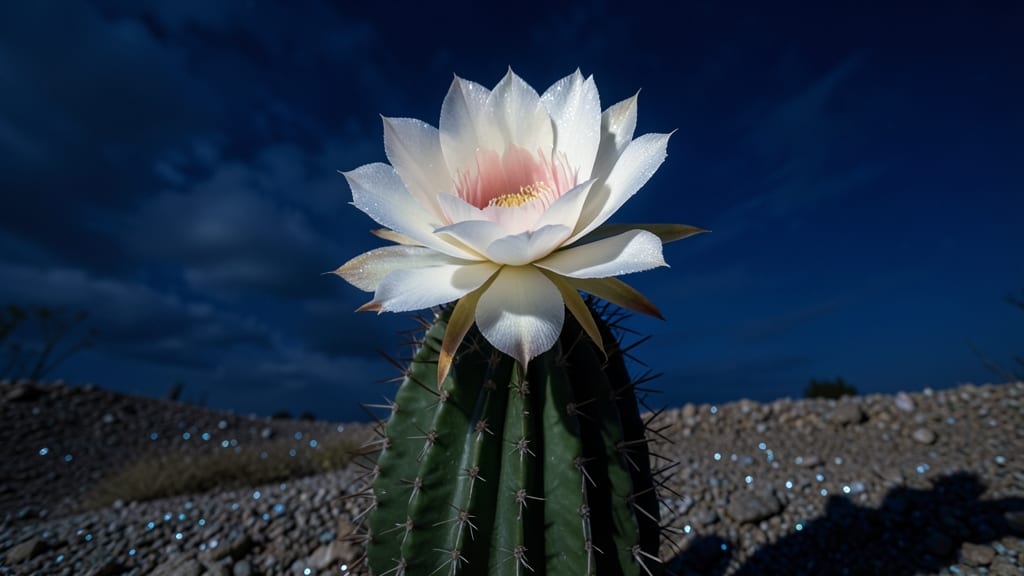
If you want a dramatic nighttime spectacle without the upkeep of traditional flowers, the Queen of the Night cactus delivers with just one stunning bloom per evening. This exotic succulent produces a massive white flower—up to 10 inches wide—with a faint pinkish center, opening precisely at night and lasting only 24 hours before wilting.
Native to desert regions, it thrives in well-draining soil and full sun, making it ideal for containers or arid gardens. Water sparingly—once every 2-3 weeks—to prevent rot, and expect blooms in late summer or fall when temperatures dip slightly. The short-lived flowers may seem fleeting, but their moonlit elegance more than makes up for it.
Perfect for gardeners in warm climates or those using containers, this cactus adds a touch of mystery to evening displays. 🌻
Angel's Trumpet with Trumpet-Shaped Night Blooms
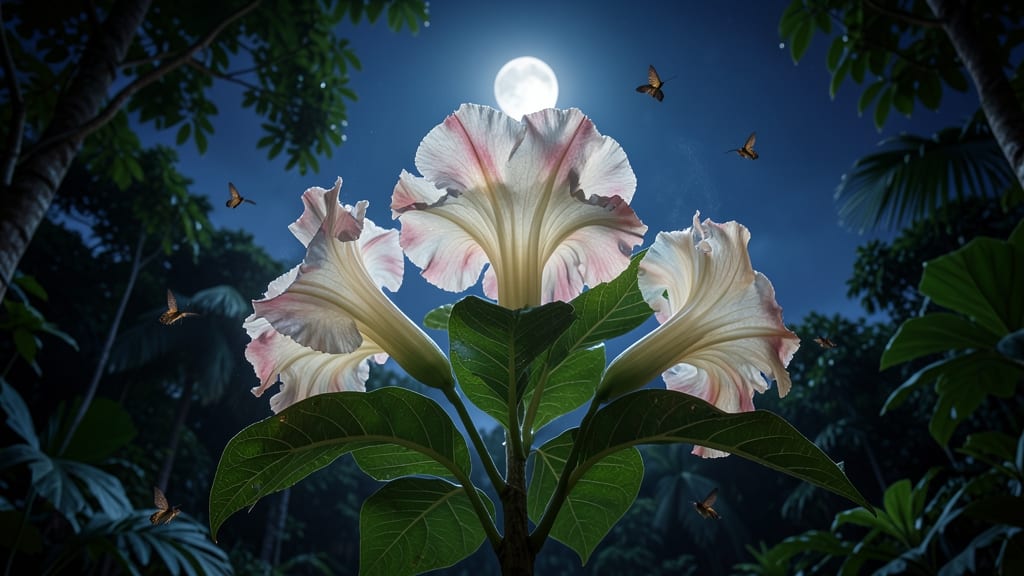
Craving a garden that feels like a tropical escape even after dark? The angel’s trumpet (Brugmansia spp.) delivers dreamy, trumpet-shaped blooms in white or pale pink that unfurl exclusively at night, filling the air with a heady, sweet fragrance that lures in moths and hummingbirds.
This fast-growing vine (up to 12 feet tall) thrives in warm microclimates** (USDA zones 9-11) and requires full sun to partial shade with rich, well-draining soil. Plant in spring after frost, spacing vines 6-8 feet apart, and prune lightly to shape. While toxic if ingested, its dramatic foliage and nighttime spectacle make it a showstopper for greenhouses, conservatories, or sheltered patios.
Perfect for gardeners seeking dramatic nighttime displays, angel’s trumpet adds tropical flair with minimal effort—just provide consistent moisture and occasional fertilizer. Pair it with other night bloomers like moonflowers for a moonlit garden that feels like a secret paradise. ✨
Four O'Clock Flower with Vibrant Color Variations
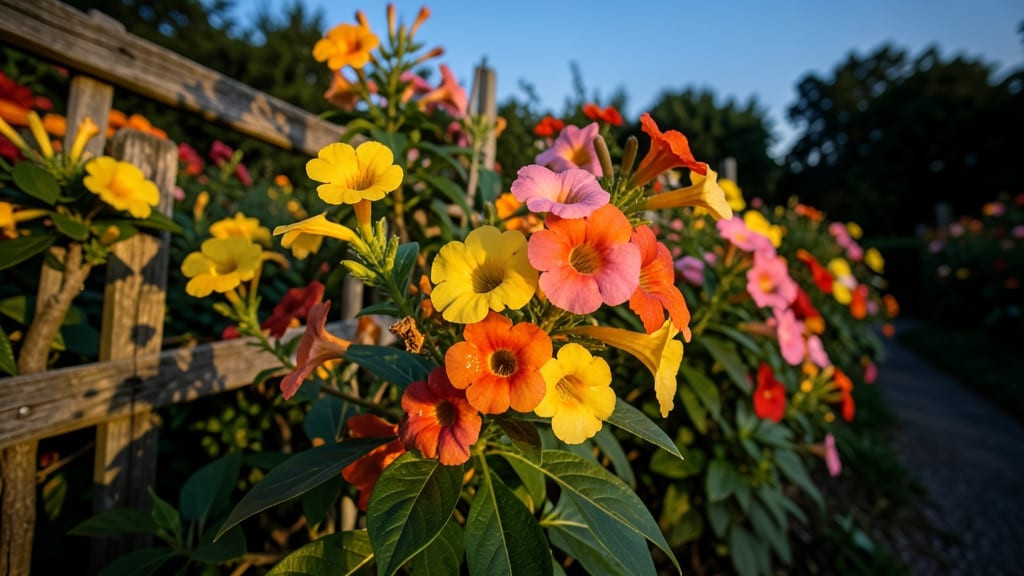
Want a garden that bursts into color just as the sun dips below the horizon? The four o’clock flower (Mirabilis jalapa) is your perfect partner, offering vibrant yellow, orange, pink, and red blooms that unfurl precisely at 4 PM—right when summer evenings begin. Unlike its nocturnal counterparts, this annual thrives in full sun and keeps blooming until frost, making it the ideal bridge between day and night.
This hardy annual adapts to almost any soil as long as it gets 6+ hours of direct sunlight daily. Plant seeds after the last frost, spacing them 12–18 inches apart for bushy growth. The flowers close by morning but reopen the next evening, creating a continuous summer display that hummingbirds and bees adore. For extra drama, mix colors in a single bed—think fiery reds near orange centers or soft pinks with golden edges.
Perfect for urban gardeners or those with limited space, four o’clock flowers grow well in containers or borders. Their drought tolerance and low-maintenance nature make them a favorite for pollinator gardens too. Just be warned: their seeds are highly invasive—plant them in pots if containment is a concern! 🌻
Evening Snapdragon with Fragrant Evening Display
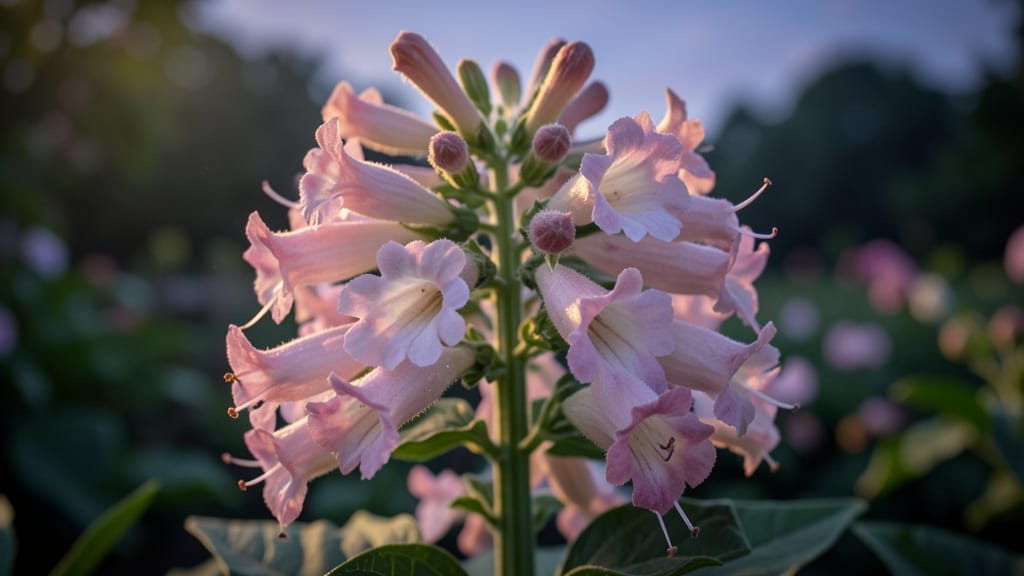
Looking for a fragrant nighttime star that doubles as a daytime pollinator magnet? Evening snapdragon (Mirabilis longiflora) is your answer—a lesser-known cousin of day snapdragons that bursts into bloom at dusk with tubular flowers in soft pinks, whites, and lavenders, filling the air with a sweet, honey-like scent that hummingbirds can't resist.
This perennial (or short-lived annual) thrives in full sun to partial shade and adapts to almost any soil, making it ideal for borders, containers, or even rocky gardens. Plant seeds directly in spring after the last frost, spacing them 12–18 inches apart—they self-seed readily, creating naturalizing colonies. Unlike its daytime relatives, evening snapdragons close their blooms by mid-morning, ensuring their fragrance and color are reserved for the evening hours.
Perfect for urban gardeners or those with limited space, this low-maintenance plant adds vertical interest and nocturnal charm without the fuss of tropical species. Pair it with night-blooming jasmine or four o'clock flowers for a sensory garden that comes alive after sunset. 🌻