
Flowers
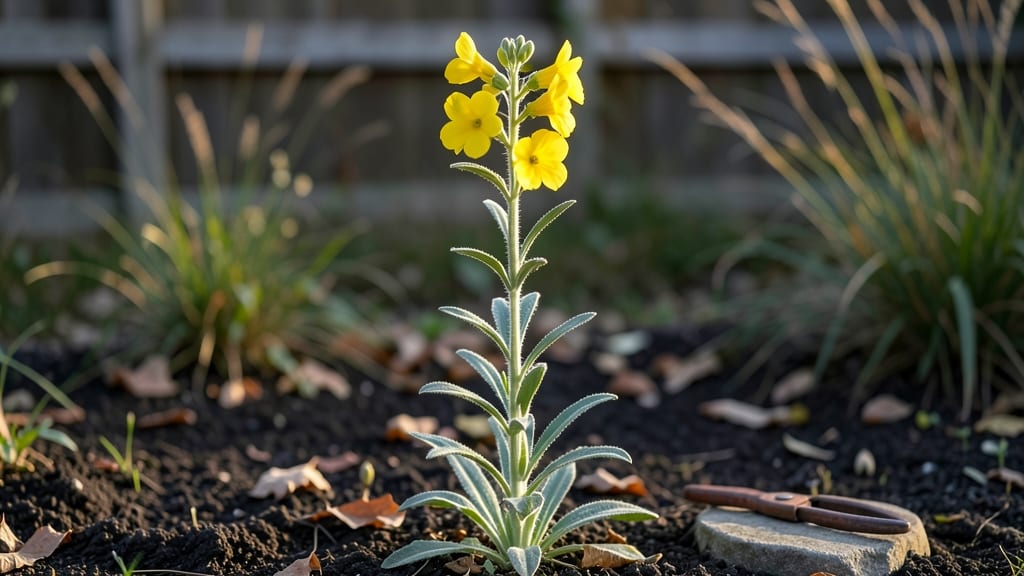
Evening primrose (Oenothera biennis) is not classified as invasive in most areas, though its prolific self-seeding can make it overly aggressive in gardens. This hardy perennial spreads quickly in disturbed soils and open spaces across USDA zones 3-9, potentially crowding out native plants if not managed.
While evening primrose doesn't meet the strict definition of an invasive species—it lacks traits like allelopathy or rapid ecological dominance—its ability to produce thousands of seeds per plant makes it a garden nuisance. 🌱 The flowers open at dusk, attracting pollinators while their seeds disperse via wind, often landing in cracks or bare soil where they germinate eagerly.
In wild landscapes, it rarely displaces established native flora, but in cultivated gardens, its persistence can become frustrating without intervention.
What sets evening primrose apart is its adaptability—it thrives in poor soils, drought conditions, and even urban environments, making it difficult to eradicate once established. Unlike true invasive species, however, it doesn't form monocultures or harm ecosystems.
The key to managing it lies in understanding its growth cycle and acting during its dormant periods for the most effective control.
💡 In This Article
- Why Evening Primrose Spreads Aggressively in Gardens
- How to Control Evening Primrose in Landscapes
Why evening primrose spreads aggressively in gardens
A single evening primrose plant can produce up to 20,000 seeds per season, each encased in a capsule that bursts open when dry, launching seeds up to 13 feet away on wind currents.
This wind-dispersal mechanism explains why it colonizes disturbed soils—like construction sites or freshly tilled garden beds—so efficiently.
The seeds remain viable in the soil for 5-8 years, waiting for ideal conditions to germinate, which is why even a few missed plants can lead to a full-blown resurgence the following spring.
The plant's deep taproot system (reaching 3-5 feet underground) gives it exceptional drought tolerance, allowing it to thrive in poor soils where many native wildflowers struggle.
Unlike aggressive invaders, evening primrose doesn't release allelopathic chemicals to suppress competitors, but its sheer seed volume creates dense patches that can shade out smaller plants. 🌱 In wild ecosystems, it often grows alongside other perennials without dominating, but in cultivated gardens, its persistence makes it feel invasive—even though ecologically, it's just opportunistic.
What makes evening primrose particularly challenging is its biennial life cycle: the first year focuses on root and leaf growth, while the second year produces flowers and seeds.
This two-year strategy means gardeners often don't notice the problem until it's too late—by the time those iconic yellow blooms appear, the seed bank is already established.
The flowers' nocturnal opening (hence the name "evening primrose") also plays a role in its spread, as pollinators like moths and beetles visit after other flowers have closed for the day, ensuring cross-pollination and genetic diversity in the seed population.
Regional adaptability is another key factor. While not classified as invasive in most areas, evening primrose has naturalized in USDA zones 3-9, from Canada's cold climates to the southern United States.
Its ability to handle both frost and heat means it outcompetes many native species in transitional zones where winters are mild but summers are hot.
The plant's lack of specialized adaptations for outcompeting other species—like toxic compounds or rapid growth rates—keeps it from meeting the strict definition of "invasive," but its sheer volume can still overwhelm garden spaces.
Consider this comparison: While morning glory (Ipomoea spp.) spreads aggressively via vines and underground runners, evening primrose relies on sheer seed quantity. A single morning glory vine can produce 1,000 seeds, but evening primrose's 20,000-seed output means it can quickly fill gaps in lawns or flower beds.
The difference? Morning glory chokes out plants physically, while evening primrose simply fills available space—making it more of a nuisance than an ecological threat.
For gardeners, the takeaway is clear: evening primrose isn't trying to take over your yard like kudzu or Japanese knotweed, but its biological strategy—deep roots, prolific seeding, and wind dispersal—makes it feel that way.
The good news? Understanding these mechanisms lets you outsmart the plant with targeted control methods, from strategic removal timing to soil management techniques designed to starve out new seedlings.