
Landscaping
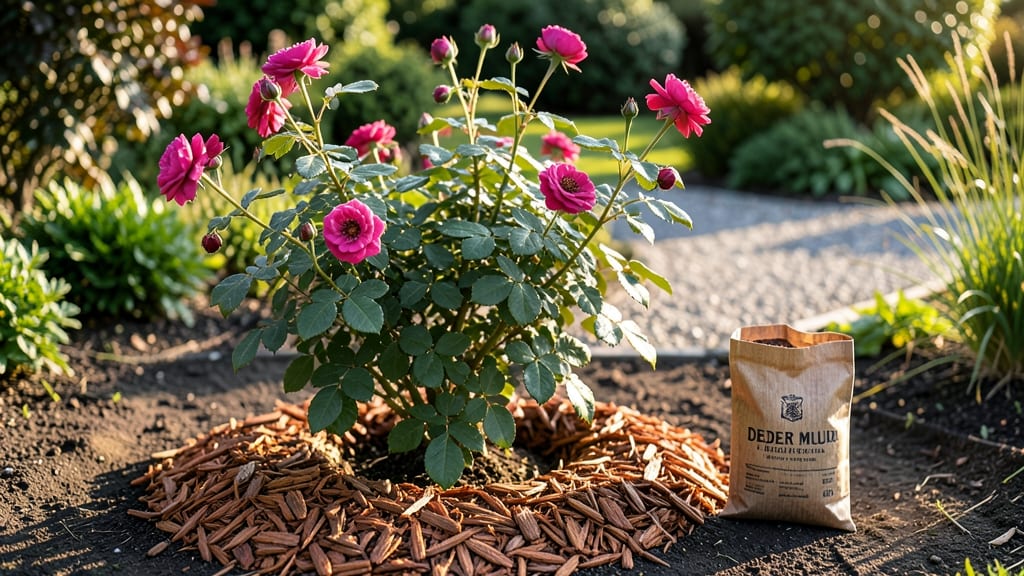
Cedar mulch's biggest advantage for roses is its natural pest-repelling properties—deer and insects avoid its strong scent, reducing damage to blooms and foliage. 🌿 However, the real concern lies in its long-term effect on soil chemistry: cedar's pH of 5.5–6.5 can acidify garden beds over time, especially in heavy applications.
For roses, which prefer neutral to slightly alkaline soil (6.0–6.5), this shift may require lime amendments every 1–2 years to maintain optimal growing conditions.
To mitigate risks, I recommend applying cedar mulch in thin layers (2–3 inches) and mixing it with compost or pine bark to buffer acidity. Testing soil pH annually with a simple kit lets you adjust before problems arise.
The key is balance—cedar's benefits make it worthwhile, but vigilance keeps your roses thriving without compromising their health.
💡 In This Article
- How Cedar Mulch Affects Rose Soil Chemistry
- Best Practices for Using Cedar Mulch with Roses
How cedar mulch affects rose soil chemistry
Cedar mulch's chemical impact on roses stems from its natural acidity, with a pH range of 5.5–6.5 when fresh. As it decomposes, it releases organic acids that gradually lower the surrounding soil pH, sometimes by 0.5–1.0 points per year in heavy applications.
Roses, however, thrive in slightly acidic to neutral soil with an ideal pH of 6.0–6.5, meaning prolonged cedar use can push conditions into their less optimal range.
This acidification affects nutrient availability—phosphorus and iron become more soluble, but essential micronutrients like calcium and magnesium may become locked out of plant uptake.
The decomposition process itself releases volatile organic compounds (VOCs) that deter pests like deer and insects, but these same compounds contribute to the mulch's acidity.
Over time, the breakdown also releases tannins that can bind with soil minerals, reducing their bioavailability. 🌱 For example, a 3-inch layer of cedar mulch applied annually might reduce soil pH by 0.3–0.6 points over three years, depending on local climate and soil type.
In cooler, wetter regions, decomposition slows, prolonging the acidification effect.
What makes this particularly tricky for roses is their sensitivity to soil chemistry. While they can tolerate a pH range of 5.5–7.0, extreme shifts—especially toward the lower end—can lead to chlorosis (yellowing leaves) or stunted growth.
The mulch's acidity also accelerates the breakdown of organic matter in the soil, potentially depleting nitrogen levels faster than roses can utilize. This is why many gardeners notice roses growing well initially with cedar mulch, only to see signs of stress after 2–3 years of continuous use.
Another critical factor is the mulch's effect on soil structure. Cedar's fibrous texture improves moisture retention by reducing evaporation rates by up to 30%, but its slow decomposition means it doesn't contribute much organic matter to the soil profile.
This can lead to a surface layer that stays moist while deeper soil remains drier, creating an uneven growing environment for rose roots. The contrast in moisture levels can stress plants, especially during drought periods.
To put this into perspective, consider how cedar compares to other mulches: Pine bark (pH 4.5–5.5) is even more acidic, while hardwood mulch (pH 6.0–7.5) is neutral to alkaline.
The key difference is that cedar's moderate acidity makes it a middle-ground option—beneficial for pest control and moisture, but requiring careful management to avoid long-term soil degradation. 🌿
For roses, the real test comes after 18–24 months of cedar mulch use. At this point, many gardeners observe subtle changes like slower bloom production or leaves that develop yellow margins—a classic sign of nutrient imbalances caused by soil acidification.
This is when soil testing becomes essential to determine whether lime amendments are needed to restore optimal growing conditions.