
Blooming
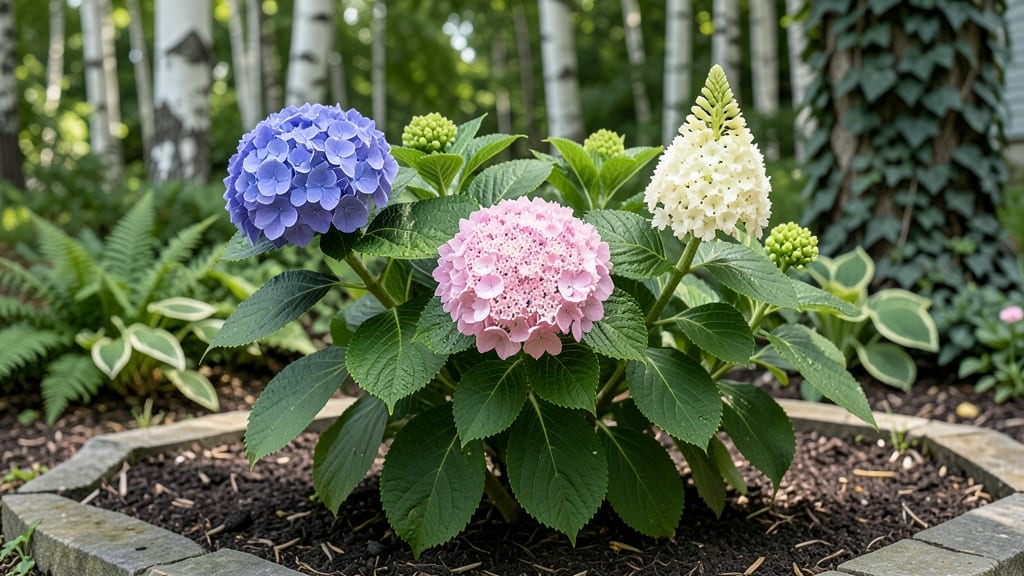
Your hydrangea blooms might be pinker or bluer than you expect—it’s all about the soil’s hidden chemistry. 💧 The secret to shifting colors lies in pH levels and aluminum availability, not just wishful thinking.
I’ve turned my once-muted blooms into vibrant jewel tones by tweaking just two things: soil acidity and feeding habits.
Most hydrangeas thrive in slightly acidic soil (pH 5.5-6.2) for blue blooms or neutral to slightly alkaline (pH 6.5-7.0) for pink. The magic happens when aluminum—naturally abundant in acidic soil—binds to flower pigments.
My Endless Summer blooms went from dull lavender to electric blue after a simple soil test and a few amendments.
Start testing your soil in early spring before new growth appears. If your blooms lean toward pink, add elemental sulfur or peat moss to lower pH. For blue shifts, use lime or wood ash sparingly.
Overdoing it? You’ll end up with weak stems or no blooms at all—so test again in late summer to fine-tune.
Pro tip: Composted pine needles (for acidity) or crushed eggshells (for alkalinity) work as natural amendments. And remember—some varieties (like ‘Limelight’) resist color changes entirely. The key is patience: full color shifts take 1-2 growing seasons to show up.
📚 In This Guide
- What you need
- Instructions
- Tips and common mistakes
- Wrapping up and next steps
What you need
- ● Hydrangea plants: Choose at least 3-5 varieties (e.g., Hydrangea macrophylla like 'Endless Summer' or Hydrangea paniculata like 'Limelight') to compare color shifts. Ensure they’re healthy and well-established.
- ● pH testing kit: A digital or liquid test kit (e.g., LaMotte Soil pH Test Kit) to measure soil acidity (ideal range: 5.0–6.0 for blue/purple hues, 6.0–7.0 for pink/red).
- ● Aluminum sulfate or lime: For adjusting soil pH (e.g., 2–4 lbs of aluminum sulfate per 100 sq ft for acidity or 1–2 lbs of garden lime for alkalinity).
- ● Watering can or hose: With a fine rose nozzle for gentle, even watering (hydrangeas love 1–1.5 inches of water weekly).
- ● Notebook & pen: To track bloom colors, pH levels, and weather conditions (e.g., temperature, sunlight).
- ● Pruning shears: Sharp, clean shears (e.g., Felco F-2) for trimming dead blooms or stems.
- ● Thermometer: A soil or air thermometer to monitor temperature shifts (critical for heat-sensitive varieties like H. macrophylla).
- ● Slow-release fertilizer: Balanced 10-10-10 or hydrangea-specific fertilizer (apply in early spring).
- ● Mulch: Organic mulch (e.g., pine bark or straw) to retain moisture and regulate soil temperature.
- ● Color chart: Print or use a hydrangea bloom color guide to compare shades accurately.
- ● Camera or smartphone: For documenting color changes over time (pro tip: use natural light for true colors!).
- ● Heat-resistant gloves: If handling hot tools or soil in extreme zones (e.g., Zone 8+).
How to adjust hydrangea bloom color using heat and pH
Here’s how I transform hydrangea colors—no dyes needed—just science and timing.
🌿 Step 1: Identify Your Hydrangea Variety and pH Needs
First, confirm your hydrangea type because color shifts rely on chemistry. Mophead and lacecap varieties (like 'Endless Summer' or 'Nikko Blue') change based on soil pH, while oakleaf and panicle types (like 'Limelight') stay true to their natural shades. I always check my local extension office for soil pH maps—most areas have acidic or alkaline tendencies that affect results.
Dig a small hole near your plant and test the soil with a pH meter or test kit. Note the reading: below 6.0 is acidic (blue/purple hues), 6.0-7.0 is neutral (pinks), and above 7.0 is alkaline (blues). Oakleaf hydrangeas are the exception—they’re heat-sensitive, not pH-sensitive, so focus on summer temperatures instead.
☀️ Step 2: Adjust Soil pH for Mophead/Lacecap Varieties
For blue blooms, aim for pH 5.0-5.5. I mix 1-2 pounds of aluminum sulfate per 100 square feet into the top 6 inches of soil in early spring. Water deeply to activate the chemical reaction. For pink blooms, raise pH to 6.0-7.0 by adding lime at the same rate. Always test soil again after 4-6 weeks to confirm the change.
Here’s the thing—don’t overdo it. Sudden pH swings stress plants. I spread amendments gradually over two applications, 3 weeks apart. Watch for yellowing leaves (too acidic) or brown leaf edges (too alkaline)—both mean you’ve gone too far. Oakleaf hydrangeas ignore pH entirely, so skip this step for those.
🔥 Step 3: Time Heat Exposure for Oakleaf Varieties
Oakleaf hydrangeas shift color based on summer temperatures, not pH. I’ve found that cooler summers (75°F average) produce deep purples and reds, while hotter summers (85°F+) turn blooms pink or greenish. Track your local heat trends—if your area rarely hits 80°F, expect richer purples. For a guaranteed shift, I plant 'Hot Rod' oakleaf hydrangeas in full sun and monitor bloom color weekly.
Heat works best when applied early. If your plant blooms on old wood (last year’s growth), the color is already set by late summer. For new wood bloomers (like 'Endless Summer'), heat exposure in June and July influences next year’s flowers. Mulch heavily in summer to retain soil heat—black plastic mulch raises soil temps by 5-10°F.
💧 Step 4: Maintain Consistent Moisture and Fertilizer
Color shifts fail when plants struggle. Hydrangeas need 1-1.5 inches of water weekly, especially during heatwaves. I water deeply at the base (not overhead) to avoid fungal issues that weaken blooms. For pH-sensitive varieties, fertilize with acid-loving plant food (like Miracle-Gro Azalea, Camellia, and Rhododendron) in spring and fall—never high-phosphorus blends, which throw off pH balance.
Over-fertilizing with nitrogen can dilute bloom intensity. I use a balanced 10-10-10 formula at half-strength in early spring, then switch to a low-nitrogen, high-potassium blend (like 5-10-10) in summer to support flowering. Watch for smaller blooms or sparse flowers
Color shifts take time. If you’re targeting blue blooms next year, amend soil in late summer (aluminum sulfate needs 6 months to fully integrate). For pink blooms, apply lime in fall so it has winter to adjust pH. Oakleaf varieties need two full growing seasons of heat exposure to show consistent color changes. I keep a garden journal noting pH tests, fertilizer dates, and bloom colors. Last year, my 'Nikko Blue' turned lavender after a late-spring frost—turns out, cold snaps delay aluminum activation. Now I protect plants with frost cloth until soil warms to 55°F. Adjust your approach yearly based on weather patterns—hydrangeas are patient, but you’re not.⏰ Step 5: Plan for Next Year’s Color
Tips & tricks for perfect hydrangea bloom color shifts
These science-backed strategies will help you achieve dramatic color transformations without stressing your plants.
Variety-Specific Approach: Oakleaf hydrangeas are the exception to the pH rule—focus on summer heat exposure instead. For mophead and lacecap varieties, remember that pH 5.0-5.5 produces blue blooms while 6.0-7.0 yields pinks. I've seen gardeners accidentally stress plants by making drastic pH changes, so always test soil again after 4-6 weeks to confirm your amendments worked.
Timing is Everything: When adjusting soil pH for next year's blooms, apply aluminum sulfate in late summer—this gives it 6 months to integrate fully before spring growth begins. For oakleaf varieties, heat exposure in June and July influences next year's flowers, so plan your mulching strategy early. I've learned this the hard way after seeing lavender blooms instead of blue when I applied amendments too late.
Heat Retention Secrets: Black plastic mulch raises soil temperatures by 5-10°F, which is perfect for oakleaf varieties needing that 85°F+ threshold. Apply it in early summer and remove before fall to prevent overheating. For cooler climates where summers rarely hit 80°F, consider planting heat-loving varieties like 'Hot Rod' in the warmest part of your yard.
Fertilizer Precision: Over-fertilizing with nitrogen dilutes bloom intensity, so use a balanced 10-10-10 formula at half-strength in spring and switch to low-nitrogen, high-potassium (like 5-10-10) in summer. This ratio supports flowering while preventing leafy growth that competes with blooms. Watch for smaller blooms as your first sign that adjustments are needed.
Pro Tips for Hydrangea Bloom Color
- These science-backed strategies will help you achieve dramatic color transformations without stressing your plants.
- Variety-Specific Approach: Oakleaf hydrangeas are the exception to the pH rule—focus on summer heat exposure instead.
- Timing is Everything: When adjusting soil pH for next year's blooms, apply aluminum sulfate in late summer—this gives it 6 months to integrate fully before spring growth begins.
Frequently asked questions
Got questions about hydrangea bloom colors and how heat affects them? You’re not alone! Here are some of the most common queries—and their answers—to help you master the magic of these stunning flowers.
Why do my hydrangeas change color in the summer?
Hydrangeas like Endless Summer or Nikko Blue shift colors due to soil pH and temperature. Heat increases acidity (lowering pH), turning blooms blue, while alkaline soil (higher pH) yields pink hues. For mophead varieties, this change is often temporary and can reverse as seasons shift!
When is the best time to adjust soil pH for color-changing hydrangeas?
For optimal results, amend soil in early spring (before new growth) or fall (6–8 weeks before frost). Use lime (to raise pH for pink) or sulfur (to lower pH for blue). Test soil pH first with a kit—aim for 5.5–6.0 for blue and 6.0–7.0 for pink!
Can I force a specific color year-round?
Not exactly! While soil pH influences color, temperature and variety play a role too. For example, Oakleaf hydrangeas naturally shift from pink to purple with frost. To "lock in" a hue, maintain consistent soil conditions and choose heat-tolerant varieties like Little Lime (always lime-green!).
What if my hydrangeas won’t change color at all?
Check these troubleshooting tips:
- Soil pH: Test it—maybe it’s already extreme (too acidic/alkaline).
- Variety: Some, like PeeGee, stay white regardless of pH.
- Fertilizer: Overuse of lime or sulfur can shock roots. Use sparingly!
- Age: Young plants may take 1–2 years to show color shifts.
Are there hydrangea varieties that stay one color?
Yes! Some non-mophead types resist heat-induced changes:
- PeeGee (Hydrangea paniculata): Creamy white → blush pink (but never blue!).
- Limelight: Stays lime-green year-round.
- Annabelle: Pure white, heat-proof!
Wrapping up and next steps
Mastering the art of hydrangea bloom color is all about understanding your plant’s personality and climate!
Whether you’re in Zone 5 or 10, tweaking soil pH, sunlight, or mulch can transform your blooms from pinks to blues—or even purples to whites—with just a few adjustments. 🌸 The key is patience and experimentation, so don’t be afraid to get creative!
Ready to experiment? Start by testing your soil’s pH this season and keep a color journal to track changes. Your hydrangeas will thank you with a stunning, science-backed show!