
Pruning
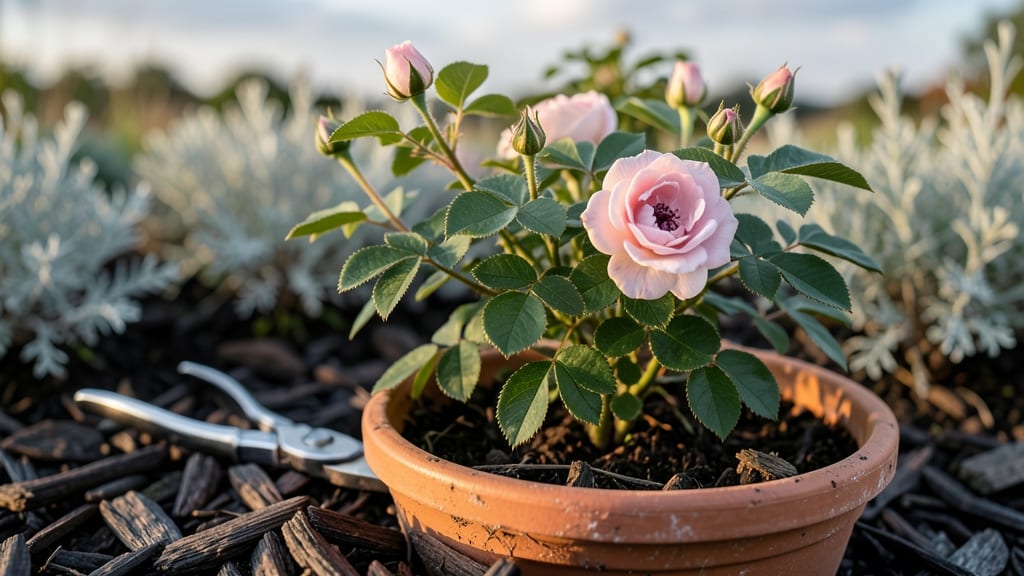
Pruning a miniature rose bush is the secret to those nonstop blooms that make neighbors stop and stare. ✂️ I’ve turned my tiny rose from a sad, leggy mess into a compact powerhouse of flowers—just by making four strategic cuts each season.
The key isn’t how much you trim, but where and when you do it.
You’ll need sharp bypass pruners (dull blades crush stems), rubbing alcohol to sterilize them between cuts, and a small bucket for clippings. Timing matters too: do the heavy pruning in late winter when the plant’s dormant, and light touch-ups after each bloom cycle.
Think of it like giving your rose a haircut—too much too soon, and you’ll leave it bald and stressed.
By the time spring rolls around, you’ll see fresh green shoots bursting from the base, each one a promise of dozens of blooms. The bush stays neat, stays healthy, and puts all its energy into flowers instead of floppy growth.
Even my black thumb can’t mess this up once you know the tricks.
Works for patio pots, window boxes, or garden beds—anywhere you want a punch of color without the sprawl. Let’s get those blooms going strong all season.
📚 In This Guide
- What you need
- Instructions
- Tips and common mistakes
- Wrapping up and next steps
What you need
- ● Pruning shears: Bypass pruners (sharp, clean, and 4-6 inches in blade length) to make precise cuts without crushing stems.
- ● Hand pruners: Small, ergonomic (for tighter spaces) with a 2-3 inch blade for delicate trimming.
- ● Disinfectant: 70% isopropyl alcohol or bleach solution (1 part bleach to 9 parts water) to sterilize tools between cuts.
- ● Garden gloves: Lightweight, breathable (preferably nitrile-coated) to protect against thorns and bacteria.
- ● Rubbing alcohol or hydrogen peroxide: 3% solution for wiping pruning tools before and after use.
- ○ Trash bag or bucket: For collecting pruned debris (optional but helpful for cleanup).
- ● Sharpie or permanent marker: For labeling pruned branches if you’re training the bush.
- ● Pruning saw: Miniature or folding (if dealing with stubborn, thicker canes—rare in mini roses but useful for stubborn growth).
- ● Fungicide spray: Copper-based or neem oil to prevent infection if cuts are large or the bush is stressed.
- ● Rose fertilizer: Balanced (10-10-10) or bloom-boosting (5-10-5) to apply post-pruning for a growth boost.
Step-by-step instructions for pruning a miniature rose bush
Here's the straightforward method I use to keep my miniature roses blooming nonstop—no fancy tools or complicated cuts.
✂️ Step 1: Gather Your Tools and Prep the Plant
Start by gathering clean, sharp pruning shears and rubbing alcohol to sterilize them before and after each cut. I like to work on a bright, dry morning when the plant is fully hydrated—this helps me see the stems clearly and reduces stress on the bush. Remove any dead, diseased, or crossing branches first; these are your easy targets. You'll know a branch is dead if it's brown all the way through and snaps when bent.
Next, give your rose bush a good look-over from all sides. Miniature roses grow densely, so you might spot branches rubbing against each other or growing inward. These are the first candidates for removal—they compete for energy and can create wounds where pests hide. Take your time here; rushing leads to uneven cuts that heal poorly.
✂️ Step 2: Cut Back Last Year's Growth
Now focus on the main stems. For miniature roses, I prune back about one-third of the previous year's growth—this keeps the bush compact while encouraging new blooms. Look for the outward-facing buds (those pointing away from the center) and make your cuts just above them at a 45-degree angle. This angle helps water run off the cut, preventing rot.
If a stem has multiple blooms, cut it back to the first outward-facing bud below the lowest bloom. Avoid leaving stubs—always make clean cuts 1/4 inch above a bud. I like to step back every few cuts to check the bush's shape. The goal is an open center that lets air and light reach all parts of the plant.
✂️ Step 3: Thin Out Overcrowded Branches
Next, look for branches that are growing straight up or crowded inward. These steal energy from the bush and often produce fewer blooms. Use your shears to remove these entirely at the base. For every 3-4 stems growing in the same direction, keep just the strongest one. This opens up the center and improves airflow, which prevents fungal diseases like black spot.
Pay special attention to the base of the plant. If you see weak, spindly growth emerging from the ground, snip it off immediately. These "suckers" drain energy from the main plant. After thinning, your bush should look like an open vase—wide at the base and gradually narrowing toward the top.
✂️ Step 4: Shape and Clean Up
Finally, give your rose bush its final shape. Step back and imagine a rounded dome—this is the classic shape for miniature roses. Trim any branches that stick out too far or disrupt the balance. For a more natural look, leave some uneven edges; perfection isn't the goal here.
After pruning, clean up all debris from the base of the plant and around the garden. Sprinkle a handful of compost or mulch around the base (but not touching the stems) to retain moisture and discourage weeds. Water deeply right after pruning to help the plant recover. You'll see new growth within 2-3 weeks, and those fresh stems will soon burst into blooms.
Tips & tricks for pruning miniature roses
Here's what I learned the hard way after struggling with uneven blooms and tangled stems.
Timing is Everything: Prune in early spring just as new growth begins—this gives your miniature roses the full growing season to establish strong new stems before winter. Avoid pruning in fall or late winter, as the plant needs its energy to survive dormancy. I always mark my calendar for late February or early March in most climates, right when the forsythia starts blooming.
The 45-Degree Angle Secret: When making your cuts in Step 2, that 45-degree angle isn't just for show—it's crucial for preventing water from pooling on the cut surface. Imagine the angle should look like a smile when you're done. If you're not confident with the angle, use a small ruler as a guide to keep it consistent. The goal is to create a surface that's about twice as wide as it is deep.
Bud Identification Made Easy: Those outward-facing buds are your golden ticket to more blooms. To spot them quickly, look for the small bumps that point away from the center of the plant—think of them as little arrows pointing outward. If you're unsure, gently squeeze the stem: the bud with the most give is usually the healthiest choice. Remember, you're shaping the plant's future growth pattern with each cut.
Sucker Control Strategy: Those pesky suckers at the base? Don't just yank them—they'll tear the main stem. Instead, use your pruners to cut them off cleanly at the base. I like to do this step last because it's easy to miss them when the bush is crowded. Think of it like weeding: you've got to get right down to the roots to prevent regrowth.
Pro Tips for Prune A Miniature Rose Bush
- Here's what I learned the hard way after struggling with uneven blooms and tangled stems.
- Timing is Everything: Prune in early spring just as new growth begins—this gives your miniature roses the full growing season to establish strong new stems before winter.
- The 45-Degree Angle Secret: When making your cuts in Step 2, that 45-degree angle isn't just for show—it's crucial for preventing water from pooling on the cut surface.
Frequently asked questions
Got questions about pruning your miniature rose bush? You’re not alone! Here are some of the most common concerns—and straightforward answers—to help you keep those blooms coming year-round.
When is the best time to prune a miniature rose bush?
For spring pruning, aim for early March (after the last frost but before new growth). Light summer pruning (after blooms fade) encourages more flowers. Avoid heavy pruning in fall—just trim dead or diseased wood. Pro tip: If you’re unsure, prune when the bush looks crowded or leggy!
How much should I cut off a miniature rose bush?
Miniature roses are delicate—never remove more than 1/3 of the plant in one session. Focus on dead, crossing, or overcrowded stems. A good rule: Cut back to an outward-facing bud (about 1/4 inch above it) to promote airflow and new growth.
What if I prune at the wrong time?
Pruning too early (before frost passes) can shock the plant, while late pruning may delay blooms. Mistake? Don’t panic! Just adjust your timing next year. If you prune too late in fall, protect the bush with mulch to insulate roots.
Can I prune miniature roses in containers?
Yes! Container roses need slightly more frequent pruning since they’re root-bound. Trim deadheads and leggy stems every 2–3 weeks during growing season. Bonus: Repot every 2–3 years to refresh soil and encourage new growth.
How do I know if I’ve over-pruned?
Over-pruned bushes may look bare, stressed, or slow to regrow. If you see no new buds within 4–6 weeks, you’ve likely cut too much. Next time, err on the side of caution—miniature roses bounce back faster than you think!
Wrapping up and next steps
Pruning your miniature rose bush doesn’t have to be intimidating—just a few strategic cuts can transform it into a lush, blooming beauty year-round! 🌸 Remember to use sharp tools, focus on shape, and prune at the right time to encourage healthy growth.
With patience and care, you’ll enjoy vibrant blooms and a thriving plant that’s the envy of the neighborhood.
Ready to take the next step? Grab your shears and give your rose bush the love it deserves! For even more tips, check out our guide on fertilizing after pruning to keep those blossoms coming.