
Blooming
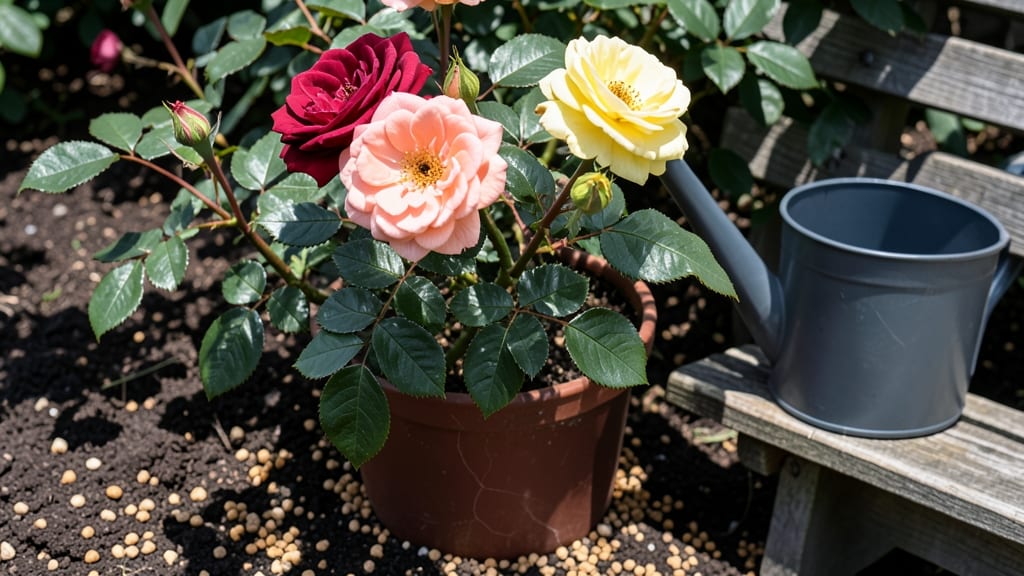
To make roses bloom, prune deadheads regularly, ensure full sun exposure (6+ hours daily), water deeply at the base, and feed with balanced rose fertilizer every 4-6 weeks during growing season. Mulch to retain moisture and protect roots from temperature swings.
Making roses bloom year-round isn't just about luck—it's about understanding what your plants truly need. 🌸 The key lies in mimicking their natural growing conditions: roses thrive when they receive consistent sunlight, which triggers photosynthesis and energy production for blooms.
Pruning isn't just about looks; it redirects the plant's energy toward new growth by removing spent flowers. I've seen dramatic results when gardeners combine these practices with seasonal adjustments, like reducing water in fall to prepare for dormancy or using slow-release fertilizers to avoid nutrient spikes that can burn roots.
What many overlook is how soil health plays a role. A well-mulched bed keeps roots cool in summer and insulated in winter, while also preventing moisture loss. The 6+ hours of sunlight rule isn't arbitrary—roses need this duration to develop the energy reserves necessary for continuous blooming.
I recommend testing your soil annually; roses often struggle in compacted or nutrient-poor soil, even with regular feeding.
💡 In This Article
- Science-Backed Pruning and Fertilizing for Rose Blooms
- Year-Round Rose Care Calendar for Continuous Blooming
Science-backed pruning and fertilizing for rose blooms
Pruning isn't just about tidying up your roses—it's a biological trigger that stimulates new growth. When you remove dead or spent blooms (called deadheading), you're essentially telling the plant to redirect its energy from seed production to creating fresh flowers.
This works because roses naturally produce hormones called auxins at the tips of stems. By cutting just above a leaf node with 5 healthy leaves, you remove these auxin sources, allowing buds further down the stem to develop into blooms.
Think of it like giving your plant a green light to focus on flowering rather than reproduction. 🌿
The 6+ hours of sunlight requirement isn't arbitrary—roses need this duration to perform photosynthesis efficiently. Their leaves contain chlorophyll that absorbs light most effectively in the blue (400-500nm) and red (600-700nm) spectrums, which are critical for producing the glucose that fuels blooms.
Without sufficient light, roses will produce fewer flowers and may become leggy or sparse. I've noticed that morning sun (when UV levels are lower) combined with afternoon shade in hot climates actually improves bloom quality by preventing leaf scorch while still providing the needed light energy.
Fertilizing at 4-6 week intervals during the growing season matches the plant's natural nutrient absorption cycles. Roses are heavy feeders, requiring a balanced mix of nitrogen (for leaf growth), phosphorus (for root development and blooming), and potassium (for disease resistance and overall vigor).
A 10-10-10 or 5-10-5 ratio fertilizer works well, but avoid high-nitrogen formulas late in the season—they encourage leafy growth at the expense of flowers.
The key is to apply fertilizer when the soil is moist, so the nutrients can be absorbed immediately rather than sitting on the surface where they might burn roots.
Watering mechanics matter just as much as frequency. Roses need 1-2 inches of water per week, delivered directly at the base to encourage deep root growth. Shallow watering creates weak roots that stay near the surface, making plants more susceptible to drought stress.
I recommend using drip irrigation or soaker hoses in the early morning to minimize evaporation and fungal diseases. The root zone should stay consistently moist but not waterlogged—roses hate soggy feet, which can lead to root rot.
Mulching with 2-3 inches of organic matter helps maintain this balance by reducing moisture loss and insulating roots.
Seasonal timing for these practices makes all the difference. For example, pruning hybrid teas in late winter (just before new growth begins) gives them 6-8 weeks to establish new canes before the first flush of blooms. Fertilizing too early in spring can stimulate growth that gets damaged by late frosts.
Similarly, reducing water in fall signals the plant to prepare for dormancy. These aren't just random suggestions—they're based on understanding how roses' natural growth cycles align with seasonal changes in temperature and daylight. 🌸
One often-overlooked factor is soil pH. Roses prefer a slightly acidic to neutral range of 6.0-6.5. Testing your soil annually reveals whether you need to add lime (to raise pH) or sulfur (to lower it).
I've seen roses that weren't blooming well simply because their soil was too alkaline, preventing them from absorbing essential nutrients like iron and manganese. The right pH ensures that all your other efforts—pruning, watering, and fertilizing—work together optimally for maximum blooms.