
Pests
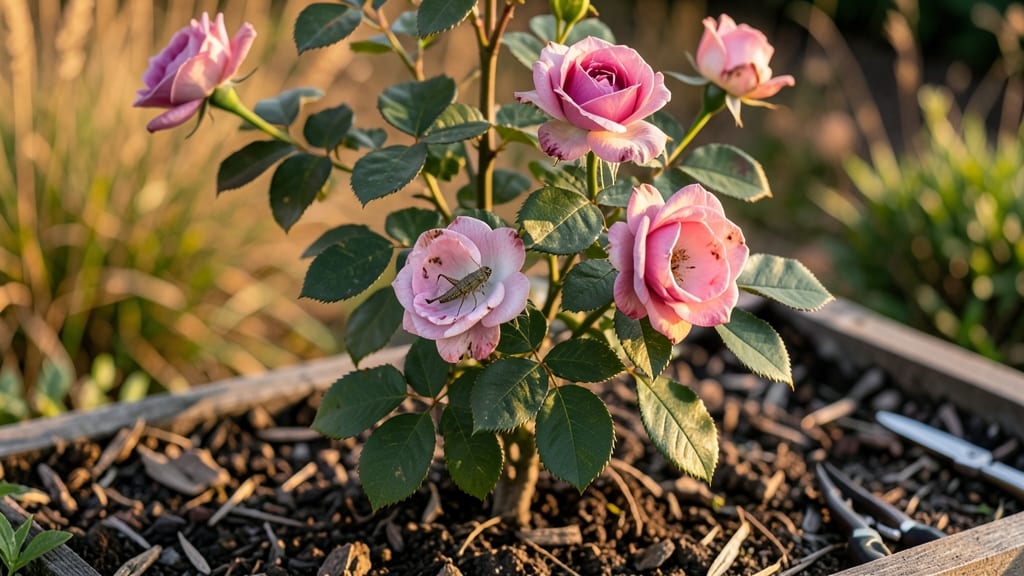
Grasshoppers do eat roses, targeting young shoots and leaves more than mature foliage. Their skeletonizing feeding pattern leaves a distinctive lacy pattern that can severely weaken plants over time.
Grasshoppers are drawn to roses because the plants contain high levels of nitrogen and sugars that these pests crave. 🌿 Unlike aphids that suck sap, grasshoppers chew through leaves, creating holes that disrupt photosynthesis.
This makes roses particularly vulnerable during their growing season when new growth is most tender and nutrient-rich.
If you notice your rose bushes looking ragged with small holes in the leaves, that's your first sign of grasshopper activity. The damage often appears overnight, which is why gardeners need to monitor plants regularly—especially during warm, dry weather when grasshopper populations surge.
💡 In This Article
- Why Grasshoppers Target Roses in Gardens
- Natural and Chemical Solutions to Protect Roses from Grasshoppers
Why grasshoppers target roses in gardens
Grasshoppers zero in on roses primarily because these plants contain high levels of nitrogen and sugars, which act like a nutritional magnet for these voracious feeders. 🌸 The tender new growth of roses—especially the young shoots and leaves—is particularly rich in these compounds, making it a prime target.
Unlike other pests like aphids, which pierce plant tissues to suck out sap, grasshoppers use powerful mandibles to chew through leaves, creating irregular holes that disrupt the plant's ability to photosynthesize efficiently.
The science behind their preference lies in their sensory systems. Grasshoppers detect plant nutrients through both chemical cues (like volatile organic compounds) and physical cues (leaf texture). Roses, with their soft, velvety foliage, trigger their feeding instincts more strongly than tougher plants.
Additionally, grasshoppers are attracted to plants that emit specific chemical signals when stressed or damaged—a phenomenon called "herbivore-induced plant volatiles" (HIPVs). This means once they start feeding on one rose, the plant's distress signals can attract even more grasshoppers to the area.
What makes rose damage so noticeable is the distinctive "skeletonizing" pattern grasshoppers leave behind. They strip leaves of their soft tissue, leaving only the veins intact—a telltale sign of their activity.
This feeding behavior weakens the plant by reducing its photosynthetic capacity, which can stunt growth and make roses more susceptible to diseases. In severe cases, repeated attacks can defoliate entire bushes, leaving them vulnerable to heat stress and sunburn.
Grasshoppers are most active during warm, dry weather, typically between late spring and early fall. 🌞 Their populations explode in these conditions, which is why gardeners often see sudden outbreaks when temperatures rise above 75°F and rainfall is scarce.
Unlike beetles or caterpillars, grasshoppers don't discriminate between rose varieties—they'll target hybrid teas, climbers, and even wild roses equally, though they show a particular fondness for the fragrant, nutrient-dense blooms.
Here's what sets grasshopper damage apart from other common rose pests:
- Chewing vs. sucking: Grasshoppers chew leaves, creating irregular holes, while aphids leave sticky residue and curled leaves.
- Speed of damage: Grasshoppers can defoliate a plant in days, whereas beetles or Japanese beetles work more slowly.
- Time of attack: Grasshoppers strike during the day when temperatures are warm, unlike nocturnal pests.
Understanding these differences helps gardeners identify the culprit quickly and apply the right control measures. For example, if you spot large, hopping insects with powerful hind legs during daylight hours, you're almost certainly dealing with grasshoppers—not beetles or caterpillars. This knowledge is critical for choosing effective deterrents, as organic sprays like neem oil work differently on chewing pests compared to systemic treatments for sap-suckers.
The key takeaway is that roses aren't just a random target—they're a nutritional powerhouse in the garden that grasshoppers can't resist. By recognizing their feeding patterns and the conditions that trigger outbreaks, you can protect your roses before they become a grasshopper buffet. 🌿