
Shrubs
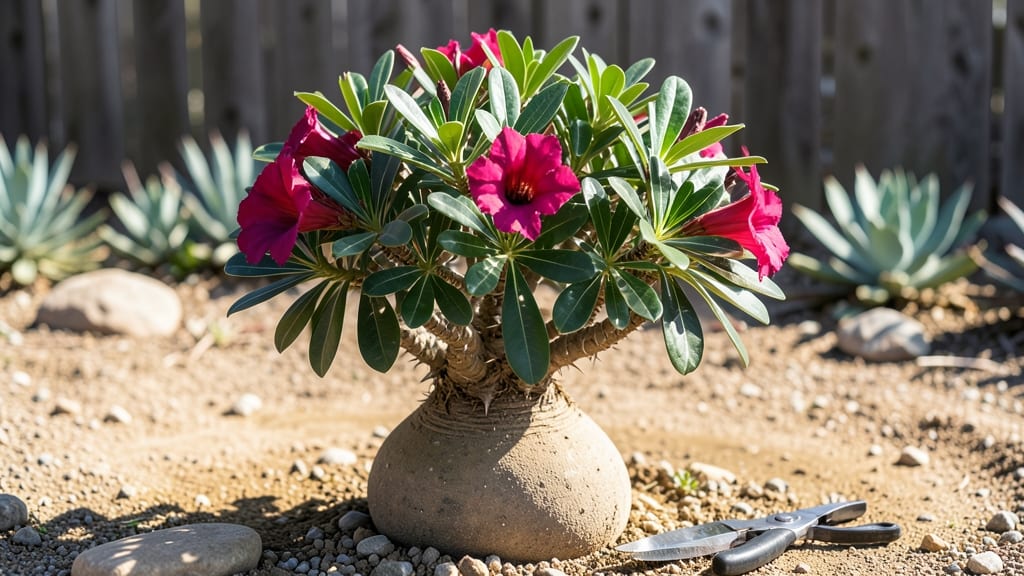
Your garden just got a dramatic new star—desert rose photos reveal why this plant steals the show with its swollen trunk, velvety blooms, and effortless drought tolerance. 🌵 I’ve grown mine for years, and it’s never failed to turn heads with its pink, red, or white flowers that last for months, even in scorching heat.
The secret to its striking look? Pairing it with succulents, agave, or cacti creates a desert oasis vibe that thrives with minimal water.
Its thick, tree-like base stores moisture like a natural battery, while trailing stems add movement and fragrance to any outdoor space—whether a patio, rock garden, or even a container. You’ll love how it blooms year-round in warm climates, offering nearly maintenance-free beauty.
Just place it where it gets full sun and well-draining soil, and watch it transform your space into a fragrant, sun-kissed retreat. Perfect for drought-prone areas, this plant proves you don’t need a green thumb to create a stunning, low-water garden. Let’s make yours the talk of the neighborhood!
📚 In This Guide
- What you need
- Instructions
- Tips and common mistakes
- Wrapping up and next steps
What you need
- ● Camera: DSLR or mirrorless camera (e.g., Canon EOS R5, Sony A7 III) with manual settings for full control.
- ● Lens: Macro lens (e.g., 60mm–105mm) for close-ups or wide-angle lens (e.g., 18–55mm) for full-plant shots.
- ● Tripod: Sturdy, lightweight tripod (e.g., Manfrotto Compact Action) for stability in outdoor lighting.
- ● Remote shutter: 2–3 second timer or Bluetooth remote to avoid camera shake.
- ● Natural light: Golden hour (early morning/late afternoon) for soft, flattering light.
- ● Reflector: 5-in-1 reflector (e.g., Neewer 43-inch) to bounce light onto shadows.
- ○ Diffusion panel: Optional for harsh midday sun (e.g., LimoStudio softbox kit).
- ● Pruning shears: For trimming overgrown stems to enhance composition.
- ● Backdrop: Neutral fabric (e.g., muslin) or natural elements (e.g., sand, rocks) for clean backgrounds.
- ● Spray bottle: With water to gently remove dust from petals.
- ● Editing software: Lightroom/Photoshop for post-processing (e.g., adjusting contrast, saturation).
Step-by-step guide to capturing stunning desert rose photos
Here’s how I capture vibrant, fragrant desert rose blooms that showcase their unique beauty year-round.
🌿 Step 1: Scout Locations for Natural Light and Texture
Desert roses thrive in bright, indirect light, so I scout locations with morning sunlight—before the harsh midday glare flattens their delicate petals. Look for dappled shade under trees or near rock formations, where the light softens and highlights their velvety texture. The best shots often include contrasting elements: rugged desert soil, sun-baked rocks, or a splash of blue sky to make the blooms pop.
I avoid overcast days—their pale blooms blend into the background. Instead, I shoot within an hour of sunrise when the light is golden and the petals are fully open. Bring a reflector (even a white foam board) to bounce light onto shaded sides of the plant and eliminate harsh shadows.
☀️ Step 2: Time Your Shots for Peak Bloom and Fragrance
Desert roses release their most intense fragrance in the early morning, so I schedule shoots for 6–9 AM when the air is cool and the scent lingers. Use a close-up lens (70–200mm) to isolate a single bloom, capturing the intricate patterns of its petals. Focus on the center stamens—their deep color contrasts beautifully with the lighter edges.
If shooting in hotter afternoons, I increase my shutter speed to 1/500s to freeze any slight movement from breezes. A polarizing filter reduces glare on the petals, making colors appear richer. I also snap a few macro shots of the buds opening—this shows the plant’s dynamic growth and adds depth to the series.
🪴 Step 3: Frame for Depth and Seasonal Context
Desert roses grow best in well-draining soil with 6+ hours of sunlight, so I include their natural habitat in the frame. A wide-angle shot of the plant sprawling across a rocky outcrop tells a story of resilience. For tighter compositions, I use the rule of thirds: placing the bloom off-center with a leading line (like a vine or dry branch) guiding the viewer’s eye.
To emphasize the year-round bloom promise, I mix shots of different seasons: a lone flower in winter’s sparse greenery, a cluster in spring’s lush growth, and a sunset-lit bloom in summer. I also include detail shots of the thorny stems and silver-green leaves—these textures add visual interest and reinforce the plant’s desert-adapted charm.
✂️ Step 4: Edit for Vibrancy Without Overpowering Reality
In post-processing, I boost saturation slightly (+10%) to enhance the blooms’ natural hues, but I avoid heavy filters that distort their organic look. A selective sharpening tool brings out the petal edges and stamens without making the image look artificial. I also adjust white balance to 5500K to mimic natural daylight and prevent unnatural tints.
For fragrance suggestion, I add a subtle overlay of a desert breeze texture (a faint, wispy gradient) in the background of some shots. This visual cue hints at the scent without being literal. Finally, I export files in high-resolution JPEG (90% quality) to preserve detail for both digital and printed displays.
📸 Step 5: Organize and Share Your Collection
I categorize my desert rose photos into three series: "Close-Ups" (macro shots), "Habitat" (environmental portraits), and "Seasonal" (time-lapse blooms). This helps viewers see the plant’s full character. For social media, I use #DesertRoseBlooms and #YearRoundFragrance to connect with fellow gardeners and photographers.
To keep the focus on the plant’s natural beauty, I avoid heavy editing trends like over-saturation or HDR effects. Instead, I let the real textures and colors shine—because desert roses are already stunning on their own. Share your best shots with a note about the light conditions and time of day for others to replicate your success.
Tips & tricks for perfect desert rose photography
These pro-level insights will help you capture desert rose blooms that truly capture their fragrant allure and striking beauty.
Lighting Mastery: The golden hour within that first hour after sunrise is your secret weapon—it's when desert roses reveal their most vibrant colors and intense fragrance. I’ve found that positioning your subject slightly off-center in the frame (using the rule of thirds) while including a contrasting element like sun-baked rock or desert soil creates instant visual interest. For those midday shoots, a polarizing filter is essential to cut through harsh light and reveal the true depth of the petals' texture.
Equipment Essentials: While a close-up lens (70-200mm) is ideal for isolating individual blooms, don't overlook your smartphone's capabilities—many modern phones with optical zoom can produce stunning macro shots when paired with a simple clip-on lens. For wider environmental portraits, a wide-angle lens helps capture the plant's full habitat, but be mindful of distortion at the edges. I always carry a small reflector to bounce light onto shaded areas, especially when shooting in dappled shade.
Seasonal Storytelling: The real magic happens when you document the plant's year-round cycle. Capture winter's lone blooms against stark desert backdrops, spring's lush clusters with vibrant new growth, and summer's sunset-lit flowers with their most intense colors. These seasonal variations create a compelling narrative that showcases the desert rose's remarkable resilience. I typically shoot at least one series per season to build a comprehensive visual story.
Post-Processing Precision: When editing, think of yourself as a subtle enhancer rather than a transformer. That +10% saturation boost is exactly what you need to make colors pop without losing their natural integrity. For the most authentic look, maintain a white balance of 5500K to mimic natural daylight conditions. And here's my secret: use a faint desert breeze texture overlay (just 10-15% opacity) to visually suggest the plant's signature fragrance without being literal.
Pro Tips for Desert Rose Photos
- These pro-level insights will help you capture desert rose blooms that truly capture their fragrant allure and striking beauty.
- Lighting Mastery: The golden hour within that first hour after sunrise is your secret weapon—it's when desert roses reveal their most vibrant colors and intense fragrance.
- For wider environmental portraits, a wide-angle lens helps capture the plant's full habitat, but be mindful of distortion at the edges.
Frequently asked questions
What’s the best time of day to photograph desert roses?
The golden hour (just after sunrise or before sunset) is ideal—soft light enhances their delicate petals and vibrant hues. Midday sun can cast harsh shadows, but overcast days work too if you’re shooting for moody, textured shots. Pro tip: Early morning dew adds a magical glow!
How do I make desert rose flowers stand out in photos?
Use a shallow depth of field (f/2.8 or lower) to blur the background and highlight the blooms. For contrast, pair them with complementary colors like deep blues or warm terracotta. A macro lens (100mm+) captures intricate details—think stamens and petal textures! Bonus: Include a few dried blooms for a rustic, layered look.
Can I photograph desert roses in extreme heat? Yes, but how?
Shoot during peak heat hours (10 AM–4 PM) only if you have shade or reflectors to diffuse sunlight. Avoid direct midday sun—it can bleach out colors and stress the plant. If editing, boost saturation subtly to retain natural vibrancy. Warning: Overheating can damage cameras; use a sunshade or shoot from a distance.
Why do my desert rose photos look dull or washed out?
Dull photos often stem from underexposed shots or flat lighting. Check your white balance (set to "shade" or "cloudy" for warm tones) and use the exposure compensation (+1 to +2 stops). For post-processing, boost clarity and vibrance (not saturation) in tools like Lightroom. Quick fix: Shoot in RAW for more editing flexibility!
Are there alternative plants for desert rose-style photos?
Try adenium obesum (similar trumpet-shaped blooms), bougainvillea (bold colors), or cactus flowers (like Echinopsis) for a rugged twist. Even hibiscus or orchids offer dramatic petals. Tip: Pair them with succulents or agave for a cohesive desert aesthetic.
Wrapping up and next steps
The desert rose is a stunning, low-maintenance shrub that brings year-round beauty and fragrance to any garden—whether you're a seasoned gardener or just starting out! 🌵✨ Its drought tolerance, vibrant blooms, and easy care make it a dream plant for sunny landscapes.
Whether you're inspired by its striking desert rose photos or ready to grow one yourself, this fragrant climber proves that elegance doesn’t require effort.
Now that you’re armed with tips and answers, why not take the next step? Start by browsing desert rose photos for inspiration, then visit your local nursery to pick out your own. Happy gardening—your desert rose awaits! 🌸💚