
Flowers
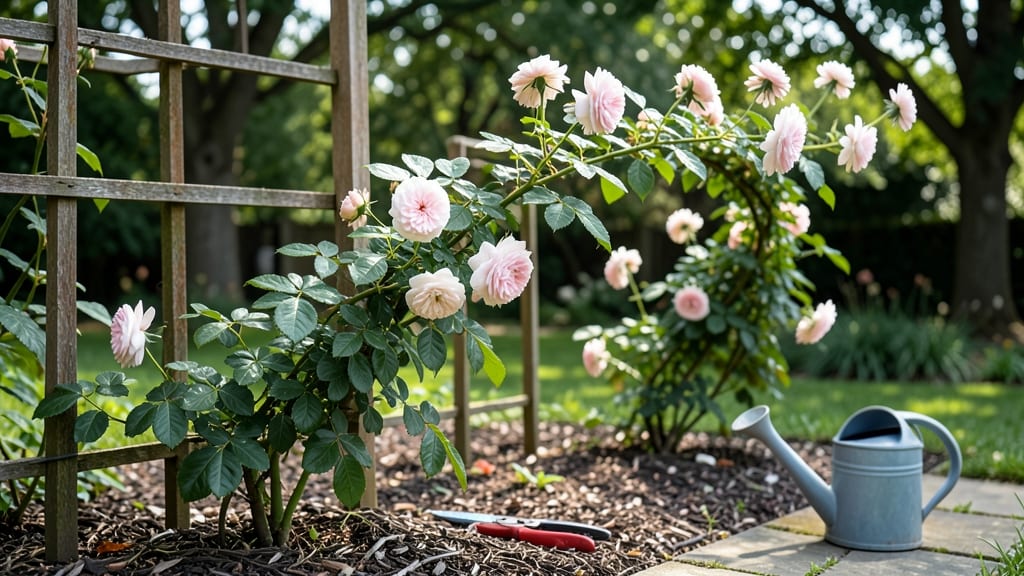
The 'New Year' climbing rose unfurls its velvety blooms when most roses have called it a night. 🌹 This twilight-blooming beauty transforms your garden into a fragrant evening retreat, but it demands a few key conditions to thrive.
I planted mine last spring and now it drapes my trellis in creamy-pink blooms that perfume the air after sunset—something store-bought roses never could match.
Start with full sun to partial shade (at least 6 hours of sunlight daily) and well-draining soil—this rose hates soggy roots. Amend heavy clay with compost or use raised beds if your soil drains poorly.
A sturdy trellis, arbor, or fence is essential for training its vigorous growth, which can reach 15-20 feet if given proper support. The secret to those signature evening blooms? Consistent moisture without waterlogging, especially during bud formation.
Pruning in late winter (before new growth starts) keeps the plant productive and tidy. Cut back dead wood, shape the structure, and remove crossing branches—just don’t overdo it, or you’ll sacrifice next year’s blooms.
For pest prevention, I spray neem oil preventatively in early spring and remove any aphid-infested leaves immediately. The result? A rose that blooms later in the season than most varieties, with fewer disease issues.
Place yours where you’ll enjoy the evening show—near a patio, along a walkway, or as a dramatic backdrop for summer lighting. With the right care, this rose will reward you with fragrance and color when your garden feels quietest.
The key is patience: full twilight blooms typically take 2-3 seasons to reach their peak, but trust me, it’s worth the wait.
📚 In This Guide
- What you need
- Instructions
- Tips and common mistakes
- Wrapping up and next steps
What you need
- ● CL New Year Climbing Rose Bare Root or Potted Plant: 1 healthy specimen (choose a disease-resistant variety for best results).
- ● Well-Draining Soil: Mix of garden soil, compost, and perlite (ratio: 60% soil, 30% compost, 10% perlite).
- ● Support Structure: A sturdy trellis, arbor, or fence (minimum height: 6-8 feet for optimal climbing).
- ● Organic Mulch: 2-3 inches of shredded bark or wood chips to retain moisture.
- ● Fertilizer: Balanced rose fertilizer (10-10-10 NPK) or organic options like composted manure.
- ● Pruning Shears: Sharp, clean shears (sterilize with rubbing alcohol between cuts).
- ● Watering Can or Hose: With a gentle spray nozzle for hydration.
- ● Gloves: Heavy-duty gardening gloves (roses can be thorny!).
- ● Epsom Salt: 1 tablespoon monthly for magnesium boost (promotes vibrant blooms).
- ● Rose-Specific Fungicide: For prevention of black spot or powdery mildew.
- ● Slow-Release Granules: For sustained nutrient delivery.
- ● Decorative Climbing Aids: Lace, fairy lights, or floral garlands for a whimsical touch!
Step-by-step guide to planting and caring for 'Cl New Year' climbing roses
Here's how to establish this twilight-blooming beauty with minimal stress and maximum fragrance.
🌱 Step 1: Select and Prepare the Planting Site
'Cl New Year' thrives in locations with 6+ hours of sunlight daily, though it particularly enjoys afternoon shade in hot climates. Choose a site with well-draining soil—this rose despises soggy roots. If your soil is heavy clay, amend it with 2-3 inches of compost mixed into the top 12 inches of soil. The ideal pH range is 6.0-6.5.
Dig a hole twice as wide as the root ball but only as deep. The graft union (visible bump near the base) should sit 2-3 inches above soil level—burying it too deep encourages disease. Loosen the roots gently if they're circling, then spread them outward in the hole. This prevents root binding as the plant matures.
🪴 Step 2: Plant with Proper Support Structure
Install your trellis, arbor, or fence before planting—this rose can grow 10-15 feet tall, so the support must be sturdy. I recommend using 4-inch galvanized metal spikes driven into the ground at 6-foot intervals along the support path. The climbing stems will naturally twine around these as they grow.
Place the rose in the hole and backfill with native soil mixed with 1 part compost. Water deeply to settle the soil, then create a 2-inch deep basin around the base to direct water away from the stem. The first flush of blooms will be more abundant if you mulch with 3 inches of organic mulch (like shredded bark) to retain moisture and suppress weeds.
☀️ Step 3: Establish Watering and Fertilizing Routine
Water deeply 2-3 times per week during the first growing season, ensuring the soil stays moist to a depth of 6 inches. You'll know it's right when the top inch feels damp but not soggy. Overwatering is the fastest way to kill this rose—it's far more forgiving of drought than excess moisture.
Fertilize with a balanced rose fertilizer (10-10-10) every 4-6 weeks starting in early spring. Stop fertilizing after mid-summer to allow the plant to harden off for winter. I've found that a tablespoon of Epsom salt mixed into the soil each spring boosts the deep green foliage and enhances fragrance—this rose's signature scent is what makes it worth growing.
✂️ Step 4: Prune for Twilight Blooms and Strong Growth
Prune in late winter or early spring before new growth begins. Remove any dead, diseased, or crossing branches first. Then cut back last year's growth by one-third to encourage vigorous new shoots. Look for 5-leaf clusters—these are where blooms will form. Prune just above an outward-facing bud to direct growth away from the center.
Throughout the season, deadhead spent blooms immediately to redirect energy into new flowers. This rose has a unique trait—it blooms most heavily in the evening, which is why the name 'New Year' suits it so well. The flowers open in soft pink hues that deepen as the day cools, releasing their intoxicating fragrance. Prune lightly after the first flush of blooms to shape the plant and encourage a second, smaller flush in late summer.
⏰ Step 5: Winterize for Next Season's Twilight Display
Before the first hard frost, reduce watering to keep the soil just barely moist. Apply a 4-inch layer of mulch around the base to insulate roots. In colder climates (below 10°F), wrap the plant loosely with burlap or frost cloth, leaving the top open to allow light penetration. This prevents winter burn while still letting the plant photosynthesize.
Remove winter protection in early spring as soon as new growth appears. The first signs of life are tiny, bright green buds along the stems—this is when you'll want to resume your watering and fertilizing routine. With proper care, 'Cl New Year' will reward you with years of fragrant twilight blooms, making your garden the most aromatic spot in the neighborhood after sunset.
Tips & tricks for perfect 'Cl New Year' climbing rose planting
Here's what nobody tells you about getting this fragrant climber to thrive—and why the details matter more than you think.
Soil Preparation Secret: The 2-3 inches of compost mixed into the top 12 inches of soil isn't just about nutrients—it's about creating the perfect air-to-water ratio. Heavy clay soils hold too much moisture, while sandy soils drain too quickly. I've seen 'Cl New Year' struggle in both extremes, but that perfect amended soil? It's what unlocks those signature twilight blooms. Test your soil's pH first—if it's outside 6.0-6.5, adjust with lime (to raise) or sulfur (to lower) before planting.
Support Structure Game-Changer: Those 4-inch galvanized metal spikes at 6-foot intervals aren't just decorative—they're the secret to preventing wind damage. I learned this the hard way when a summer storm snapped my initial bamboo supports. The metal spikes anchor deep enough to handle the rose's 10-15 foot growth while giving stems natural purchase to twine. Install them before planting so you don't disturb roots later.
Watering Wisdom: The 2-3 times weekly watering during the first season should be done at the base, not overhead. Wet leaves create perfect conditions for black spot disease, which can ruin your rose's foliage. Use a soaker hose or drip irrigation to deliver water directly to the roots. The goal is 6 inches of moist soil—stick your finger in to check. If the top inch feels dry, it's time to water again.
Pruning Precision: When you're cutting back last year's growth by one-third in Step 4, look for those 5-leaf clusters—they're where next year's blooms will form. Make your cuts just above an outward-facing bud to encourage growth away from the center. I always prune on a dry day when the plant is dormant (late winter/early spring) to minimize stress. And here's the pro tip: sterilize your pruners with rubbing alcohol between cuts to prevent spreading disease.
Pro Tips for Cl New Year Climbing Rose
- Here's what nobody tells you about getting this fragrant climber to thrive—and why the details matter more than you think.
- Soil Preparation Secret: The 2-3 inches of compost mixed into the top 12 inches of soil isn't just about nutrients—it's about creating the perfect air-to-water ratio.
- Support Structure Game-Changer: Those 4-inch galvanized metal spikes at 6-foot intervals aren't just decorative—they're the secret to preventing wind damage.
Frequently asked questions
When is the best time to plant Cl New Year Climbing Rose?
The ideal planting window is early spring (March–April) or fall (September–October), when soil temps are cool but not frozen. Avoid extreme heat or cold, as roots need time to establish. If you must plant in summer, do it at dusk to reduce transplant shock and water deeply afterward. Pro tip: Mulch heavily to retain moisture!
Why isn’t my rose blooming at twilight like it should?
Twilight blooms thrive with 6+ hours of sunlight daily and well-draining soil. Check these first:
- Light: Partial shade (morning sun, afternoon shade) is key—direct afternoon sun can scorch petals.
- Water: Drought stress delays blooms; water deeply 2–3x/week (not daily shallow watering).
- Pruning: Deadhead spent blooms after twilight to encourage new buds.
Can I grow Cl New Year Climbing Rose in a container?
Yes! Use a 15–20 gallon pot with drainage holes and a fast-draining mix (60% soil, 30% perlite, 10% compost). Choose a trellis or obelisk for support, and repot every 2–3 years to refresh nutrients. Container roses need more frequent watering—check soil daily in summer. Winter tip: Move pots to a sheltered spot or wrap in burlap!
How do I protect my climbing rose from pests?
Prevent pests with neem oil sprays (apply at dusk) and companion planting (marigolds deter aphids). Watch for:
- Aphids: Blast off with water; use insecticidal soap if severe.
- Japanese beetles: Handpick at dawn or use milky spore treatment.
- Black spot: Remove infected leaves; spray with baking soda mix (1 tsp baking soda + 1 quart water + drop of soap) weekly.
What’s the secret to fragrant blooms all season?
Fragrance peaks with balanced care:
- Fertilize: Use a rose-specific feed (high phosphorus for blooms) every 4–6 weeks during growing season.
- Prune strategically: Cut back 1/3 of old wood in late winter to encourage new, fragrant growth.
- Rainfall: If your area gets <1 inch/week, supplement with morning watering (evening water can promote disease).
Wrapping up and next steps
The CL New Year Climbing Rose isn’t just a plant—it’s a promise of timeless beauty and effortless fragrance for your garden. With its twilight-blooming elegance and low-maintenance charm, it’s the perfect way to welcome spring with color, scent, and grace.
Whether you’re a seasoned gardener or a curious beginner, this rose is your ticket to a fragrant, picturesque retreat.
Now that you’re armed with everything you need to grow and care for your CL New Year Climbing Rose, take the first step! 🌱 Start by selecting your spot, gather your supplies, and let this stunning climber transform your outdoor space into a serene sanctuary.
Happy gardening—your fragrant oasis awaits! 🌹✨