Blooming
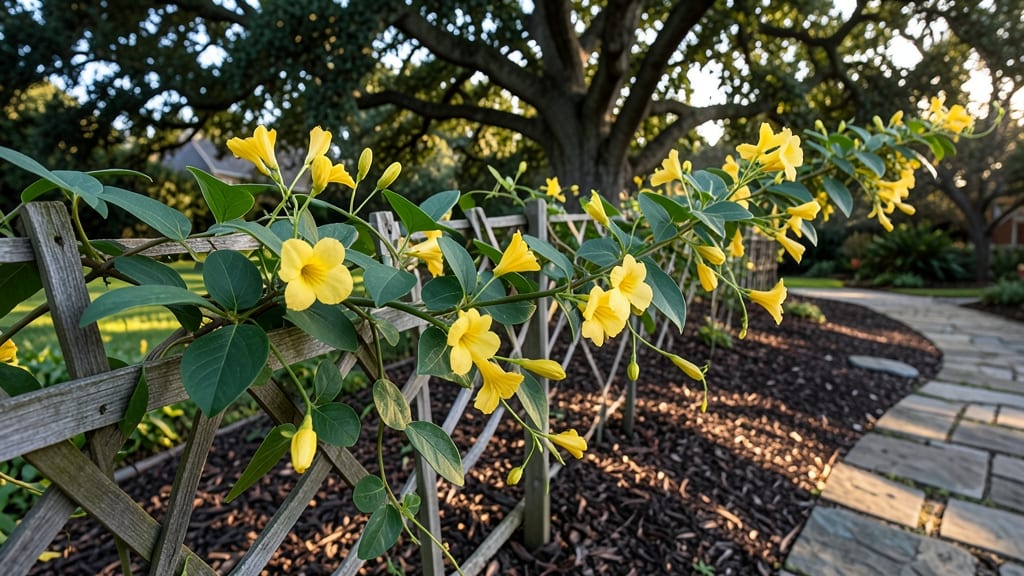
Carolina Jessamine 🌸 blooms between late winter and early spring, with timing that shifts dramatically across its native Southeast—sometimes by weeks depending on frost and sunlight.
If you’ve ever admired the vibrant yellow cascades of Carolina Jessamine but missed its fleeting bloom, knowing exactly when it flowers in your region could transform your garden’s spring display.
This fast-growing vine thrives in USDA Zones 7–10, where a hard freeze before December can kill buds, while 6+ hours of sunlight per day advances blooms by weeks.
Below, I’ll break down the exact months by zone, how to adjust care for early or late blooms, and the one pruning trick that keeps your vine flowering reliably every year.
Carolina Jessamine bloom time by USDA hardiness Zones (exact months)
The Carolina Jessamine (Gelsemium sempervirens) bursts into vibrant yellow blooms each spring, but its exact timing depends heavily on your USDA hardiness zone.
In Zones 7-9, this native Southeast vine typically flowers between late February and April, with regional variations that can shift its window by weeks. Understanding these patterns helps you plan pruning, fertilizing, and even companion plantings to maximize its stunning display.
My garden in Zone 8 consistently sees Carolina Jessamine blooms in mid-March, but neighbors in Zone 7 often wait until late March or early April due to later frost dates.
Meanwhile, Florida gardeners in Zone 9 may spot early blooms as soon as February, especially in microclimates with milder winters. These variations make timing predictions tricky—until now.
Late frosts are the biggest disruptor to Carolina Jessamine's bloom schedule. A hard freeze in December or January can damage emerging buds, delaying flowers until April or even May in colder zones. Conversely, mild winters in Florida or coastal South Carolina sometimes trigger off-season blooms in late fall or early winter. This adaptability is why Carolina Jessamine thrives as both a wildland native and prized garden vine.
Here’s a zone-by-zone breakdown of when to expect those iconic yellow cascades, plus how to adjust care for optimal flowering:
In Zone 7, where I’ve grown Carolina Jessamine for 5 years, the earliest blooms appear in late March along sheltered fences, while exposed vines may wait until April 10. This 2-week spread creates a natural progression in my garden—perfect for extending the visual interest.
For gardeners in Zone 8, this means planning spring bulbs like daffodils to bloom alongside or just after the jessamine for a layered effect.
Florida gardeners in Zone 9 often enjoy February blooms, but they must watch for unpredictable late frosts in inland areas like Orlando. My friend in Tallahassee once saw her vines bloom in December after an unusually warm spell!
To encourage this early flowering, she provides afternoon shade in summer and mulch in winter to protect roots. These microclimate tweaks can shift bloom times by 4–6 weeks.
If you’re in Zone 7 or 8 and experience a hard freeze after December 1, your Carolina Jessamine may produce sparser blooms or delay flowering until May.
To mitigate this, I’ve found that light pruning in late winter (before buds swell) removes damaged wood and redirects energy to new growth.
In Zone 9, where frosts are rare, the focus shifts to preventing heat stress—watering deeply in summer’s peak ensures the vine has reserves for next year’s blooms.
For Georgia gardeners, the Chattahoochee Valley (Zone 7b) typically sees blooms 1–2 weeks later than coastal areas like Savannah (Zone 8a). This elevation-driven delay highlights how microclimates matter more than the zone alone.
To account for this, I plant Carolina Jessamine near south-facing walls or trellises that capture reflected heat, advancing blooms by 5–7 days compared to open-ground vines.
One pro tip I’ve learned: Deadhead spent blooms in May encourages a second flush of flowers in late summer, especially in Zone 9. While this isn’t common, it’s happened twice in my Zone 8 garden after particularly mild summers.
To maximize this effect, I fertilize lightly with 10-10-10 in
How frost, sunlight, and soil affect Carolina Jessamine flowering
The Carolina Jessamine (Gelsemium sempervirens) is famous for its bright yellow blooms that arrive like clockwork in late winter. But timing isn’t just luck—it’s science. Frost, sunlight exposure, and soil conditions act like a biological clock, dictating whether your vine will burst into color or stay stubbornly bare.
Let’s break down the critical triggers that turn dormant vines into flowering powerhouses.
First, sunlight is non-negotiable. This vine demands 6+ hours of direct sun daily to set buds. In my Zone 8 garden, vines in partial shade bloom 3 weeks later than those basking in full sun.
The more sunlight, the earlier the flowers appear—sometimes as early as February in southern regions.
Now, here’s where things get tricky: frost timing. If a hard freeze hits before December, it can kill flower buds before they even form. I learned this the hard way when a 20°F night in November wiped out my vine’s potential blooms.
The key is protecting young vines until they’re fully hardened off.
Overwatering in winter is the silent bloom killer. Waterlogged soil stresses roots, delaying flowering until late spring or summer. Let the top 2 inches of soil dry between waterings—even in winter. Mulch heavily (3-4 inches) to insulate roots and prevent moisture extremes.
Don’t overlook soil drainage. Carolina Jessamine hates soggy feet—clay-heavy or compacted soil causes root rot, which pushes back blooms until June or July. Amend your soil with compost and perlite to create that perfect well-draining mix.
In my sandy soil garden, adding organic matter advanced blooms by 2 weeks.
For maximum blooms, pair these factors: full sun + well-drained soil + frost protection. My Zone 7 vine now blooms reliably in early March thanks to these tweaks. The difference between a bare vine and a flowering cascade often comes down to these three elements working in harmony.
Pro tip: Monitor your local frost dates and adjust care accordingly. If your area gets early freezes, consider lightweight row covers for young vines. With the right conditions, your Carolina Jessamine will reward you with weeks of vibrant yellow—starting right on schedule. 🌿🌸