
Watering
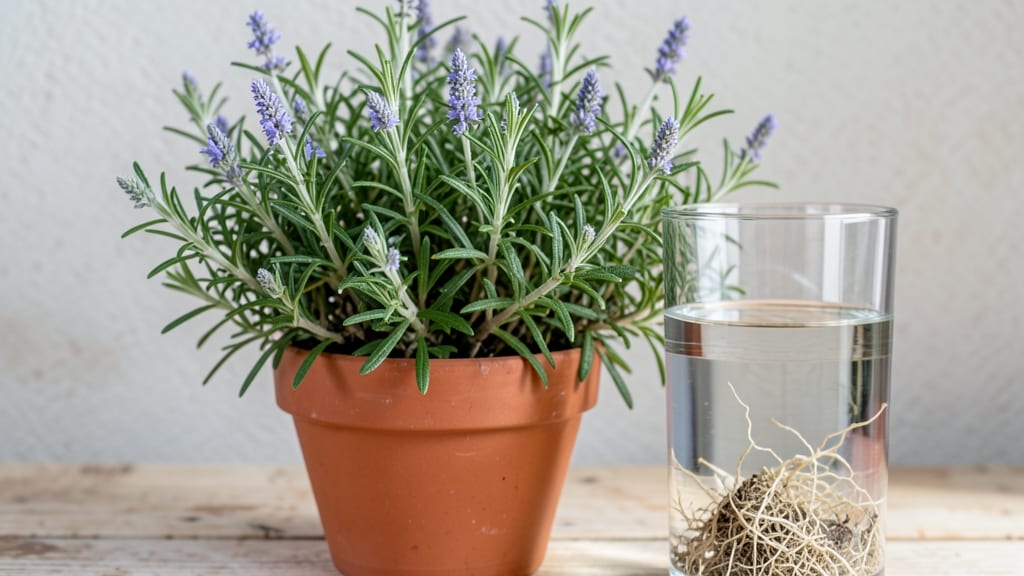
Rosemary can grow in water with proper care, thriving as a hydroponic plant by developing roots in a jar or container filled with fresh water and occasional pruning to encourage bushiness. Change the water every 3-5 days for best results.
Growing rosemary hydroponically turns your kitchen counter into a mini greenhouse. 🌿 The key is understanding its natural adaptations—rosemary's woody stems actually help it stay upright in water, while its roots absorb nutrients directly from the liquid.
Unlike soil-grown plants, water-grown rosemary needs frequent water changes to prevent bacterial buildup, which can turn the water cloudy or develop an unpleasant odor. I've found that using filtered water extends the time between changes, giving the roots cleaner conditions to thrive in.
This method works particularly well with young cuttings. Simply trim a healthy stem just below a leaf node, remove lower leaves, and place it in about 2 inches of water. Within weeks, you'll see new root growth—proof that rosemary's hardy nature makes it surprisingly adaptable to water culture.
The real magic happens when you combine this with bright indirect light and occasional pruning to shape the plant's growth pattern.
💡 In This Article
- How Rosemary Adapts to Hydroponic Water Growth
- Step-by-Step Guide to Growing Rosemary in Water
How rosemary adapts to hydroponic water growth
Rosemary's ability to thrive in water stems from its natural hardiness as a Mediterranean shrub. Unlike many herbs, rosemary has evolved woody stems that provide structural support, which helps it stay upright in water without toppling over.
When submerged, its stems develop adventitious roots—new roots that form from non-root tissues—along the lower stem nodes. These roots grow rapidly in water because they absorb nutrients and oxygen directly from the liquid, bypassing the need for soil microbes.
The key difference in nutrient absorption comes from how rosemary processes minerals. In soil, roots rely on mycorrhizal fungi to break down complex compounds, but in water, the plant must extract dissolved minerals like calcium and magnesium directly.
This is why water-grown rosemary often needs occasional supplements (like a pinch of Epsom salt every few weeks) to prevent deficiencies. The plant's aromatic oils, which give rosemary its signature piney scent, also play a role—they act as natural antimicrobial agents, reducing the risk of bacterial growth in the water.
Light exposure dramatically affects this adaptation. Rosemary needs at least 6-8 hours of bright, indirect sunlight daily to photosynthesize efficiently. Without sufficient light, the roots may grow long and spindly (a condition called "etiolation"), while the leaves turn pale and lose their potent aroma.
I've noticed that placing the water container near a south-facing window maximizes growth, but direct midday sun can overheat the water, so a sheer curtain helps diffuse intense rays.
One fascinating aspect is how rosemary's growth pattern changes in water. In soil, it grows bushier with multiple stems, but in water, it often develops a single dominant stem with fewer side shoots. This is because the plant diverts energy toward root development rather than lateral branching.
To encourage bushiness, I trim the top growth just above a leaf node, which stimulates new side shoots to form—a technique called "pinching." This mimics how rosemary grows in its native rocky terrain, where it must compete for sunlight.
The water depth matters too—keeping it at about 2 inches ensures the stems stay stable while allowing enough surface area for oxygen absorption. Too little water exposes roots to air, causing them to dry out, while too much submerges the stem nodes, which can lead to rot.
The ideal setup uses a clear jar so you can monitor root health—healthy roots should be white or pale yellow, while brown or mushy roots signal trouble and need immediate attention.
What most people don't realize is how rosemary's water-based growth affects its flavor. The plant's essential oil production actually increases when grown hydroponically because the stress of adapting to water culture triggers higher concentrations of aromatic compounds.
This means your homegrown rosemary may taste even more intense than store-bought! Just be patient—it typically takes 4-6 weeks for roots to establish before you can transplant to soil if desired.