
Pests and Diseases
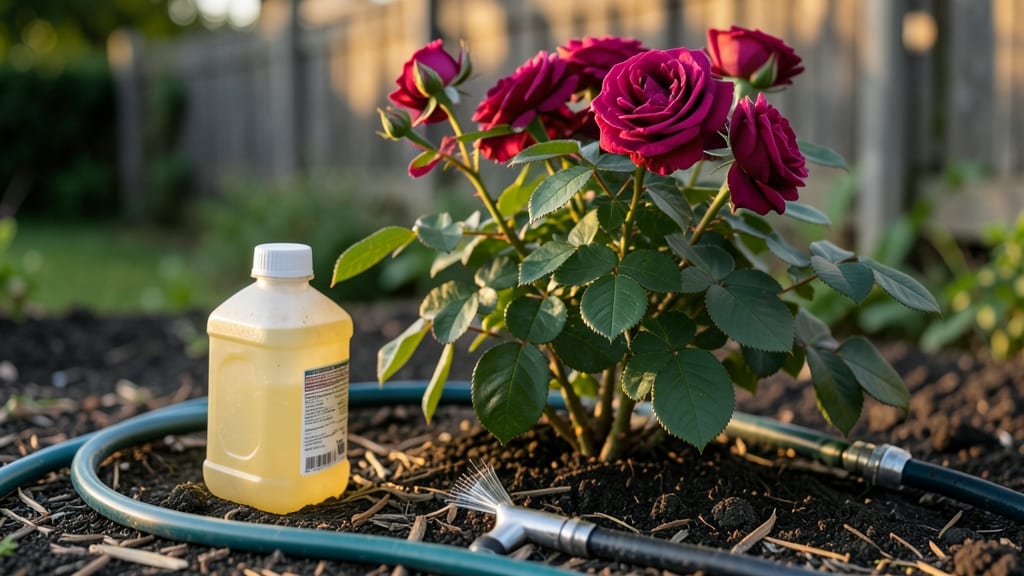
When using bleach with roses, always dilute it to a 1:9 ratio (1 part bleach to 9 parts water) for sanitizing pruning tools or surfaces, then rinse thoroughly to avoid plant damage. Never apply bleach directly to leaves or soil.
Bleach works as a disinfectant because its active chlorine compounds kill bacteria and fungi on tools, but roses are sensitive to chlorine buildup. 🌹 The dilution ratio prevents leaf burn while still eliminating harmful pathogens that spread diseases like black spot.
I always rinse tools with clean water afterward to remove residual chlorine—this step is just as critical as the dilution itself. For surfaces like potting benches, a 1:9 bleach solution works well, but always let it dry completely before handling plants again.
If you're concerned about chemical exposure, consider vinegar or rubbing alcohol as safer alternatives. White vinegar (1:1 ratio with water) is effective against many pathogens and rinses away easily, though it has a stronger smell.
Rubbing alcohol (70% isopropyl) evaporates quickly and leaves no residue, making it ideal for tools used in humid conditions. For organic gardeners, hydrogen peroxide (3%) is a great chlorine-free option that breaks down into water and oxygen.
💡 In This Article
- How Bleach Disinfects Pruning Tools Without Harming Roses
- Alternative Disinfectants for Rose Care and Tool Sterilization
How bleach disinfects pruning tools without harming roses
Bleach's disinfecting power comes from its active ingredient, sodium hypochlorite, which releases chlorine gas when diluted with water. This chlorine disrupts the cell membranes of bacteria and fungi, effectively killing pathogens like Diplocarpon rosae (black spot) and Botrytis cinerea (powdery mildew) that commonly infect roses.
The 1:9 dilution ratio (about 0.5% sodium hypochlorite) creates enough chlorine to be antimicrobial while keeping the concentration low enough to avoid damaging plant tissues.
At this level, the chlorine oxidizes organic matter on tools without lingering long enough to cause phytotoxicity—though residual chlorine can still harm roses if not properly rinsed away.
The key to safe use lies in understanding chlorine's behavior. When you apply a 1:9 bleach solution to pruning tools, the chlorine breaks down organic debris (like sap or old plant matter) that harbors pathogens.
However, any chlorine that remains on tools can leach into rose stems during pruning, leading to chlorine buildup in plant tissues. This buildup manifests as yellowing leaves or stunted growth because chlorine disrupts the plant's cellular respiration process. 🌿 The solution?
A thorough rinse with clean water after sanitization removes 90%+ of residual chlorine, making tools safe for immediate use.
Dilution isn't just about safety—it's about effectiveness. Pure bleach (5-6% sodium hypochlorite) would kill beneficial microbes in the soil and burn rose foliage upon contact.
The 1:9 ratio maintains enough chlorine to sanitize tools in 5-10 minutes of soaking, while reducing the risk of chlorine gas inhalation (which occurs at higher concentrations).
For comparison, household bleach typically contains 5.25-6.15% sodium hypochlorite, so even a few drops in a gallon of water can create a potent but safe solution when properly rinsed.
Visual cues help gauge proper dilution. A correctly diluted bleach solution should appear pale yellow—similar to weak tea—rather than the dark amber of undiluted bleach.
If you're unsure, use a bleach tester strip (available at pool supply stores) to measure the chlorine concentration; aim for 100-200 ppm (parts per million) for tool sanitization. Over-dilution (e.g., 1:10) may not kill all pathogens, while under-dilution (1:8) increases the risk of plant damage.
For surfaces like potting benches, a 1:9 solution works well, but always allow it to dry completely before handling plants.
Timing matters too. After sanitizing tools, rinse them immediately with water to remove chlorine residues. Let tools air-dry in sunlight—UV light further breaks down any remaining chlorine. For surfaces, wipe down with a damp cloth after sanitization to prevent chlorine from accumulating in soil or mulch.
This process ensures your roses stay healthy while keeping tools pathogen-free for the next pruning session. The science is clear: proper dilution and rinsing make bleach a safe, effective tool in rose care. 🌹
For those who prefer a more natural approach, consider these alternatives: white vinegar (1:1 with water) kills 82% of bacteria and fungi but has a strong odor, while 3% hydrogen peroxide breaks down into water and oxygen, leaving no residue.
Rubbing alcohol (70% isopropyl) evaporates quickly but may dry out tool handles over time. Each option has trade-offs, but all can achieve the same goal—clean tools and healthy roses—without the risks of chlorine buildup.